
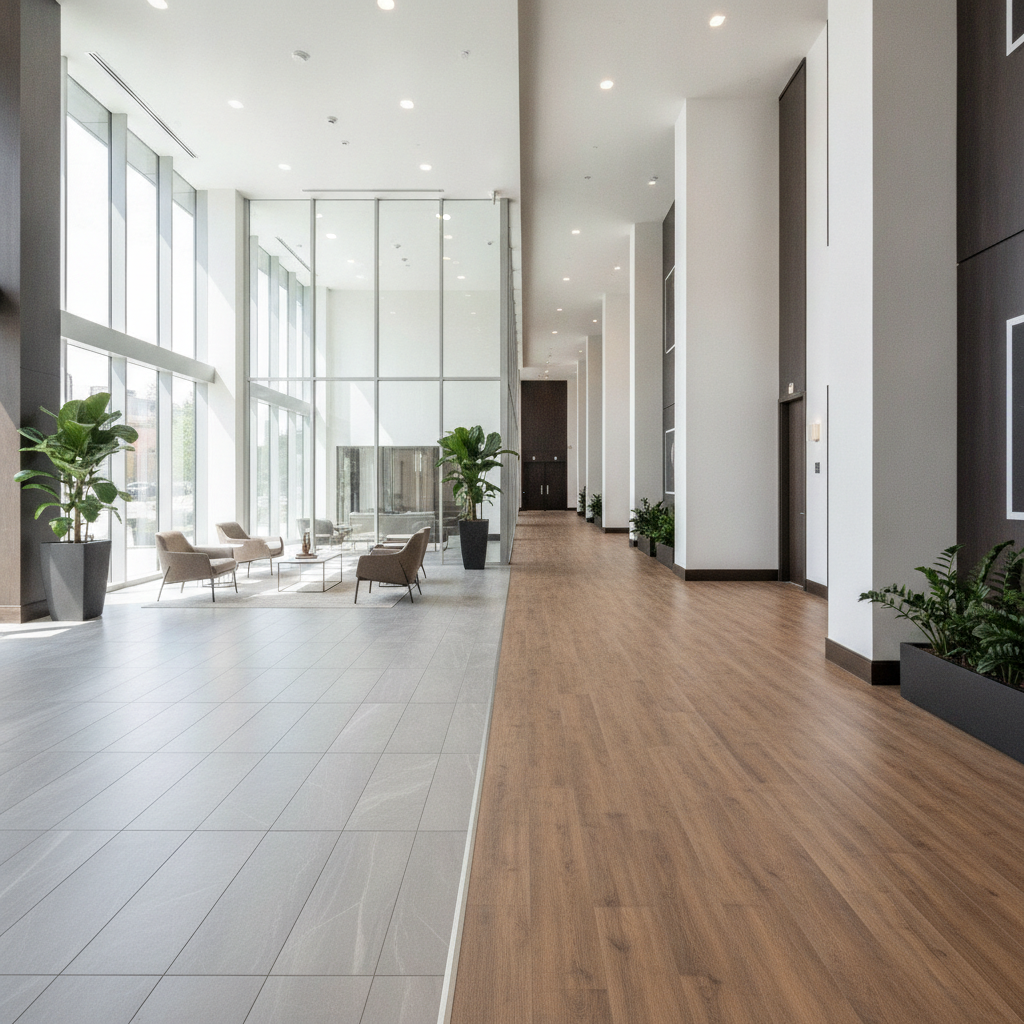
Flooring and tiling for multi unit buildings is the selection and installation of durable, code-aware surfaces across apartments and shared areas. In London, ON, our team at Mahal Concrete and Constructions uses standardized specs to speed turnovers, reduce noise transfer, and improve safety and tenant appeal in hallways, lobbies, kitchens, and baths.
By Mahal Concrete and Constructions • Last updated: 2026-06-17
Overview and Table of Contents
This complete guide explains how to choose, specify, and install multi-unit flooring that stands up to traffic, moisture, and noise. You’ll see seven proven material picks, planning steps that prevent rework, London, ON–specific tips, and checklists you can use to hand units over faster with fewer callbacks.
Managing floors in apartments is about consistency at scale. The right system keeps units rentable, quiet, and safe while streamlining maintenance across your portfolio.
- What “flooring and tiling for multi unit buildings” really means
- Why multi-family flooring decisions impact NOI, safety, and satisfaction
- How specs, sequencing, and QA reduce vacancy days
- Seven smart flooring and tile picks for 2026
- Acoustics, slip resistance, fire, and moisture basics
- London, ON considerations for property managers
- Case examples from our Southwest Ontario work
- FAQ and a practical next-steps checklist
Quick Summary
For multi-unit properties, select surfaces by location, acoustics, moisture, and maintenance. Glue-down LVP and porcelain tile lead for speed and durability; add proper underlayments, transitions, and movement joints. Standardize SKUs and details portfolio-wide to reduce ordering errors and accelerate turnovers.
We standardize finishes across kitchens, baths, corridors, and lobbies so procurement and installation are predictable. That standardization alone can eliminate days of decision churn during unit turns.
What Is Multi-Unit Flooring and Tiling?
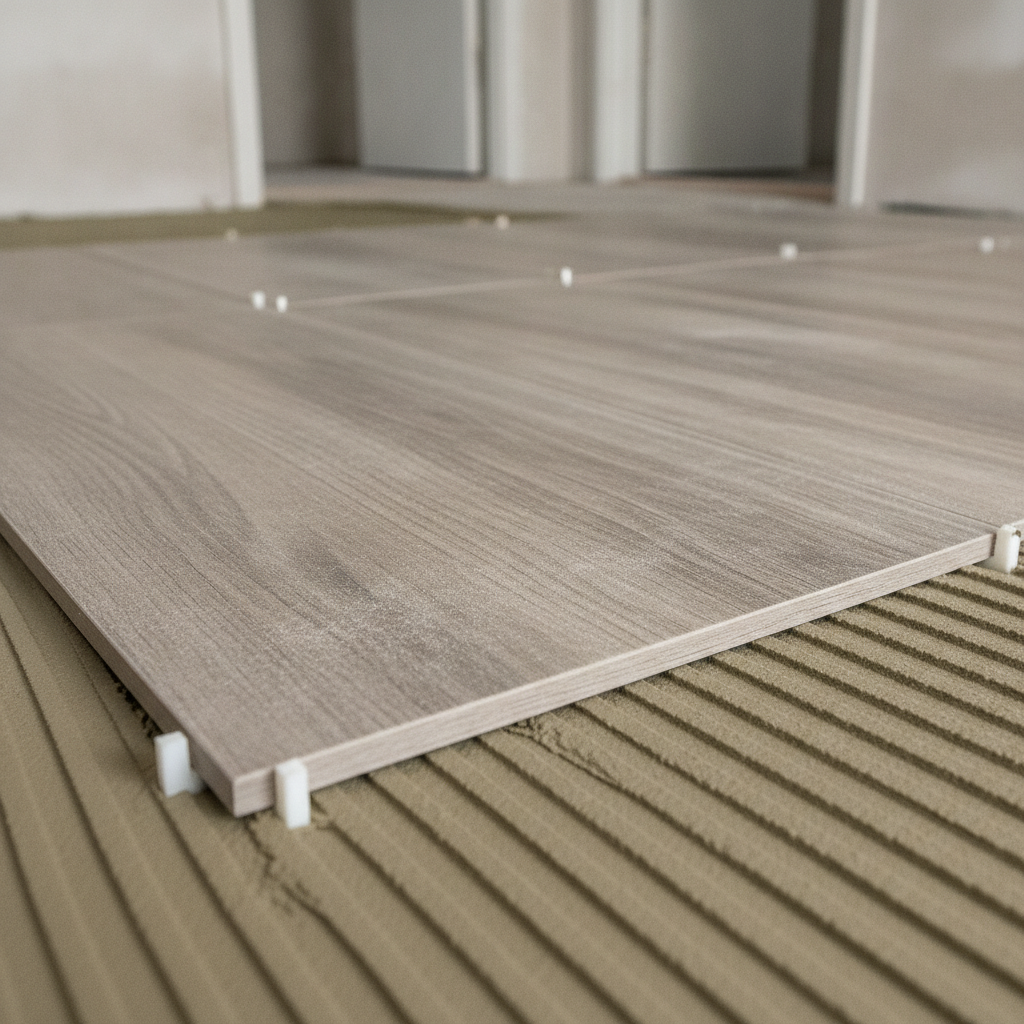
Multi-unit flooring and tiling is the coordinated design, specification, and installation of surface materials across apartments and common areas. It balances durability, acoustics, code, and maintenance while enabling fast, repeatable turnovers with consistent, tenant-ready finishes.
Think of it as a building-wide system, not one-off rooms. In our projects, we align substrates, adhesives, underlayments, and trim details so crews move cleanly from one unit to the next without rework.
Where it applies in apartments
- Unit interiors: living rooms, bedrooms, kitchens, and bathrooms
- Shared spaces: corridors, lobbies, stairs, amenity rooms, laundry
- Back-of-house: service rooms, mechanical, refuse and loading areas
Performance dimensions to define up front
- Acoustics: target IIC/STC in the 50–55+ range between units; use acoustic underlayments under hard surfaces.
- Slip resistance: wet DCOF ≥ 0.42 for interior wet areas; textured tiles in entries to handle tracked-in moisture.
- Fire and smoke: Class A flame spread/smoke development where required; verify assembly ratings.
- Moisture tolerance: waterproofing in baths and shower surrounds; vapor emission limits for adhesives.
- Turnover speed: products that install fast and return spaces to service quickly.
Standardizing these specs lowers risk across your portfolio. We package them in a simple finish schedule tied to room types and elevations.
Why Multi-Unit Flooring Decisions Matter
Flooring choices drive vacancy time, noise complaints, safety incidents, and lifetime maintenance. The best systems resist wear, reduce sound transfer, and clean fast—so units show better and turnover windows shrink. In multi-unit buildings, smart flooring is a portfolio lever, not a cosmetic upgrade.
We see flooring affect three areas most: days to re-lease, tenant satisfaction, and unplanned maintenance. A resilient, easy-clean surface with the right acoustics keeps marketing photos sharp and neighbors happy.
- Reduce vacancy days: fast-install materials and predictable sequencing pull handovers forward.
- Cut service tickets: stain-resistant, repairable finishes lower callbacks over the first year in service.
- Meet safety goals: slip-resistant entries and bath surfaces limit incidents after rain or cleaning.
- Stabilize budgets: standardized SKUs simplify purchasing and reduce rush orders.
In our experience across Southwest Ontario, standard LVP for living areas and porcelain tile for kitchens and baths strikes the best speed-to-durability balance. We document this in the turnover scope so vendors and supers follow the same playbook.
For risk control, see our internal guidance on working with an insured contractor and our unit turnover checklist.
How Specs and Installation Work in Multi-Unit Projects
Successful multi-unit flooring projects follow a repeatable path: assess substrates, lock specs, stage materials, sequence floors by stack, and control QA at handoff. The more consistent the details, the faster crews move—and the fewer surprises appear after occupancy.
Your step-by-step sequence
- Site assessment: verify slab flatness, moisture, and deflection; map transition heights and thresholds.
- Specification: select SKUs, underlayments, adhesives, grout, trims, and movement joints by room type.
- Staging: pre-cut transitions, pre-bundle trowels and rollers, and stage by floor stack to reduce handling.
- Installation: follow manufacturer open times; keep grout joints consistent (often 1/8 in. on rectified tile).
- QA + protection: blue-tape punch, then protect surfaces during paint and millwork to avoid rework.
- Turnover: record product data, cleaning guidance, and warranty notes in the handover packet.
Technical checkpoints that prevent callbacks
- Acoustics: pair hard surfaces with acoustic underlayments to raise IIC/STC to target values.
- Moisture: respect RH and MVER limits for adhesives; waterproof showers and wet walls.
- Movement: include perimeter and field movement joints per tile size and layout.
- Transitions: use ADA-friendly reducers between surfaces; align heights to avoid toe-stubs.
- Protection: cover finished floors during remaining trades; many failures start as construction damage.
Our turnover scope templates define these details so supers can enforce them. If you need a starting point, explore our turnover scope template and how to choose a turnover contractor.
The 7 Smart Picks for 2026
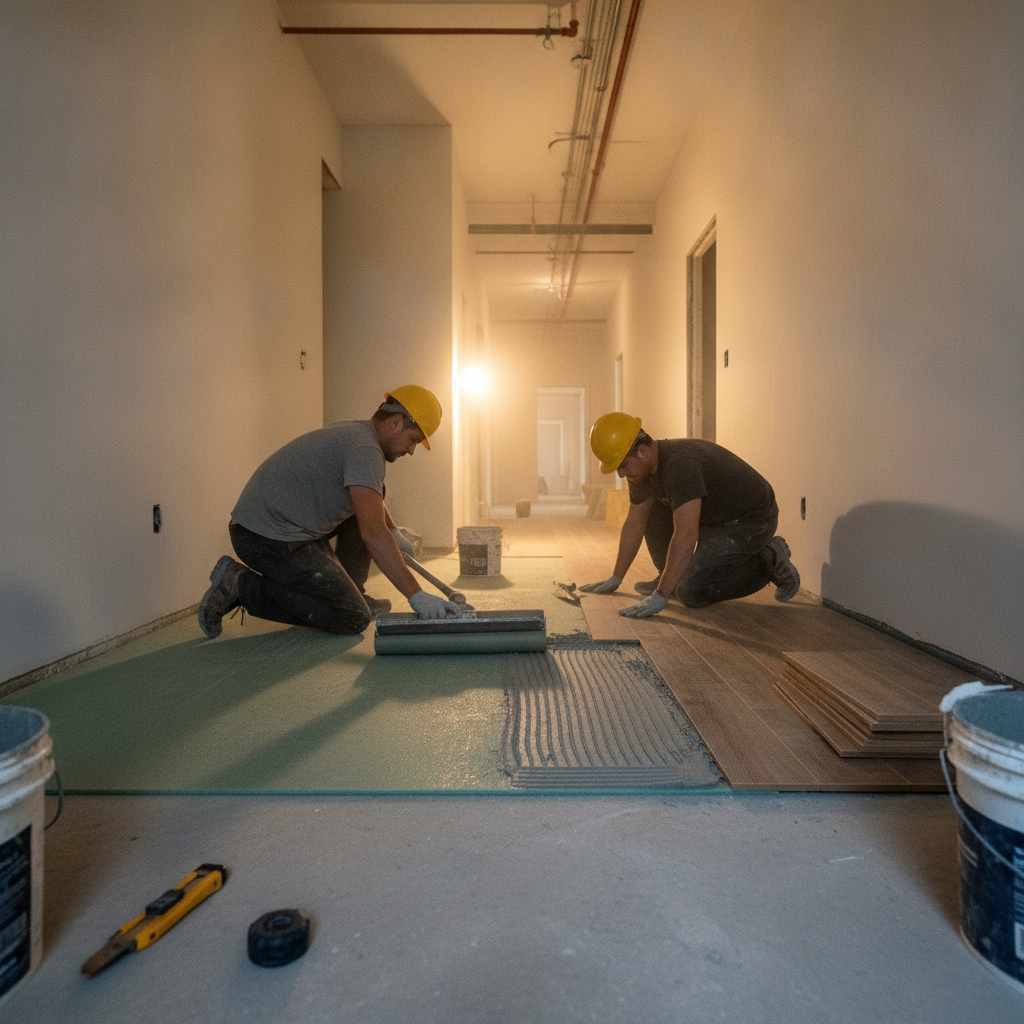
For multi-unit buildings, seven materials lead on durability, speed, and maintenance: glue-down LVP, large-format porcelain tile, SPC rigid core plank, carpet tile, rubber flooring, quarry tile, and epoxy/urethane systems. Use each where it fits: living areas, baths, corridors, stairs, laundry, and back-of-house.
Choose from these seven, then standardize SKUs and details. This lets your suppliers pre-stage inventory and your crews install at a predictable pace across every building in your portfolio.
At-a-glance comparison
| Material | Best For | Key Strengths | Acoustic Path | Slip Resistance Notes | Maintenance |
|---|---|---|---|---|---|
| Glue-down LVP (20–28 mil) | Living areas, bedrooms | Fast install, repairable planks, water-resistant | Acoustic underlayment to hit IIC/STC 50+ | Textured surfaces reduce slips | Vacuum + damp mop; replace single planks |
| Porcelain tile (12×24/24×24) | Kitchens, baths, entries, lobbies | Hard-wearing, waterproof, premium look | Underlayment or membranes in wood assemblies | Wet DCOF ≥ 0.42 in wet zones | Neutral cleaner; periodic grout sealing |
| SPC rigid core plank | Units over uneven substrates | Telegraphs less, click or glue options | Acoustic pad built-in or added | Embossed finishes add traction | Similar to LVP; panel replacements |
| Carpet tile (solution-dyed) | Corridors, bedrooms in colder climates | Modular repairs, good acoustics | Cushion back boosts IIC | Low-pile options help safety | Vacuum; replace stained tiles |
| Rubber flooring (stair treads) | Stairs, fitness rooms | Slip resistance, impact, recyclability | Adhesive set with nosing details | Raised textures improve grip | Neutral cleaner; scrubber safe |
| Quarry tile | Laundry, service, back-of-house | Non-slip, chemical resistant | Bond coat over prepped slab | Aggressive textures for wet areas | Degreaser as needed |
| Epoxy/urethane mortar | Mechanical rooms, refuse | Seamless, heavy-duty, chemical resistant | Moisture-tolerant systems exist | Textured broadcast adds traction | Scrub; spot repairs by kit |
Where each shines
- Glue-down LVP: our default in living/bedroom areas for fast installs, consistent colorways, and plank-level repairs.
- Porcelain tile: kitchens, baths, and high-traffic entries; rectified edges with 1/8 in. grout for clean sightlines.
- SPC plank: bridges minor substrate issues and speeds replacements in older buildings.
- Carpet tile: quiets corridors and bedrooms; modular swaps keep hallways presentable after spills.
- Rubber: stairs and gyms where traction and impact matter; integrate with metal nosings.
- Quarry tile: laundry and service rooms; excellent wet traction and toughness.
- Epoxy/urethane: mechanical rooms and refuse areas where seamless, chemical-resistant floors pay off.
Want deeper dives on specific materials? See this overview of luxury vinyl tile installation and a primer on tile flooring installation. If you’re comparing alternatives, this guide to hardwood flooring installation outlines considerations for residential settings.
Best Practices That Improve Results
Standardize SKUs, underlayments, trims, and layouts; control acoustics and moisture; and protect finished floors until handover. These steps consistently reduce punch-list items and keep rework out of your turnover window.
Specification and procurement
- Create a finish schedule by room type with exact SKUs and colors.
- Use 20–28 mil wear layers for LVP; select colorways that hide scuffs.
- Confirm product lead times and order overage for attic stock per building.
Acoustics and comfort
- Target IIC/STC 50–55+ between units; verify underlayment compatibility.
- Use cushion-back carpet tiles in corridors to absorb noise.
- Seal perimeter gaps; small flanking paths undermine acoustic goals.
Moisture and movement
- Test slab RH/MVER; use moisture-tolerant adhesives or mitigation as needed.
- Install movement joints per tile size and sun exposure; honor structural joints.
- Waterproof showers and bath floors; flood test before tile.
Protection and turnover
- Cover new floors during paint and cabinet work; most damage happens post-install.
- Provide a cleaning guide with approved products at handover.
- Schedule a 30-day post-occupancy check for early-wear hotspots.
For planning support, review our notes on budget planning for turnovers and keep the turnover checklist handy for every stack.
Tools, Templates, and Resources
Lock your details with a repeatable toolkit: a finish schedule, a turnover scope, a QA punch checklist, and a maintenance handout. These documents keep crews aligned and make turnovers faster, cleaner, and more consistent across buildings.
- Finish schedule: room-by-room SKUs, trim profiles, grout color, and transitions.
- Turnover scope: responsibilities, sequencing, substrate prep, and protection steps.
- QA + punch: tile alignment, grout joints, transition heights, acoustic seals.
- Maintenance guide: cleaning chemicals, frequency, stain/spot repair instructions.
To jump-start your kit, adapt our scope template and pair it with the turnover checklist. For contractor selection, our guide on how to choose a turnover contractor covers vetting, safety, and scheduling.
Local Specs and Considerations for London, ON
In London, ON, prioritize slip-resistant entries for winter slush, moisture-tolerant adhesives for seasonal humidity swings, and acoustic underlayments that calm older assemblies. Standardized finishes across units speed turnovers and match regional tenant expectations for clean, quiet, move-in-ready homes.
We work from London as a WSIB-compliant, fully insured contractor, so occupied properties stay safe and operational while we renovate. Our phased scheduling helps maintain quiet hours, trash rooms, and elevator access while crews move floor by floor.
Local considerations for London
- Winter brings tracked-in moisture; specify entry mats and tiles with wet DCOF ≥ 0.42 and textured finishes.
- Spring/fall humidity swings affect substrates; verify acclimation windows and adhesive RH limits before install.
- Occupied buildings need quiet hours; coordinate corridor work in short, well-communicated phases.
Case Studies and Practical Examples
Standardizing LVP in living spaces and porcelain in kitchens/baths has cut rework and noise complaints on our recent London-area projects. Below are three quick scenarios showing how consistent specs, sequencing, and QA turn complex, occupied buildings into smooth turnovers.
Scenario 1: 40-unit refresh with staggered occupancy
A 1960s building needed in-place upgrades. We sequenced corridors by stack, used glue-down LVP over acoustic underlayment, and tiled entries/baths with rectified porcelain. Result: clean transitions, better IIC/STC, and minimal tenant displacement.
Scenario 2: Kitchen and bath remodel program
Across 20 units, we standardized cabinet replacement, countertop installation, and porcelain tile backsplashes. Aligning grout color and trim profiles delivered a consistent look for marketing photos and reduced punch items at handover.
Scenario 3: Back-of-house risk reduction
Laundry and refuse rooms were slippery when wet. We installed quarry tile with textured finish and swapped stair treads to rubber for grip. Maintenance reported fewer slip incidents and faster cleanups.
Need help framing scope? Explore our full-unit turnover checklist or reach out for a structured walkthrough.
Budget and Scheduling Factors (No Pricing)
Plan budgets around lifecycle value, not just materials. Installation speed, substrate prep, acoustic layers, and protection drive timelines. Preapproved SKUs and a clear turnover scope shrink ordering delays and keep units rentable sooner—without publishing or promising fixed prices.
Key drivers to plan
- Substrate prep: leveling, moisture mitigation, and movement joints.
- Acoustic goals: underlayment type/weight to reach IIC/STC targets.
- Moisture/waterproofing: membranes in baths and wet walls.
- Install rate: corridor lengths, unit size, and crew availability.
- Protection: covering finished floors until handover.
For occupied buildings, we phase work to maintain access, post daily notices, and keep cleaning frequent. Our experience is that clear daily goals and a tidy site prevent most schedule drift.
Frequently Asked Questions
Property managers ask about acoustics, tile in baths, corridor options, and maintenance. Here are concise answers you can share with your team to make faster, more consistent flooring decisions across buildings.
What’s the best flooring for apartment living rooms?
Glue-down luxury vinyl plank with a 20–28 mil wear layer is a proven pick. It installs fast, looks consistent across units, handles minor spills, and allows plank-level repairs. Add an acoustic underlayment to raise IIC/STC so neighbors below don’t hear footfall.
Should I use porcelain tile in bathrooms and entries?
Yes—porcelain’s durability and water resistance make it ideal for kitchens, baths, and entry zones. Choose rectified edges for narrow grout joints and ensure wet DCOF is at or above 0.42. Waterproof or tank shower areas and add movement joints to control stress.
How do I reduce noise transfer between units?
Pair hard-surface floors with acoustic underlayments and seal perimeter gaps at walls and door frames. Aim for IIC/STC ratings of 50–55+ in multi-family settings. Carpet tile with cushion backing in corridors also absorbs wheel and foot noise effectively.
What’s the safest surface for stairs and laundry rooms?
Rubber stair treads with integrated nosings offer strong traction on stairs, while quarry tile with textured finishes works well in laundry and service rooms. Both clean easily and resist slips when wet, which is essential for high-traffic shared areas.
How can I speed up unit turnovers without cutting quality?
Standardize SKUs and installation details portfolio-wide, stage materials by stack, and protect finished floors until final clean. Document specs and QA in a turnover scope so every crew follows the same process, cutting decision time and rework.
Conclusion and Next Steps
The fastest path to better multi-unit flooring is standardization: decide your seven go-to materials, lock the details, and run a consistent playbook. You’ll shorten turnovers, reduce complaints, and present cleaner units—without overcomplicating maintenance.
Key takeaways
- Use glue-down LVP in living areas and porcelain tile in kitchens/baths for speed and durability.
- Hit IIC/STC 50–55+ with the right underlayments and sealed perimeters.
- Set wet DCOF ≥ 0.42 and Class A fire/smoke where applicable.
- Standardize SKUs, trims, and movement joints across your portfolio.
- Protect finishes until handover; most damage happens late in the schedule.
Practical next steps
- Download and adapt your turnover checklist.
- Draft a building-wide finish schedule with seven standard materials.
- Align vendors on SKUs and stocking plans for predictable lead times.
- Book a structured walk to scope floors in your next stack.
Soft CTA: Need a standards package tailored to your buildings in London and Southwest Ontario? We operate WSIB-compliant, fully insured crews and a repeatable turnover process. Let’s outline your finish schedule and sequencing plan together.
Final CTA: Schedule a brief discovery session in London to align on acoustics, slip resistance, and standardized finishes for your next turnover program.