
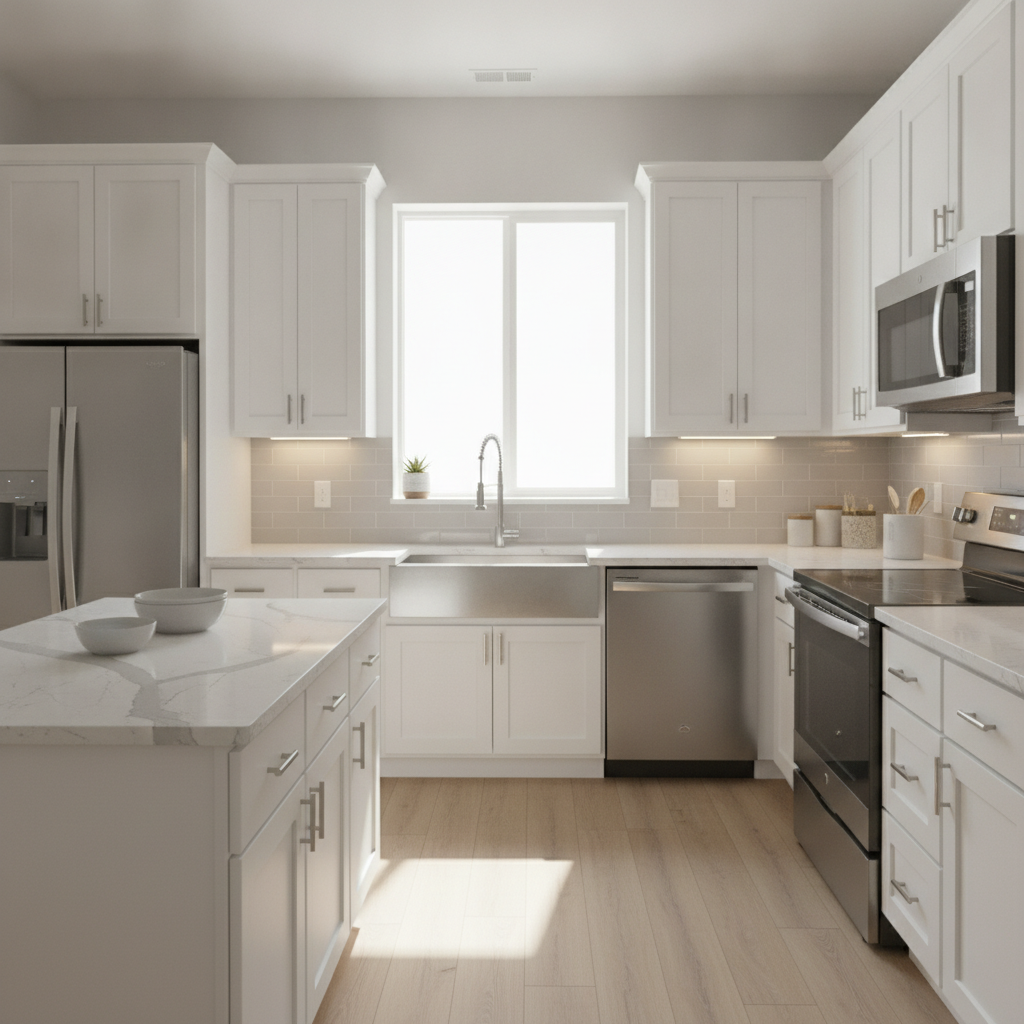
Countertop installation for rental kitchens is the planned selection and professional fitting of durable, low-maintenance surfaces in apartment units to cut vacancies and reduce damage. At our London, ON hub near 805 Chelton Rd, Mahal Concrete and Constructions executes standardized installs that speed full unit turnovers and keep finishes consistent across multi-unit portfolios.
By Amaruppdesh Singh • Mahal Concrete and Constructions
Last updated: 2026-06-15
Summary: Why countertop installation for rental kitchens matters
The right rental countertop combines durability, fast installation, easy cleaning, and standardized finishes. Property managers get fewer callbacks, tighter turnover timelines, and move-in-ready units that photograph well. The best materials balance stain resistance, impact strength, and repairability while fitting predictable, repeatable installation workflows.
Here’s what you’ll get in this guide, tailored for multi-unit buildings managed by property managers, landlords, and portfolio operators in Southwest Ontario:
- Material picks that survive rental use and simplify replacements
- Edge, cutout, and sealing details that actually prevent damage
- A multi-unit installation process built for occupied properties
- Maintenance practices that reduce service tickets and extend lifespan
- Local tips for London, ON buildings and seasonal schedules
Overview: Countertop installation for rental kitchens
Countertop installation for rental kitchens prioritizes tough, low-porosity surfaces, sealed edges, and repeatable fabrication. In multi-unit settings, the smartest choices minimize moisture intrusion at sinks, resist stains, and drop in quickly so units return to market on schedule.
As a WSIB-compliant, fully insured contractor built for multi-unit work, we design countertop specifications around standardized finishes and repeatable details. That means identical color kits, consistent sink cutouts, and post-formed or sealed edges that stop water from attacking substrates. The outcome is fewer emergencies, predictable timelines, and units that show well online.
Quick Comparison Table
Use this table to match material strengths with your building’s turnover velocity and tenant profile. Compare durability, stain behavior, repairability, and install speed to standardize specs across an entire portfolio without sacrificing marketing appeal.
| Material | Durability | Stain/Heat | Repairability | Install Speed | Best For |
|---|---|---|---|---|---|
| High-Pressure Laminate (HPL) | High for value | Good with care | Low (swap section) | Fast | Value units; high turnover |
| Quartz (engineered) | Very high | Excellent | Low (pro repair) | Moderate | Premium, long-stay suites |
| Solid Surface (acrylic) | High | Good | Moderate (seam sand) | Moderate | Mid-tier upgrades |
| Porcelain slab | Very high | Excellent | Low | Moderate | Cook-heavy, sunlit kitchens |
| Compact laminate | Very high | Very good | Low | Fast/Moderate | Student & short-term |
| Butcher block (sealed) | Moderate | Moderate | Moderate | Moderate | Boutique appeal |
| Stainless steel | Very high | Excellent | Dent-prone | Moderate | Micro-units; resilience |
| Tile over substrate | Moderate | Grout stains | Tile swap | Slow | Low-usage suites |
| Stock postform laminate | High for value | Good | Low (swap) | Fastest | Portfolio standard kits |
Quartz remains a tenant-pleasing premium option thanks to its stain resistance and consistent appearance—see this general overview of quartz durability benefits for context on why it performs well in long-stay rentals.
Our Top Pick: Postformed HPL laminate (sealed)
For most rental portfolios, sealed, postformed high-pressure laminate is the best balance of durability, speed, and look. It supports same-week turnovers, keeps edges chip-resistant, and standardizes colors and cutouts for fast future replacements.
Why it works in multi-unit buildings:
- Fast fabrication and install: Stock lengths and integrated backsplashes compress timelines so units re-list quickly.
- Edge integrity: Postformed noses reduce front-edge seams and chip risks in high-traffic spots.
- Wet-zone protection: Proper silicone at sink and faucet penetrations helps stop substrate swelling.
- Standardization: Two to three neutral colors across a portfolio keep spares on hand and simplify logistics.
Pair with a tight-radius edge and seamless backsplash returns at stove and sink runs. Where cabinets are older melamine, confirm plumb/level and add corner blocking. For context on cabinet box stability, review this overview of melamine vs. plywood cabinet boxes and why flatness matters under new counters.
More options for rental kitchens (#2–13)
Beyond laminate, portfolio owners can spec quartz, solid surface, porcelain, compact laminate, and more. Match materials to tenant behavior, cleaning protocols, and turnover speed so every unit class gets an optimal balance of resilience, aesthetics, and replacement ease.
Entry #2: Prefabricated Quartz (engineered stone)
Quartz offers exceptional stain resistance and visual consistency that photographs well for listings. Prefab sizes with pre-polished edges improve speed and predictability. It excels in premium or long-stay units that justify a tougher surface and fewer interventions over time.
- Why choose it: Stable color/pattern, great for undermount sinks, resists many common stains.
- What to watch: Require plumb, level cabinets and careful corner relief at cutouts to limit stress.
- Standardize: Keep sink cutouts uniform across units; stock extra sink rails and clips.
Many operators prefer subtle, light neutrals to maximize perceived brightness and reduce visible crumbs—another practical gain in tenant satisfaction. For a broad orientation to performance traits, see this overview of quartz benefits.
Entry #3: Solid Surface (acrylic blends)
Solid surface provides a monolithic look with seams that can be inconspicuous, plus the ability to sand out small scratches. It’s a strong mid-tier upgrade when you want a step above laminate without moving into stone fabrication complexities.
- Pros: Warm-to-touch, repairable surface; integral sink option reduces leak paths.
- Cons: Heat and chemical sensitivity demand clear tenant/cleaner guidance.
- Spec tip: Favor soft, matte finishes to hide micro-abrasions between tenant turns.
Entry #4: Porcelain slab
Porcelain resists heat, scratches, UV, and many chemicals—ideal for cook-heavy households or sun-drenched suites. Slim profiles can modernize dated cabinets visually without a full box replacement.
- Pros: Exceptional resilience; thin, modern look; easy cleaning.
- Cons: Edge handling requires skilled fabrication; seams must be tight and well-supported.
- Spec tip: Use mitered edges only with verified cabinet flatness and proper substructure.
Entry #5: Compact laminate (phenolic core)
Compact laminate is dense, water-tolerant, and impact-ready. It’s a favorite in student housing and short-term rentals where frequent turns are expected and wet-zone protection is critical.
- Pros: Built-in moisture resistance; tough edges; no separate substrate needed in many designs.
- Cons: Limited color libraries compared to HPL; precise tooling required.
- Spec tip: Standardize faucet and sink penetrations; reseal annually at high-risk seams.
Entry #6: Butcher block (sealed)
Sealed wood adds warmth and boutique appeal in targeted units. It needs routine oiling or sealers and a cleaning plan that supports the finish. This is best where tenant education is feasible and design differentiation drives leasing velocity.
- Pros: High aesthetic value; easy to refinish localized wear.
- Cons: Moisture discipline is mandatory; heat pads and cutting boards are non-negotiable.
- Spec tip: Keep it away from dishwashers or use raised lips and aggressive sealing.
Entry #7: Stainless steel
Stainless is nearly impervious to heat and water. It shines in micro-units, basement suites, or accessory apartments where resilience beats scratch-free perfection. Brushed finishes hide wear better over time.
- Pros: Hygienic, heat-proof surface; integrated sinks available.
- Cons: Can scratch and dent; some tenants perceive it as “commercial.”
- Spec tip: Use plywood support and acoustic underlays to quiet the workspace.
Entry #8: Tile over substrate
Tile is familiar and modular, but grout requires care. Damage is often localized and can be swapped without removing the entire surface. Choose stain-resistant grout and waterproof backer boards.
- Pros: Easy localized repairs; many design choices.
- Cons: Grout haze and staining if cleaning teams use the wrong chemicals.
- Spec tip: Pre-seal grout and document approved cleaners in the turnover packet.
Entry #9: Ready-to-install postform laminate (stock)
Stock postform with integrated backsplashes is the quickest path to a refreshed kitchen in value units. It standardizes lengths and colorways, shrinking both measurement and fabrication windows.
- Pros: Fastest install; widely available; portfolio-friendly color kits.
- Cons: Lower repairability; seams are not invisible.
- Spec tip: Choose tight-radius noses to resist edge chipping during move-ins.
Entry #10: Solid surface with integral sink
An integral bowl removes a major leak path and simplifies housekeeping. It’s a strategic upgrade for mid- to premium-tier units where cleaning efficiency matters.
- Pros: Seamless sink transitions; easy wipe-downs.
- Cons: Heat sensitivity; requires maintenance guidance.
- Spec tip: Provide a cleaner list at move-in to protect finish warranties.
Entry #11: Quartz with undermount sink
Undermount sinks improve usability and cleanliness. Ensure the cabinet base is level and use sink support rails or a strap system to prevent stress at the stone.
- Pros: Sleek look; no rim to trap debris.
- Cons: Requires precise support; improper install can crack corners.
- Spec tip: Document rail placement and fasteners in your turnover record.
Entry #12: Porcelain with mitered waterfall end
Mitered porcelain waterfalls protect cabinet sides and create a premium, photo-ready edge at exposed ends. Use where appliance aisles or peninsula ends get bumped by carts or luggage.
- Pros: Durable ends; modern aesthetic for marketing photos.
- Cons: Demands exact cabinet plumb/level; specialty fabricator.
- Spec tip: Add edge guards during move-ins to prevent initial dings.
Entry #13: Laminate with replaceable sink-deck insert
A replaceable insert around the sink lets you refresh the highest-risk zone without removing the full top—useful in rapid-turn buildings. Standardize cutout sizes across the portfolio.
- Pros: Targeted replacement; minimal downtime.
- Cons: Visible seam lines if not perfectly aligned and sealed.
- Spec tip: Keep two spare inserts per building for emergency swaps.
How to choose for your building
Start with turnover velocity, tenant behavior, and cleaning protocols. In London, ON portfolios, pick fast-install laminates for value units and quartz or porcelain for premium suites. Standardize colors and cutouts across buildings to simplify stocking, approvals, and future replacements.
Material selection is less about a showroom look and more about predictable performance. Decide where your building sits on the spectrum of turnover frequency, tenant cooking intensity, and housekeeping discipline. Then assign two to three standardized material/edge packages to unit classes (value, mid, premium) so managers and vendors work from the same playbook.
- Turnover velocity: Faster cycles benefit from HPL or compact laminate; premium units may justify quartz or porcelain.
- Wet-zone control: Tight silicone beads, sealed cut edges, and backsplash returns reduce swelling and mold risk.
- Cleaning reality: Provide approved cleaner lists; abrasive powders and harsh solvents shorten service life.
- Standardization: Limit colorways and keep spare lengths and sink rails on site.
- Cabinet flatness: Verify plumb/level before stone; review general cabinet substrate guidance like this overview of melamine vs. plywood.
Local considerations for London
- Winter access windows are shorter; schedule template and install blocks to avoid weather delays for occupied buildings.
- Holiday turnover spikes mean stock postform kits help keep units market-ready with minimal fabrication queue time.
- Student move cycles increase quick-turn demand; compact laminate or sealed HPL with tight-radius edges holds up well.
Buying Guide: specs, edges, and fabrication
Specify neutral colors, tight-radius edges, uniform sink cutouts, and documented silicone/sealing steps. These small choices reduce moisture damage, speed future swaps, and keep photos consistent across listings.
When your goal is move-in-ready units across dozens of suites, micro-specs matter. Standardize sink models, faucet hole counts, and dishwasher grommets. Use sealed particleboard edges for laminate and ensure all penetrations receive silicone—not just the sink bowl. Document it all in a one-page spec for vendors and onsite teams.
- Edges: Postformed noses for HPL; eased or small radius for stone to resist chipping.
- Backsplashes: Integrated for speed in value units; separate slab or tile returns for premium suites.
- Cutouts: Keep consistent templates; store digital files to repeat orders quickly.
- Substrate: Confirm cabinet flatness and add shims/blocking where needed—vital under quartz/porcelain.
- Documentation: Photos of silicone beads and seam alignment go in the turnover record.
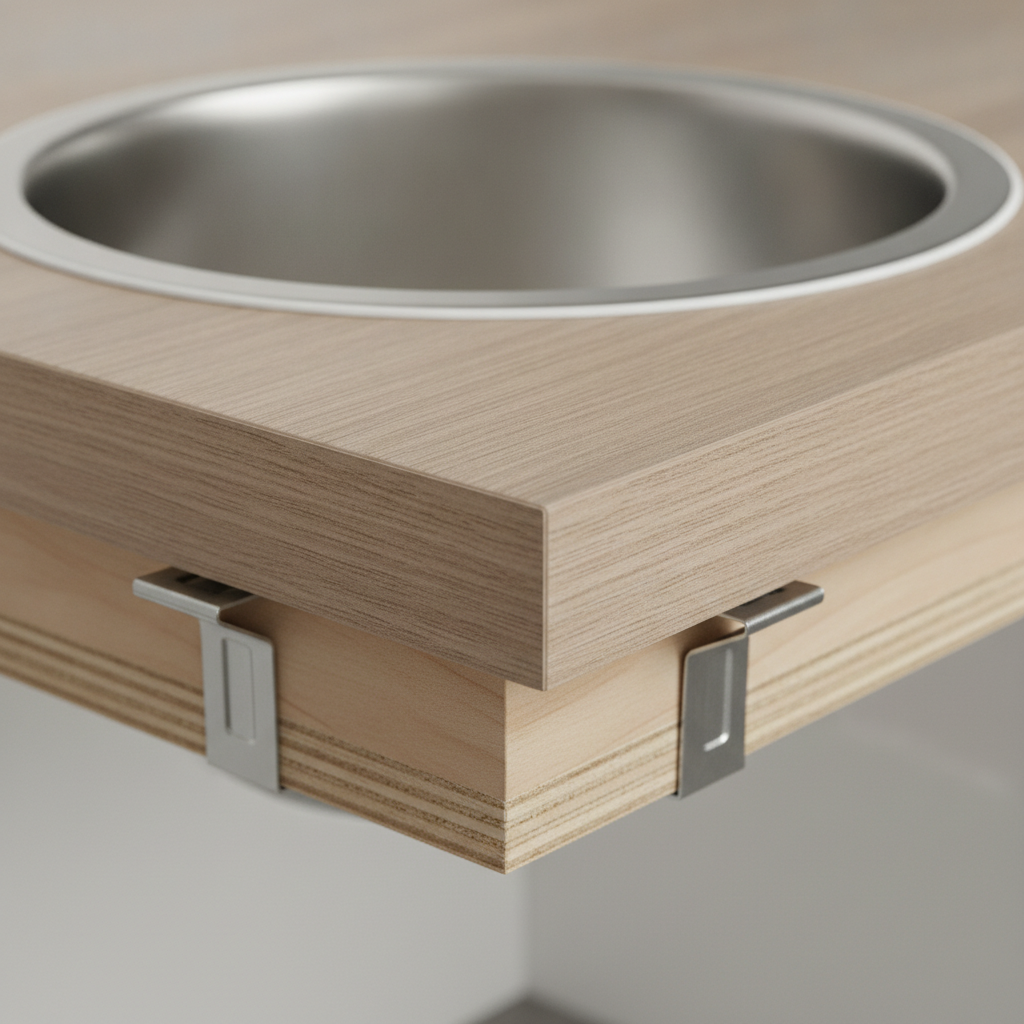
Laminate installation shares techniques with other sheet-based finishes; coordinated substrate prep and edge sealing are recurring themes in efficient make-readies. For an adjacent perspective on planning sheet-good upgrades at speed, see this general guide to laminate installation practices.
Installation process in multi-unit properties
Use a repeatable, low-disruption sequence: assess, measure, fabricate, dry-fit, seal, set the sink, reconnect plumbing, and document. Time-box noisy work, cluster units by stack, and photograph handovers for portfolio records.
- Site assessment & scope finalization: Confirm unit class, material package, and access windows.
- Cabinet verification: Check plumb/level/flatness; add shims/blocking as required.
- Template/measure capture: Digital or physical templates for repeatable cutouts.
- Fabrication & edges: Postform HPL or fabricate stone/porcelain with eased edges.
- Dry-fit & adjust: Test seams and wall scribe; correct before adhesive.
- Secure & seal: Fasten tops; silicone every penetration and seam.
- Set sinks & reconnect: Support rails for undermounts; licensed plumbing reconnection.
- Quality check: Level, seam tightness, silicone continuity, backsplash alignment.
- Clean & handover: Approved cleaners only; leave tenant care sheet.
- Document: Photos, SKUs, and spec sheet added to building records.
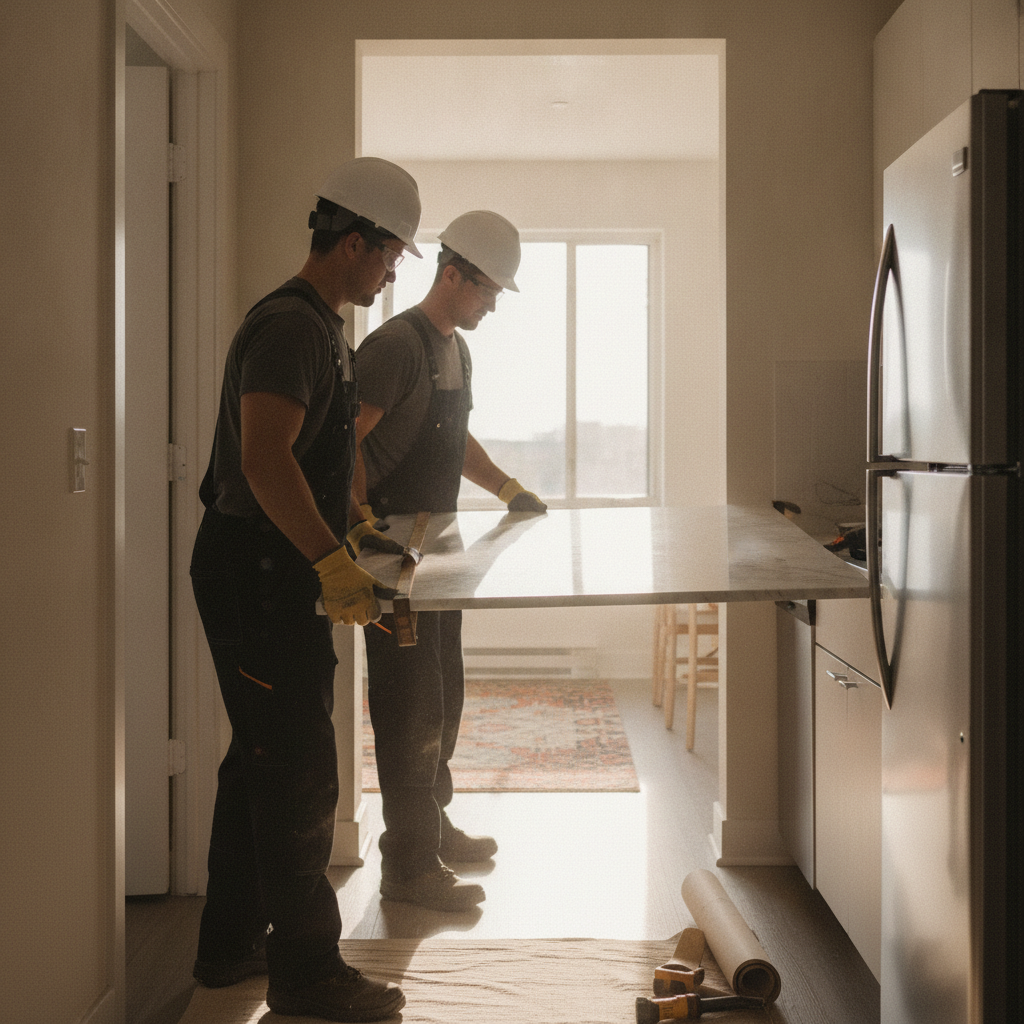
Soft CTA: Need a standardized spec and install plan across your portfolio? Our multi-unit team in London builds counter packages that align with your turnover calendar and cleaning playbook. Request a walkthrough to get started.
Maintenance and damage prevention
Most rental countertop issues trace to moisture at cutouts and heat abuse. Provide a simple care card, specify approved cleaners, and schedule quick edge inspections during unit turns to keep surfaces performing.
Successful portfolios treat cleaning teams as partners. We leave a one-page card inside the sink cabinet with “do and don’t” reminders. Between tenants, our crews check silicone continuity at sinks and faucets, confirm backsplash seams are intact, and replace any worn edge caps on HPL. These ten-minute checks save hours of future remediation.
- Use cutting boards and trivets; no hot pans directly on tops.
- Wipe standing water at seams and around faucets after cleaning.
- Train on non-abrasive, pH-balanced cleaners to preserve finish.
- Reseal critical edges annually in high-turnover buildings.
- Keep two spare sink rails and clips onsite for quick swaps.
Compliance, safety, and documentation
In occupied properties, safety-first execution and clean documentation protect residents and owners. WSIB-compliant crews, insured operations, and photo-based handovers create audit trails that simplify unit approvals and reduce disputes.
Mahal Concrete and Constructions operates with a structured, end-to-end process: assessment, detailed proposal and timeline, scheduled execution with minimal disruption, and rigorous quality checks before handover. For countertops, we append material SKUs, color codes, edge profiles, sink support photos, and an approved-cleaners list to each unit file. This level of documentation speeds future replacements and standardizes expectations for onsite staff.
For broader design-context reading that helps guide product selection conversations with tenants and owners, skim these concepts on choosing kitchen materials—useful when aligning stakeholders on durability versus look.
FAQ
These quick answers address the most common questions property managers ask when planning countertop installation for rental kitchens across multi-unit buildings.
What countertop lasts longest in rentals?
Quartz and porcelain handle stains, heat, and daily cleaning very well, which is why they’re strong picks for premium or long-stay units. For rapid-turn buildings, compact laminate and sealed HPL balance speed, resilience, and easy replacement.
Do I need to replace cabinets before new counters?
Not always. If cabinet boxes are structurally sound, plumb, and level, new counters can be installed without a full cabinet change. Add blocking and shims as needed, and verify support rails under undermount sinks.
How fast can a unit be turned with new countertops?
With stock postform laminate and pre-scheduled access, measuring and fabrication can be completed rapidly and installation slotted into the turnover window. Coordinated stacks and repeatable cutouts help keep timelines tight.
Which edge profiles are best for rentals?
Tight-radius postformed noses for laminate and eased or small-radius edges for stone reduce chipping and water ingress. Uniform sink cutouts and sealed penetrations add extra protection at the highest-risk zones.
Methodology
We evaluated 13 countertop options against durability, stain/heat behavior, repairability, install speed, and portfolio standardization. The recommendations reflect multi-unit workflows and our standardized-finish approach for predictable turnovers.
Our team has delivered 500+ projects with schedule-driven quality checks across London and Southwest Ontario. That experience informs the scoring: we favor edges that seal out moisture, substrates that stay flat under stress, and finishes easy for cleaning teams to maintain. We also test whether each option realistically supports the short access windows common in occupied properties.
Key takeaways
Standardize two to three material packages, seal every penetration, and document each install. These three moves cut callbacks, accelerate turns, and make future swaps predictable across an entire portfolio.
- Standardize colors, cutouts, and sink models by unit class.
- Seal edges and silicone every faucet and accessory penetration.
- Verify cabinet flatness before stone or porcelain installs.
- Photograph seams, silicone beads, and support rails for records.
- Leave an approved-cleaners list for tenants and housekeeping.
Conclusion
Countertop installation for rental kitchens works best when materials, edges, and workflows are standardized. Choose sealed HPL for value units and quartz or porcelain for premium suites, then document every detail to keep units market-ready.
Here’s the bottom line: the right spec protects your budget by preventing the predictable failure points—wet edges, unsealed cutouts, and mismatched replacements. Pair smart materials with a repeatable process and you’ll reduce vacancy periods, lift tenant satisfaction, and keep marketing photos consistent across your apartment portfolio.
Ready to standardize your kitchen refresh playbook? Our WSIB-compliant, fully insured multi-unit team in London can assess your buildings and deliver a portfolio-wide countertop spec with install sequencing. Book a portfolio walkthrough to get started.