
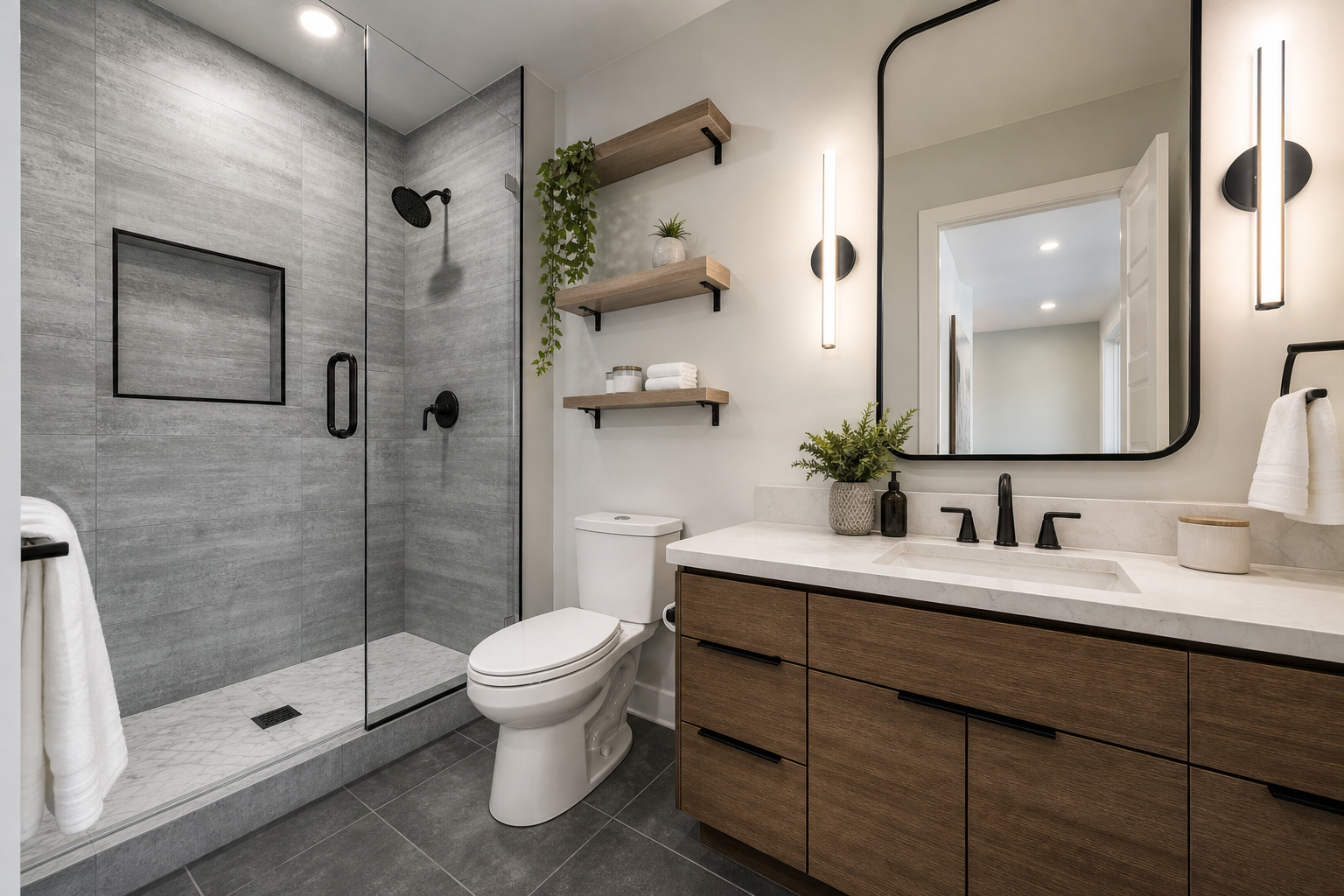

A Practical Guide to Rental Unit Bathroom Upgrades That Last
Bathrooms take more daily wear than almost any other room in a rental. Water, steam, cleaning chemicals, and frequent use can quickly break down finishes and fixtures if they are not chosen and installed with longevity in mind. This guide gives property stakeholders a clear, durable-first playbook for planning and executing rental unit bathroom upgrades that stand up to turnover and everyday use.
Start with a durability brief
Before choosing materials or fixtures, capture a short, practical brief to align everyone on what “lasting” really means for your units. This helps avoid attractive but fragile choices that increase maintenance load later.
- Define service life targets: For each component (flooring, vanity, toilet, lighting, ventilation, grout/caulk), note your expected time-to-refresh under normal tenant use.
- Prioritize easy-to-clean surfaces: Smooth, non-porous, light-to-medium colour finishes show issues early and clean faster.
- Standardize SKUs: Pick a repeatable set of finishes and fixtures across units to simplify procurement and replacement parts.
- Design for access: Choose install methods that allow fast swaps (e.g., accessible shutoff valves, removable trap assemblies, and service panels where appropriate).
- Target moisture control first: A bathroom that breathes and sheds water properly outlasts premium finishes installed over poor moisture management.
Moisture management: the foundation of longevity
Water is the primary driver of bathroom deterioration. Address these fundamentals before finishing surfaces:
- Ventilation capacity and use: Ensure a properly sized, quiet exhaust fan to encourage regular use. Run-on or timer switches can help extend fan operation after showers.
- Contain and direct water: Use properly sloped shower pans, continuous waterproofing in wet zones, and splash protection at vanities.
- Seal critical transitions: Corners, tub-to-wall lines, and floor perimeters benefit from flexible, mildew-resistant sealant applied cleanly and renewed on a schedule.
- Choose water-tolerant substrates: In wet areas, select substrates designed for tile and waterproofing rather than standard drywall.
- Plan drip paths: Where water can run, give it a controlled path to drains rather than allowing it to rest at seams or edges.
Surfaces that handle tenant traffic
Hard-wearing, easily cleaned surfaces reduce callbacks and refresh costs. Weigh your options with the following principles:
- Flooring: Select water-tolerant, dimensionally stable products that resist chipping and have a finish compatible with routine cleaning. Use slip-conscious textures where appropriate.
- Walls in wet zones: For showers/tubs, pair a proven waterproofing system with tile or solid-surface panels. Fewer seams mean fewer failure points.
- Grout strategy: Where tile is used, choose narrower joints and a grout type suitable for wet installations. Darker or mid-tone colours can hide light staining between cleanings.
- Wall paint outside wet zones: A quality, washable finish helps resist moisture and scrubbing without frequent repainting.
- Vanity tops: Non-porous, stain-resistant tops with integrated backsplashes protect walls and are easier to sanitize.
Fixtures and hardware built for repeat use
Fixtures in rentals should emphasize reliability, serviceability, and readily available replacement parts.
- Toilets: Prioritize proven, clog-resistant designs with standard internal components for fast, low-cost repairs. A comfortable but compact footprint helps in smaller rooms.
- Faucets and valves: Look for solid, serviceable cartridges and metal bodies. Single-lever lavatory faucets are intuitive and quick to replace if needed.
- Shower systems: Straightforward pressure-balance setups are easier to maintain. Ensure trim and cartridges are from stable, widely stocked lines.
- Hardware: Metal towel bars, robe hooks, and paper holders with secure mounting reduce replacements. Backing in walls at common mounting points helps hardware stay put.
- Drains and traps: Use components that allow tool-free clean-outs where possible.
Shower and tub upgrades that hold up
Because showers combine frequent water exposure with daily use, build them to minimize seams and simplify cleaning.
- One-piece or multi-panel surrounds: Where full tile is not required, consider durable surrounds with sealed vertical joints and integrated shelves that avoid water traps.
- Tile assemblies: If tiling, install a continuous waterproof membrane behind or beneath tile in wet zones, and choose larger format tiles to reduce grout joints.
- Glass vs. curtain: Framed or semi-frameless glass can reduce water escape when sized and sealed correctly; curtains are lower cost but rely on tenant use and replacement.
- Caulk management: Use flexible sealant where planes change (e.g., tub-to-wall corners) and establish a simple inspection and re-seal routine at turnover.
Lighting, power, and ventilation together
Good visibility and dry air extend finish life and improve tenant experience.
- Task and ambient lighting: Pair a mirror-area light with ambient lighting for even coverage. Use fixtures with enclosed or damp-rated designs appropriate for bathrooms.
- Switching: A fan control that encourages post-shower run time helps dry the room. Consider a timer or humidity-sensitive option to simplify use.
- Outlets: Ensure conveniently located GFCI-protected power near vanities for tenant appliances, keeping cords away from water sources.
Safe, practical storage and access
Clutter and poor storage drive damage. Build in simple, robust solutions that keep items off wet surfaces.
- Vanity storage: Opt for cleanable interiors and hardware that withstands frequent opening and closing.
- Over-toilet shelving or cabinets: Choose units with secure wall anchoring and moisture-tolerant finishes.
- Shower niches or shelves: Integrate storage that drains and avoids grout pooling; slope shelves slightly to shed water.
Colour and finish choices that age well
Slightly warm neutrals and mid-tones often balance cleanability and timelessness. Ultra-bright whites can show wear quickly; very dark colours highlight soap residue and water spotting. Aim for finishes that:
- Mask minor wear between scheduled maintenance
- Coordinate easily across multiple properties for purchasing efficiency
- Support quick touch-ups without visible patchwork
Installation details that make or break longevity
Even the right materials fail if installed poorly. Incorporate these details into scopes and checklists:
- Substrate prep: Flat, clean, dry, and properly primed or waterproofed surfaces help adhesives and membranes bond; this prevents early failure.
- Movement accommodation: Use expansion joints where needed and flexible sealant at plane changes to avoid cracking.
- Fastener selection: Use corrosion-resistant fasteners in wet or humid zones to prevent staining and loosening.
- Penetrations: Seal around plumbing and accessory penetrations to block moisture intrusion.
- Quality checks: Build a simple punch list that inspects slopes, seals, fan operation, shutoff accessibility, and fixture stability before handover.
Standardization: a portfolio advantage
Repeatable selections reduce learning curves and maintenance costs. Create a standardized kit for bathrooms:
- Core SKU set: One faucet line, one toilet model, one shower valve, one vanity style in a few widths, one mirror/medicine cabinet, one lighting family.
- Finish palette: Two to three coordinated colourways covering floor, wall, vanity, and hardware.
- Hardware pack: Towel bar, paper holder, robe hook, and shower rod with the same finish and mounts across units.
- Consumables: The same grout, caulk, and cleaning products to ensure predictability.
Preventive maintenance that pays back
A small, recurring maintenance routine preserves finishes and stops minor issues from becoming repairs.
- Quarterly or at-turnover checks: Inspect caulk and grout lines, tighten hardware, test shutoff valves, verify fan performance, and check for slow leaks.
- Re-seal schedule: Refresh flexible sealant at tubs, showers, and vanities as needed based on inspection.
- Clean-and-protect protocol: Use manufacturer-recommended cleaners; avoid harsh products that degrade finishes.
- Tenant education: A brief move-in note on fan use, avoiding flushables, and wiping pooled water reduces service calls.
Upgrade tiers for different turnover scenarios
Match scope to unit condition and target lifespan to keep budgets aligned with outcomes.
- Refresh tier: Re-caulk, re-grout touch-ups, repaint non-wet walls, replace worn hardware, service fan, and replace toilet seat and shower rod.
- Mid-scope tier: Replace vanity and faucet, swap toilet for a reliable standard model, upgrade lighting and fan, and install a new mirror or medicine cabinet.
- Full-scope tier: Address substrates and waterproofing, new flooring, new wet-zone surround or retile with membrane, updated plumbing trim, and standardized accessory pack.
Risk-reduction checklist before you close the door
Use this quick checklist at project closeout or turnover to catch issues early:
- Run the shower for several minutes and check for leaks at valve, head, and tub/shower connections.
- Confirm the exhaust fan clears steam effectively and is quiet enough for regular use.
- Check all caulk joints for continuity, especially at corners and transitions.
- Verify all shutoff valves operate smoothly and do not weep when cycled.
- Ensure hardware is firmly anchored and level, with no wobble.
- Test GFCI protection on outlets and verify proper reset.
- Inspect under-vanity plumbing for slow drips after running water.
- Confirm floor edges are sealed where needed and that thresholds are stable.
Frequently asked questions
What materials are most forgiving in rental bathrooms?
Choose water-tolerant, easy-to-clean finishes. For floors, use durable products that resist moisture and cleaning chemicals. In wet walls, pair a continuous waterproofing system with tile or solid-surface surrounds to minimize seams. For vanities, non-porous tops with integral backsplashes protect walls and clean quickly. Hardware and fixtures with readily available replacement parts reduce downtime.
How can I prevent mould and mildew from taking hold?
Focus on airflow, waterproofing, and sealing. A properly sized, easy-to-use exhaust fan helps purge humidity. In showers and tubs, install a continuous waterproofing layer and maintain flexible sealant at transitions. Slope shelves and ledges so water drains. During turnovers, inspect and refresh caulk as needed and verify that the fan is operational.
Is tile always better than surrounds in rentals?
Not necessarily. Tile can be highly durable when backed by a continuous waterproofing system and maintained with appropriate grout and sealant. However, multi-panel or one-piece surrounds reduce grout lines and can simplify cleaning and maintenance. The best choice depends on your standardization plan, the skill of your installation team, and your maintenance routine.
What’s a smart approach to faucets and shower valves?
Simplicity and serviceability matter. Specify reliable, widely stocked lines so cartridges and trim are easy to source. Single-lever lavatory faucets are intuitive for tenants and quick to replace if needed. For showers, pressure-balance systems are straightforward and consistent for most users.
How often should I re-caulk a rental bathroom?
Base intervals on inspections rather than a fixed calendar. At each turnover or periodic check, assess tub-to-wall, corner, and vanity transitions. If you see gaps, cracking, or mould staining that cleaning won’t remove, cut out and replace the flexible sealant in those areas.