
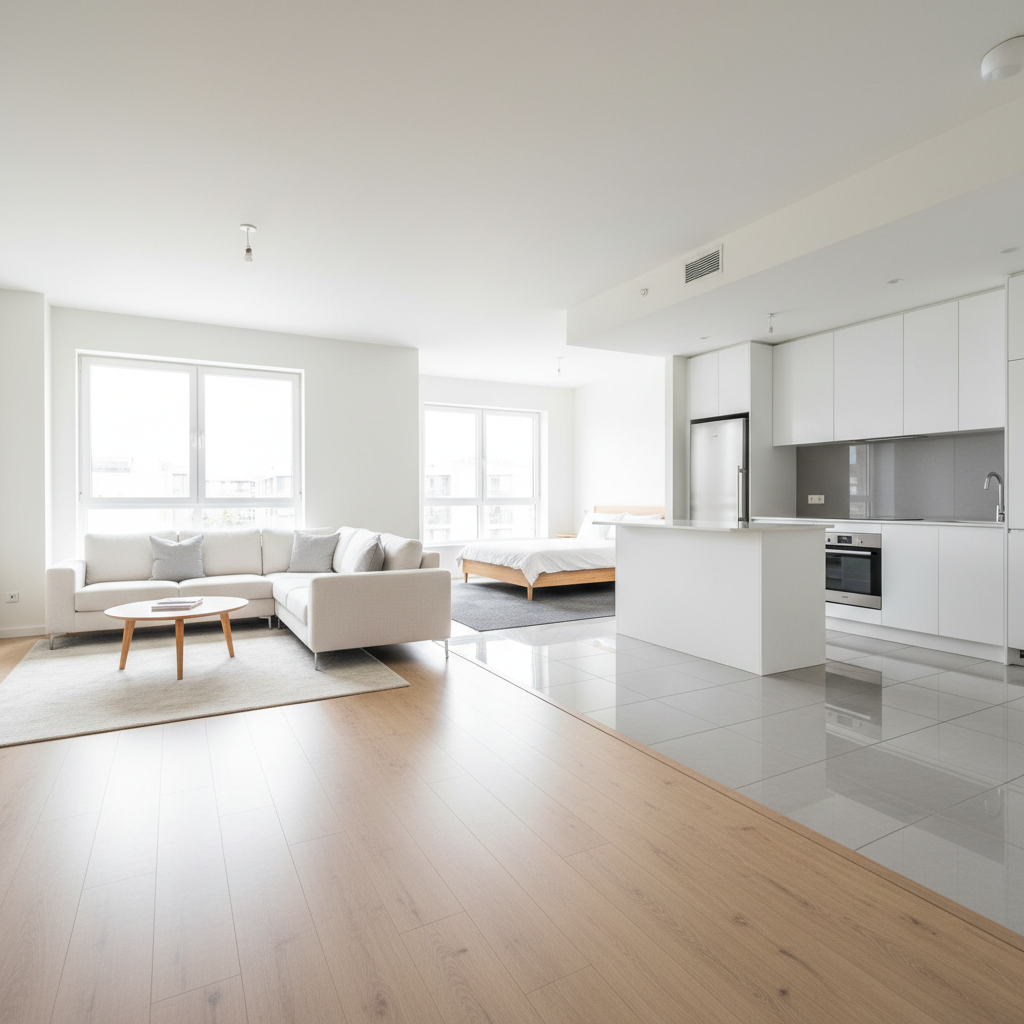
Flooring options for apartment renovations are the material systems—like luxury vinyl plank, carpet tile, tile, laminate, or engineered wood—chosen to balance durability, acoustics, moisture control, and install speed. For multi-unit turnovers in London, ON (805 Chelton Rd, N6M 0K9), we specify quick-install, standardized assemblies that minimize vacancy and fit your building’s performance rules.
By Mahal Concrete and Constructions • Last updated: June 2, 2026
Above-the-Fold: Hook + TOC
If you manage apartments, the best flooring strategy pairs fast-install products with long-wear finishes and solid acoustics. Use click-lock vinyl in living areas, porcelain in wet zones, and carpet tile for shared corridors. This mix cuts downtime, hits building rules, and keeps units move-in ready with predictable maintenance.
Here’s the thing—vacancy days add up. The right flooring plan shortens turns, protects against damage, and gives you a consistent “portfolio look.” This complete guide is tailored to multi-unit properties in and around London, Ontario.
- What flooring options fit apartment renovations and turnovers
- How to evaluate acoustics, slip resistance, and moisture tolerance
- Install speed benchmarks for quick, low-disruption projects
- Comparison table covering nine common materials
- Buying guide and spec checklist for property managers
- Case studies from Southwest Ontario portfolios
Use this as a field-ready reference during scopes, walk-throughs, and handovers. It aligns with our structured process: site assessment, detailed proposal and timeline, scheduled execution, and quality checks prior to handover.
Quick Summary
Choose luxury vinyl plank (LVP) for most living spaces, porcelain tile for kitchens and baths, and carpet tile for corridors. Target IIC 60+ underlayment where required, slip resistance ≥0.42 DCOF in wet areas, and wear layers ≥12 mil. This portfolio mix speeds installs and holds up to tenant traffic.
Apartment portfolios benefit from standardized, replacement-friendly systems. Typical daily productivity on turns: 600–900 sq ft/day for click-lock vinyl, 250–400 sq ft/day for porcelain, and 700–1,000 sq ft/day for carpet tile. These ranges help you stage trades and minimize vacancy windows.
What Are Flooring Options for Apartment Renovations?
Flooring options for apartment renovations are the vetted material-and-underlayment combinations used to meet building rules, speed of install, tenant durability, and maintenance targets. In multi-unit work, selections prioritize standardized finishes, acoustic ratings, water resistance, and quick change-outs at turnover.
In our experience on 500+ projects, the winning spec isn’t one product; it’s a system. That system includes the wear surface, an acoustic or moisture underlayment where needed, the prep method, and a finish or seal plan you can repeat across buildings.
Core elements you’re choosing
- Surface material: LVP/SPC, carpet tile, porcelain/ceramic, laminate, engineered wood, rubber, sealed concrete.
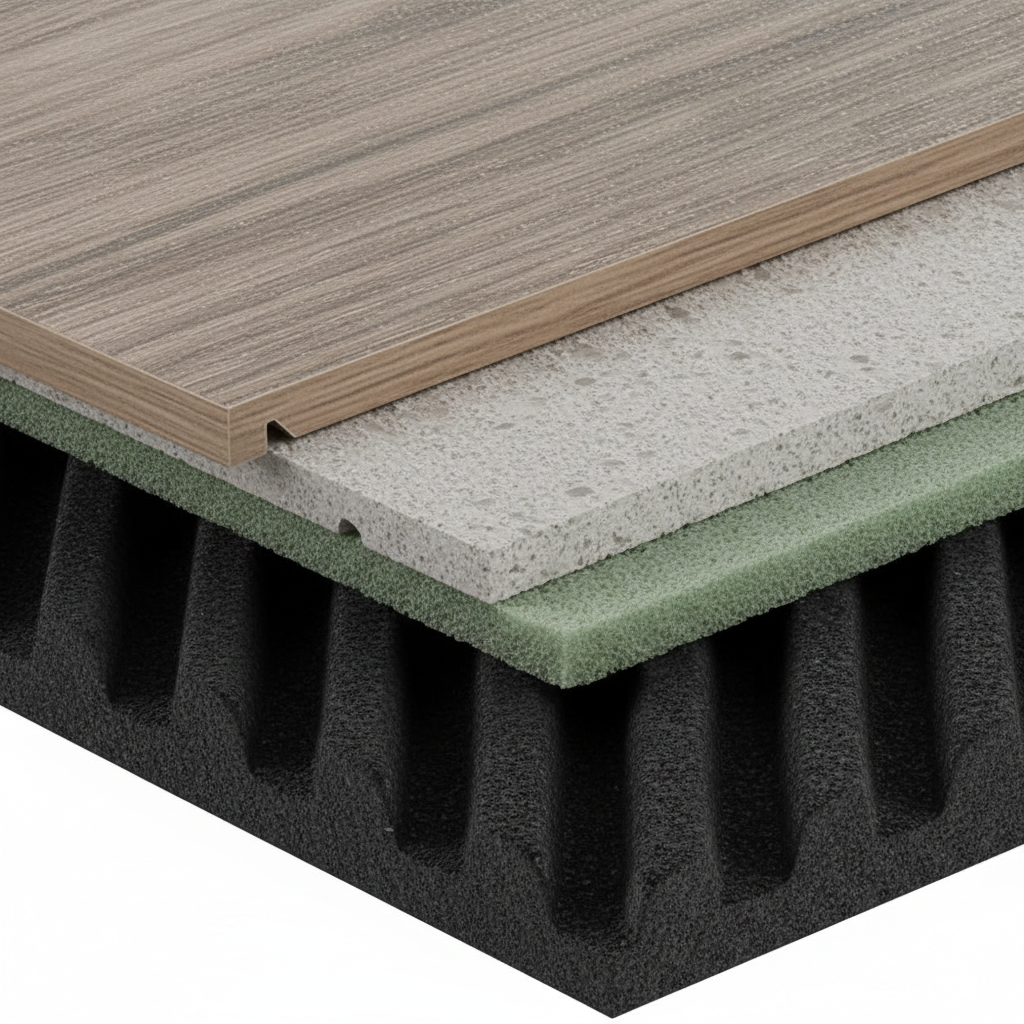
- Underlayment: Acoustic (IIC/STC targets), moisture barriers, or combo pads.
- Prep method: Self-leveling, patching, grinding, or skim coats for flatness.
- Finish plan: Sealers, trims, transitions, and base for a clean, durable edge.
Why it matters: each decision affects install speed, punch lists, and future swaps. Standardizing these details lets property managers forecast labor days per unit and reduce rework.
Why Flooring Choice Matters in Multi-Unit Buildings
Flooring drives downtime, call-backs, tenant satisfaction, and compliance. Pick assemblies that install fast, resist water where needed, meet IIC/STC rules, and clean easily. Portfolios that standardize specs typically cut turn timelines and reduce maintenance variability across buildings.
We see the same pain points: long vacancies, noisy units, and damage-prone finishes. The right materials reduce complaints and protect NOI. For example, aiming for IIC 60+ in wood-structure buildings curbs noise disputes. Using DCOF ≥0.42 on bath tiles reduces slip incidents. A 12–22 mil wear layer on vinyl helps withstand moves and pet traffic.
- Downtime impact: Faster systems (click-lock vinyl, carpet tile) compress schedules.
- Risk control: Water-tolerant assemblies in kitchens/baths prevent subfloor damage.
- Consistency: One spec catalog across buildings simplifies stocking and training.
- Tenant appeal: Neutral, modern finishes photograph well and show clean during tours.
Bottom line: flooring is a strategic lever. Choose once, apply many times, and make unit turnovers predictable.
How Flooring Selection Fits Your Turnover Workflow
Integrate flooring early: assess substrates, confirm acoustic and moisture needs, and pre-approve a standard palette. Sequence prep, install, and cure times with painting and millwork. This keeps trades moving and gets your unit to “move-in ready” with fewer punch items.
Our structured process in London, ON is simple but strict: site assessment and scope finalization, detailed proposal with timeline, scheduled execution, and quality checks prior to handover. Flooring touches each step.
- Assessment (Day 0–1): Measure, check levelness (aim ≤1/8 in over 6 ft), moisture readings on slabs, and existing assemblies.
- Spec confirmation (Day 1): Lock finishes: LVP wear layer, tile slip class, carpet tile fiber, base height.
- Prep (Day 2–3): Demo, patch, self-leveler as required. Typical cure: 12–24 hours.
- Install (Day 3–5): Productivity targets: vinyl 600–900 sq ft/day; tile 250–400; carpet tile 700–1,000.
- Finish (Day 5–6): Transitions, trims, silicone at wet edges; final clean and punch.
Coordinate painting and baseboard work to avoid trade conflicts. We typically paint walls first, set flooring, then install base and transitions to finish edges cleanly.
Types of Apartment Flooring Compared
Use vinyl plank/SPC for fast installs and water tolerance, porcelain tile for wet zones, carpet tile for corridors and bedrooms, and laminate or engineered wood where design demands. Match each to its best-use zone, then standardize SKUs to simplify maintenance and replacement.
| Material | Best use | Water tolerance | Acoustics | Install speed | Lifespan | Maintenance | Slip resistance | Notes |
|---|---|---|---|---|---|---|---|---|
| LVP / SPC | Living areas, bedrooms | High | Good with pad | Fast (600–900 sq ft/day) | 10–20 yrs | Low; damp mop | Moderate | Wear layer 12–22 mil; bevel edges hide seams |
| Porcelain tile | Kitchens, baths | Excellent | Needs underlayment | Moderate (250–400) | 20+ yrs | Low; grout care | High (DCOF ≥0.42) | Great for wet zones and radiant heat |
| Ceramic tile | Bath walls, some floors | Good | Needs underlayment | Moderate | 15–20 yrs | Low; grout care | High (textured) | Budget-friendly alternative to porcelain |
| Carpet tile | Corridors, bedrooms | Low | Very good | Fast (700–1,000) | 7–10 yrs | Moderate; replace tiles | Moderate | Modular for easy swap-outs |
| Laminate | Living areas | Moderate | Good with pad | Fast | 8–15 yrs | Low | Moderate | Watch for moisture; newer water-resistant SKUs exist |
| Engineered wood | Premium units | Moderate | Good with underlay | Moderate | 15–25 yrs | Moderate; refinish limited | Moderate | Elevates look; control humidity |
| Rubber | Gyms, playrooms | High | Excellent | Moderate | 10–15 yrs | Low | High | Great shock absorption; niche use |
| Sealed concrete | Basements, lofts | High | Low without mat | Fast once prepped | 20+ yrs | Low | Moderate | Very durable; can be cold |
| Sheet vinyl | Kitchens, laundry | High | Good | Fast | 10–15 yrs | Low | Moderate | Few seams; economical coverage |
Buying Guide: How to Choose for Your Building
Start with traffic patterns, moisture exposure, acoustic rules, and maintenance capacity. Set performance targets (IIC 60+, DCOF ≥0.42, wear layer ≥12 mil), then pick two or three SKUs per category to standardize. Pre-approve trims and base. This lets site teams order fast and swap damaged pieces quickly.
Decision checklist
- Structure type: Concrete vs. wood affects sound and moisture strategy.
- Moisture zones: Use porcelain or sheet vinyl in baths, kitchens, laundry.
- Acoustics: Target IIC 60+ with underlayment in wood-frame buildings.
- Durability: Choose LVP 12–22 mil for heavy move-ins and pets.
- Maintenance: Favor modular systems (carpet tile) for easy spot swaps.
- Design consistency: Neutral palettes show clean and photograph well.
Local considerations for London
- Freeze-thaw cycles and tracked salt can scuff entries; use durable mats and transition strips at unit doors.
- Seasonal humidity swings (winter heat vs. summer moisture) favor stable cores like SPC over solid wood.
- Portfolio scheduling spikes near academic move-in/out; pre-purchase SKUs and underlayment to avoid delays.
We standardize trims and base heights so paint and flooring meet cleanly across buildings. This reduces painter–installer conflicts and shaves hours off touch-ups per unit.
Best Practices for Fast, Low-Disruption Installs
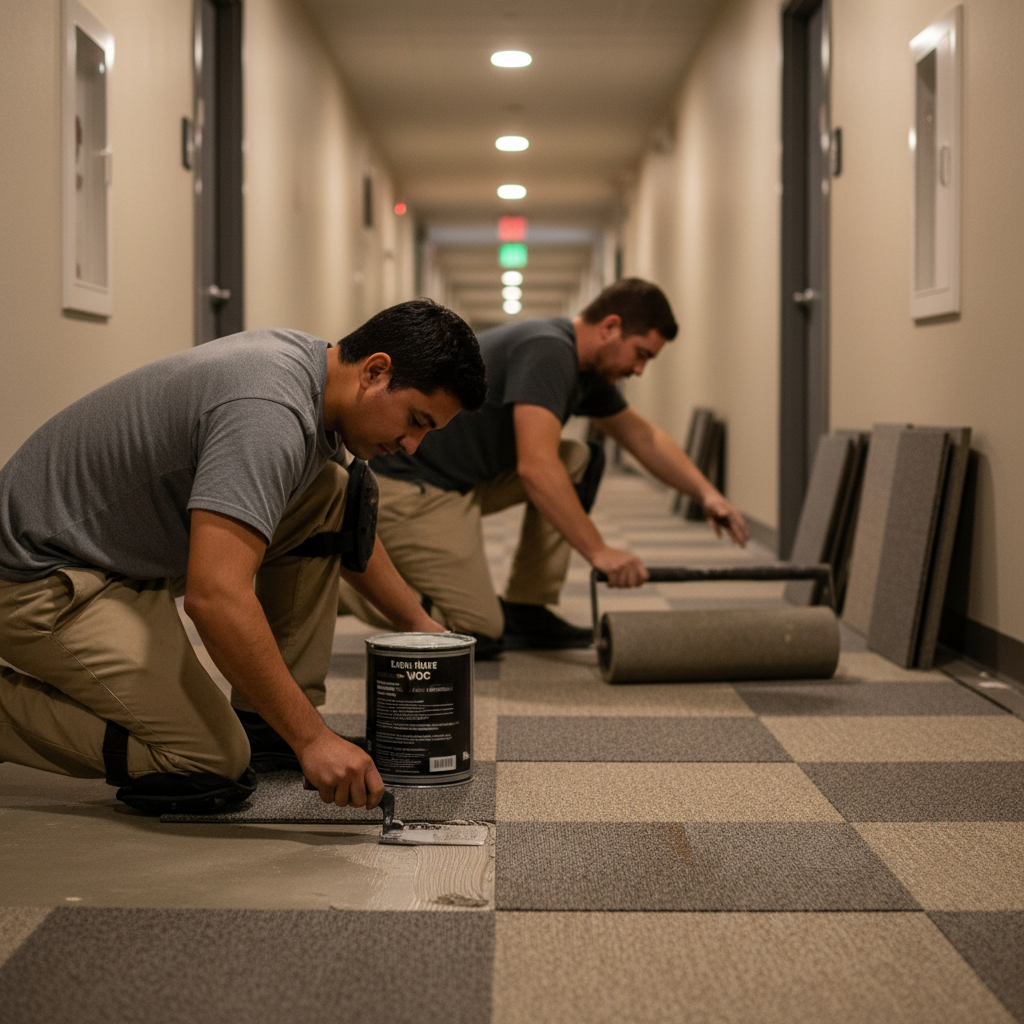
Stage materials, pre-cut transitions, and use dust-controlled prep. Paint-first, floor-second, base-last. Reserve quiet hours for occupied wings and keep clear egress paths. This sequencing cuts rework, keeps residents safe, and gets units show-ready faster.
- Noise windows: Limit loud grinding to daytime; communicate by-floor schedules.
- Dust control: HEPA vacs and plastic containments protect adjacent units.
- Adhesives and VOCs: Favor low-VOC products; ventilate during cure (often 24–48 hrs).
- Edge integrity: Silicone at wet edges; use metal transitions at doorways.
- Documentation: Photo each room pre/post; log IIC underlayment SKUs in turnover packet.
We maintain WSIB-compliant and fully insured practices while operating in occupied properties. That includes clear signage, tidy corridors, and end-of-day broom-clean conditions so residents can move through without hazards.
Tools and Resources for Property Managers
Equip your team with a standard spec sheet, moisture meter, straightedge, and a rolling 90-day SKU plan. Pair that with a quick “tenant notice” template and a punch-list checklist. These simple tools keep multi-unit turnovers organized and auditable.
Manager’s kit
- Spec catalog: 2–3 pre-approved SKUs per zone (LVP, tile, carpet tile).
- Moisture and flatness checks: 1/8 in over 6 ft as a working flatness target.
- Acoustic records: Keep IIC/STC data sheets for each underlayment.
- Turnover packet: Photos, SKUs, warranties, and cleaning instructions.
For a deeper overview of installation steps, see this flooring installation guide and a regional installation overview for added context. For refinishing scenarios on premium units, review this hardwood refinishing explainer.
Mid-article CTA: Need a spec you can roll out across 10, 50, or 100 units? Visit our homepage to request a standardized flooring package aligned to your building’s rules.
Case Studies and Real-World Examples
Standardizing on LVP in living areas, porcelain in wet zones, and carpet tile in corridors let three London-area properties cut average turn time while improving tenant reviews. Modular, replaceable elements meant damaged pieces were swapped in hours, not days, keeping units rentable.
London mid-rise: occupied wing turnover
- Challenge: Noise constraints and limited elevator time.
- Approach: Pre-staged LVP on pallets by floor; quiet prep methods; baseboards installed last.
- Result: 8 units updated in staggered phases with consistent finishes and minimal tenant impact.
Southwest Ontario garden complex: moisture-prone entries
- Challenge: Tracked-in water and salt at entries.
- Approach: SPC vinyl with sealed transitions; porcelain at kitchens; added entry mat wells.
- Result: Fewer subfloor issues and quicker clean-ups during move-outs.
Portfolio refresh: standardized SKUs across 4 buildings
- Challenge: Inventory confusion and variable install times.
- Approach: 2 SKUs per zone, shared trims, uniform base height, and shared punch templates.
- Result: Predictable scheduling and less rework across 40+ unit turns.
These patterns match our turnkey approach: assess, plan, execute, and verify. We close with a documented handover so maintenance teams know exactly what’s in each unit.
Budget and Lifecycle Planning (No Pricing)
Think total lifecycle: install speed, expected service life, and swap-out ease. Choose assemblies you can replace in sections and clean quickly. This approach protects NOI without discussing specific prices and keeps units rentable with short, planned outages.
- Service life targets: LVP 10–20 years; tile 20+; carpet tile 7–10 with modular swaps.
- Preventive care: Trim protectors at fridge ranges, felt pads on chair legs, and door mats.
- Spare inventory: Keep 2–5% overage per SKU on site for quick repairs.
When we develop proposals, we focus on value and predictability: standardized finishes, durable materials, and efficient timelines—never surprise numbers. For legal and policy details, see our terms and conditions and privacy policy.
Frequently Asked Questions
Property managers often ask about noise rules, water tolerance, and install times. Aim for IIC 60+ where required, use porcelain in wet zones, and schedule click-lock vinyl or carpet tile to compress turns. Keep a spare inventory so repairs take hours, not days.
What flooring holds up best to move-ins and pets?
Luxury vinyl plank with a 12–22 mil wear layer performs well in living areas and bedrooms. It resists scratches and minor water exposure, cleans fast, and installs quickly. Pair it with an acoustic pad when your building needs IIC compliance.
Should I use tile or vinyl in bathrooms?
Porcelain tile remains the safest bet for wet zones thanks to excellent water resistance and higher slip ratings. If transitions or speed are critical, sheet vinyl is a viable alternative. In both cases, seal edges and specify DCOF ≥0.42 for traction.
How do I meet sound requirements in wood-frame buildings?
Use an acoustic underlayment rated to hit IIC 60+ when paired with your chosen finish. Verify STC/IIC data for the full assembly, not just the pad. Floating vinyl with quality underlay or carpet tile systems usually meet targets without heavy build-up.
What’s the fastest flooring to install during a tight turnover?
Click-lock vinyl plank and carpet tile are typically quickest. Expect 600–900 sq ft/day for vinyl and 700–1,000 for carpet tile under normal site conditions. Pre-staging materials by floor and finishing baseboards last helps avoid rework.
Conclusion
Standardize a three-zone spec: LVP/SPC in living areas, porcelain or sheet vinyl in wet rooms, and carpet tile in corridors. Set acoustic and slip targets up front. This blueprint cuts vacancy, simplifies maintenance, and keeps apartments show-ready across your portfolio.
- Decide by zone: living, wet, corridor/bedroom.
- Lock targets: IIC 60+, DCOF ≥0.42, wear layer ≥12 mil.
- Sequence work: paint, floor, base, then trims and sealants.
- Document SKUs and keep 2–5% spares for quick fixes.
Ready to roll this out at scale? We specialize in multi-unit turnovers and standardized finishes. Start with a site assessment through our main site, and we’ll align specs to your building rules and timelines.
Related Articles in Our Apartment Series
Explore deeper apartment topics: turnover checklists, quality control before handover, and emergency stabilization protocols. These processes work together with flooring choices to keep units rentable and residents safe with minimal disruption.
- Full unit turnover checklist for apartment owners
- Quality checks before unit handover
- Emergency repair triage for multi-unit buildings
- Kitchen and bath upgrade playbooks for rentals
For company updates and more resources, you can also browse our latest post on the company blog. For cookies and site usage details, see the cookies policy.