
A multi-unit bathroom scope comparison
Compare Rental Bathroom Remodelling Scope Options
Short answer. Compare four scopes: targeted repair for an isolated defect, turnover refresh for functional finishes, partial remodel for one failing system or zone, and full reconfiguration when layout, building systems or broad conditions require coordinated work. Choose the smallest scope that resolves documented problems and meets code, resident, maintenance and portfolio standards. Confirm price and schedule only after a unit survey.

Choose the smallest scope that resolves documented conditions and meets building, resident and asset requirements.
Start with a rental bathroom condition survey
Do not select a renovation scope from age, appearance or a turnover deadline alone. Inspect finishes, fixtures, plumbing, electrical, ventilation, moisture, substrate, accessibility, fire-stopping interfaces and adjacent rooms. Review maintenance history, leaks, resident reports and prior work.
Separate visible symptoms from causes. A stained ceiling may reflect an old incident, active leak, condensation or another unit. Loose tile can involve adhesive, substrate or movement. Qualified investigation should determine what must be opened, tested or repaired.
Mahal Concrete and Construction’s current homepage lists Bathroom Remodelling and Full Unit Turnover for multi-unit properties. Treat that as service-category evidence only. Verify current qualifications, trade responsibility, territory, access procedures, scope, schedule, price and warranty for the building.
Compare four bathroom remodelling scope options
1. Targeted repair
Best fit: an isolated, understood defect where surrounding systems and finishes remain serviceable. Examples may include a localized fixture, seal, hardware, finish or access repair after qualified diagnosis. The trade-off is visual mismatch and the risk that a narrow scope misses a concealed cause.
2. Turnover refresh
Best fit: a vacant unit with functional systems but worn, inconsistent or difficult-to-maintain finishes. The scope can standardize selected fixtures, coating, hardware, caulking and minor repairs. It should not cover active moisture, unsafe wiring, failing ventilation or plumbing problems cosmetically.
3. Partial remodel
Best fit: one system or zone needs broader replacement—such as tub or shower surround, vanity area, floor or ventilation—while layout and other systems remain suitable. Interfaces matter: waterproofing, plumbing, electrical, wall and floor substrates may extend beyond the visible area.
4. Full reconfiguration
Best fit: layout, accessibility, widespread failure, building-system coordination or portfolio standards require a coordinated design. This option carries the most design, permit, resident, trade and unknown-condition work. It is not automatically better for every unit.
Use consistent scope selection criteria
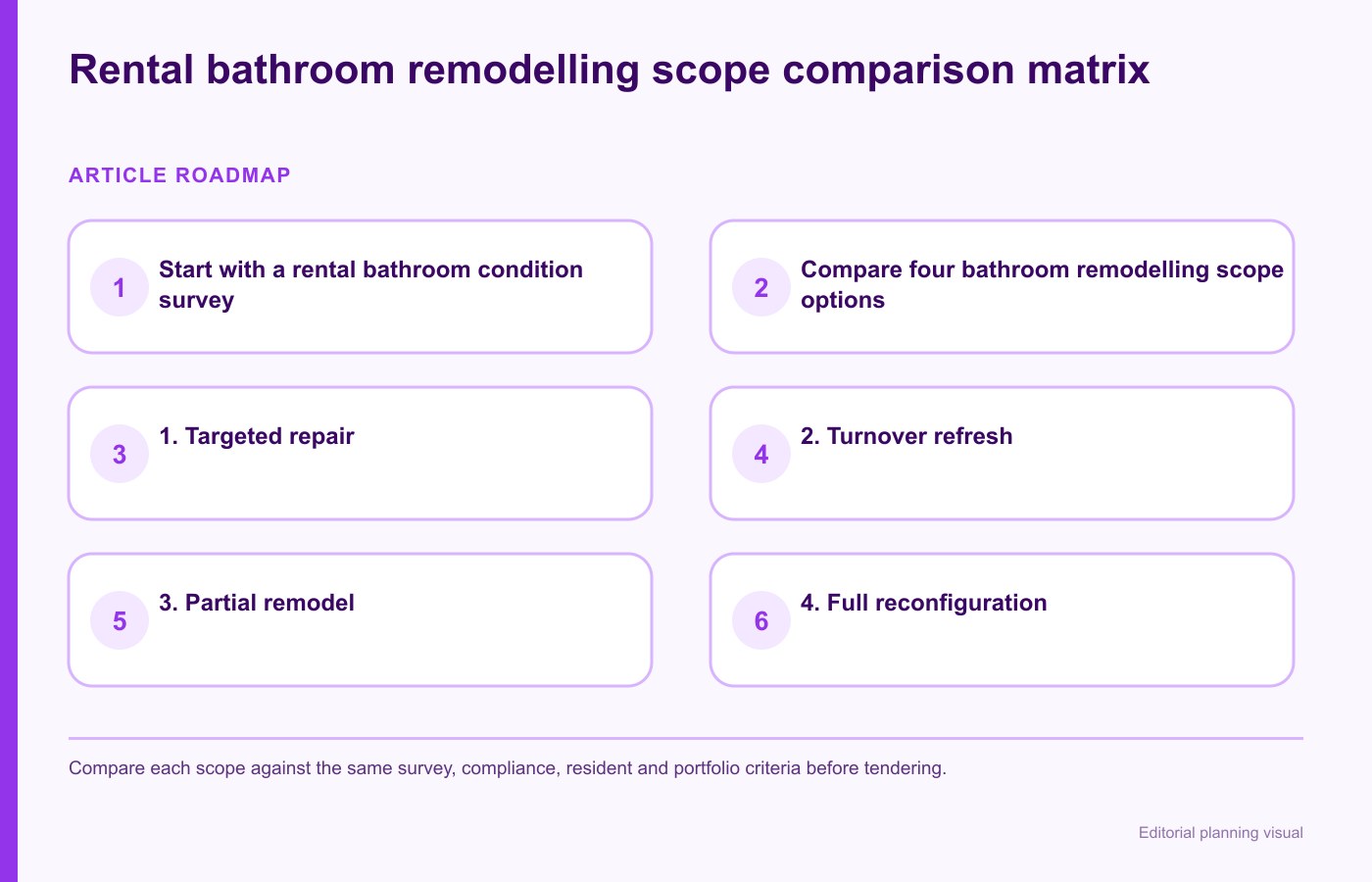
Compare each scope against the same survey, compliance, resident and portfolio criteria before tendering.
| Criterion | Repair or refresh signal | Partial or full remodel signal |
|---|---|---|
| Cause | Known, isolated and accessible | Concealed, repeated or system-wide |
| Moisture | No active source after investigation | Waterproofing, plumbing or substrate work required |
| Layout | Functional and maintainable | Access, clearance or operations require change |
| Systems | Plumbing, electrical and ventilation remain suitable | One or more systems need coordinated upgrade |
| Finish standard | Selective matching is acceptable | Portfolio consistency requires broader replacement |
| Occupancy | Short, contained work can be managed | Loss of bathroom use needs a resident plan |
| Compliance | Maintenance work within confirmed limits | Permit, design, accessibility or code review triggered |
Use a qualified designer or trade to define which work falls into each scope. A comparison article cannot classify an actual bathroom without evidence.
Plan occupied and vacant bathroom work differently
Vacant-unit work may allow broader access, but turnover pressure should not replace investigation, permits or curing requirements. Occupied-unit work needs legal entry notice, resident communication, privacy, dust and noise controls, temporary bathroom access, daily cleanup, secure tools and an emergency contact.
Ontario’s renting rights guidance provides general information about landlord and tenant responsibilities and entry. Obtain current legal advice for the property and circumstances; this article does not establish a notice period or right of entry.
Ask residents about accessibility and accommodation needs through the property manager’s lawful process. Do not publish personal information. Define who communicates schedule changes, water shutoffs, access, complaints and restoration.
Coordinate bathroom systems and compliance
A bathroom connects plumbing, drainage, waterproofing, electrical, ventilation, structure, fire separations and finishes. Changing a fixture location can affect several trades. Removing finishes can expose hazardous materials or prior unpermitted work. Assign design, testing and correction responsibilities before demolition.
Ontario publishes the current Building Code and guidance. The adopted requirements, permits and professional responsibilities depend on the building, municipality and scope. Confirm them with the applicable authority and qualified professionals.
Standardize maintainable finishes across units only after confirming compatibility, availability, cleaning, repair and replacement. Keep approved product data and spare-material rules. Do not claim a finish is durable, waterproof or code-compliant from marketing alone.
Build a comparable bathroom renovation tender
Give each bidder the same survey, photos, drawings and unit list. Separate base work, unit-specific allowances and owner options. A useful scope identifies:
- Unit, occupancy and access constraints
- Protection, isolation, dust, noise and cleanup
- Demolition limits and hazardous-material responsibility
- Plumbing, electrical, ventilation and waterproofing scope
- Fixtures, finishes, product data and alternates
- Permits, inspections and professional design
- Resident notices, shutoffs and temporary access
- Unknown-condition and change-order process
- Testing, deficiencies, closeout and warranties
- Price, schedule assumptions, payment and cancellation
Mahal’s current services page describes site assessment followed by scope and proposal planning. Ask how that process applies to the actual building, who performs regulated work and what evidence will be provided.
Common rental bathroom scope mistakes
- Selecting a refresh before diagnosing moisture or ventilation
- Using one scope for every unit without surveys
- Painting over a condition that needs repair
- Ignoring plumbing, electrical and fire-stopping interfaces
- Starting demolition before hazardous-material and permit review
- Assuming vacant units eliminate schedule and curing constraints
- Failing to plan bathroom access for occupied units
- Comparing bids with different fixtures, protection and closeout
- Using price or vacancy promises instead of a complete scope
Frequently asked questions
Should every rental bathroom get a full remodel?
No. The right scope follows condition, cause, system, resident and portfolio evidence. A targeted repair or refresh may fit a serviceable bathroom; broader work may be needed for system or layout issues.
Can a bathroom be renovated while a tenant remains?
Sometimes, but legal entry, bathroom access, accommodation, safety, noise, dust, water shutoff and schedule require a property-specific plan.
How much does rental bathroom remodelling cost?
Cost depends on condition, scope, access, trades, fixtures, permits, hazardous materials and building logistics. Obtain comparable survey-based proposals rather than a generic range.
Does bathroom remodelling require a permit?
It depends on the location and work. Confirm with the municipality and qualified professionals before construction.
Request a rental bathroom scope assessment
Prepare the unit list, occupancy, maintenance history, condition photos, portfolio standard, access limits and desired decision. Include recurring defects and previous repair records so the assessment can separate isolated symptoms from broader building conditions. Then use Mahal Concrete and Construction’s current contact page to request an assessment. Before engagement, verify qualifications, insurance, trade responsibilities, permits, resident plan, scope, price, schedule, changes, closeout and warranty in writing.