
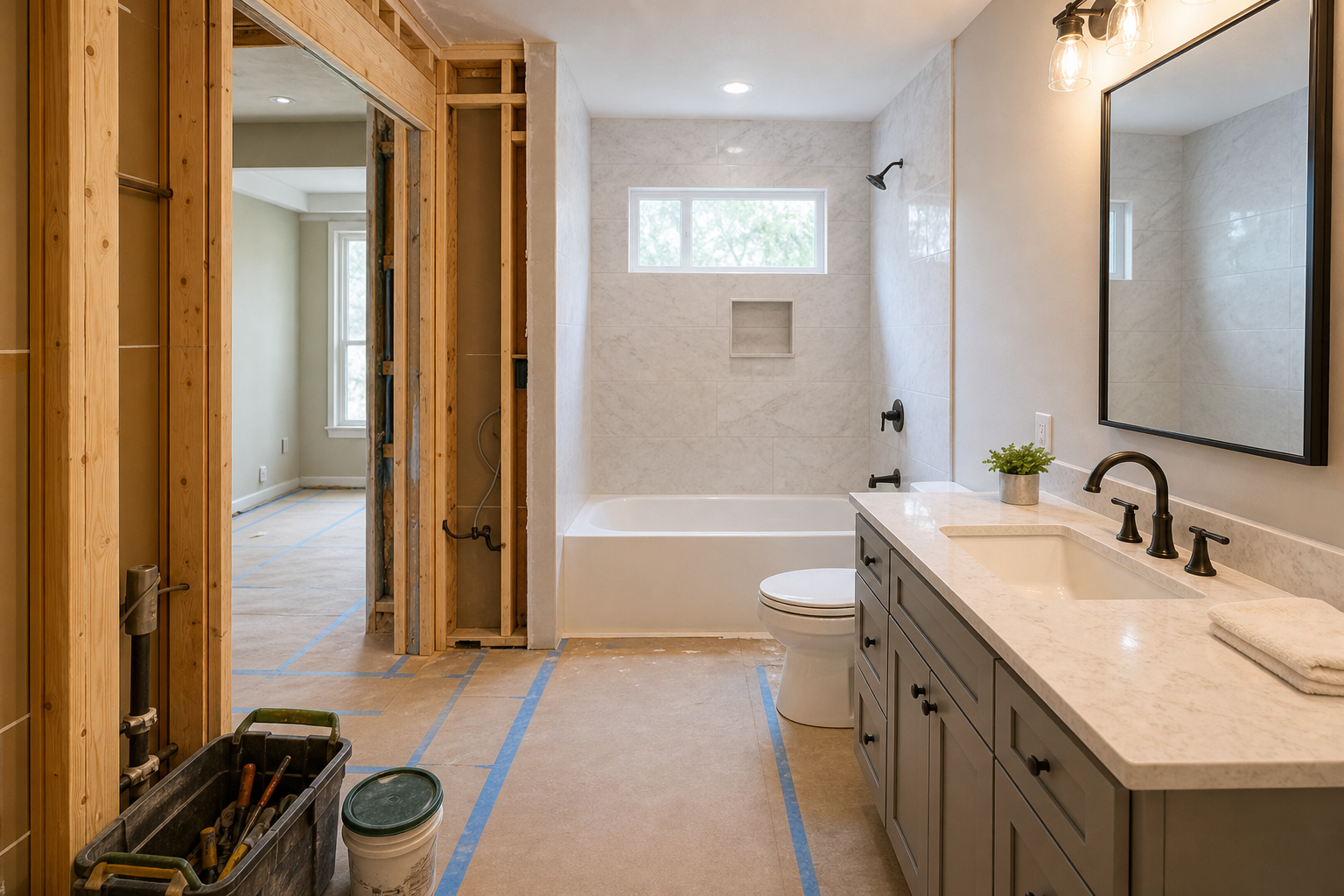
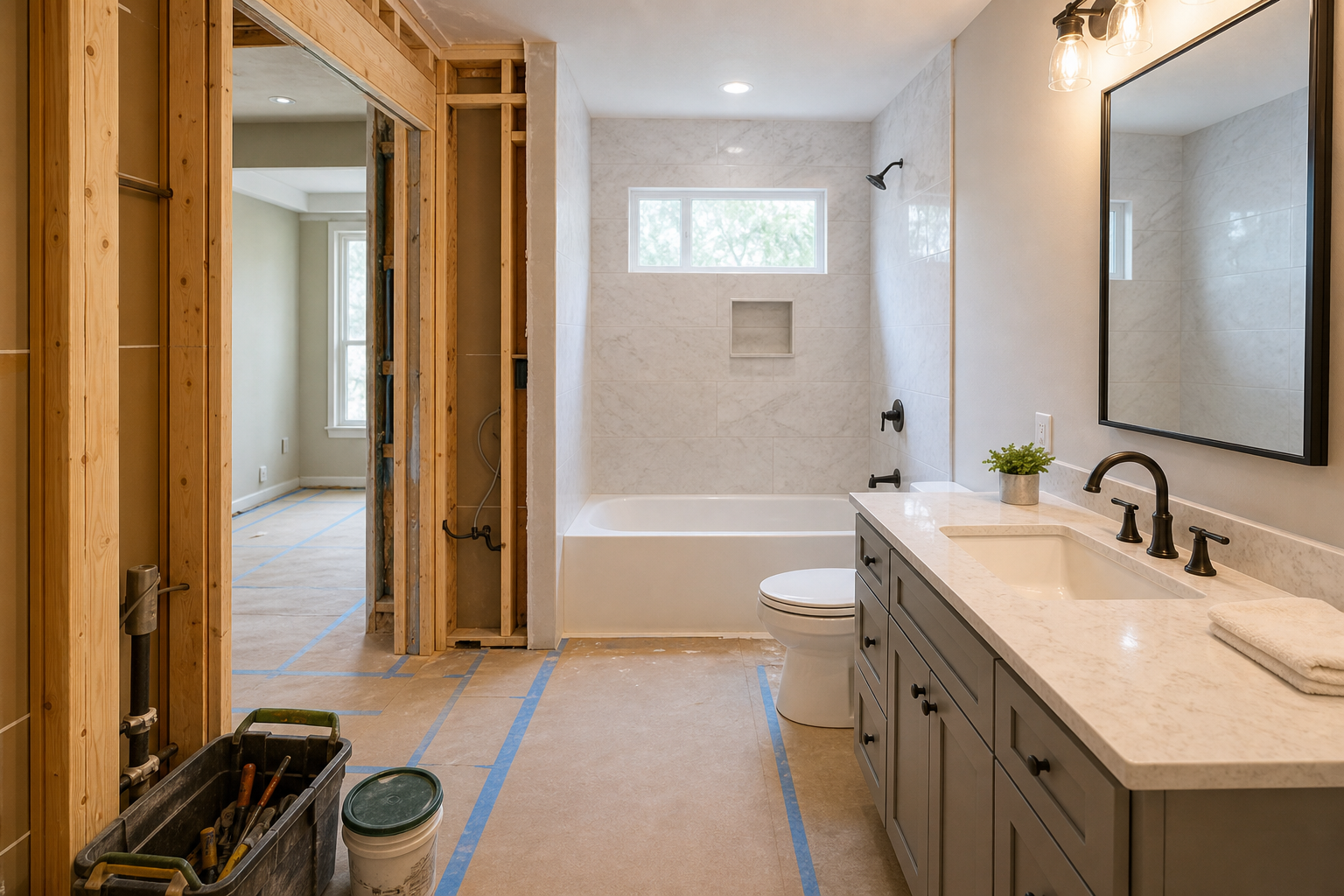
Quick bathroom renovation timeline for occupied rental units
This guide gives property managers, landlords, and apartment owners three ready-to-use timeline templates for rental bathroom projects, plus tenant-friendly phasing, contract and inspection stop points, and a move-in-ready handover checklist to reduce vacancy and disruption. Mahal Concrete and Constructions specialises in multi-unit projects and operates with WSIB-compliant crews and structured delivery, which we reference throughout for site protocols and safety measures Mahal Concrete and Constructions.
What this timeline covers and how to pick the right template
This article uses three project classes so you can match scope to vacancy tolerance and budget. Use the cosmetic refresh when you must reopen quickly. Use the mid-range update when moderate demolition and tile work are required. Use the full gut remodel for layout changes, new plumbing, or complete replacements.
- Cosmetic refresh: paint, fixture swaps, regrout, small repairs, finished in a long weekend to a few days.
- Mid-range update: partial demolition, new vanity and tile, plumbing adjustments, typical duration one to three weeks.
- Full gut remodel: strip to studs, rough-ins, tile and finishes, commonly six weeks though scope can extend this range.
Industry sources show a full bathroom renovation commonly runs around six weeks when planned and permitted properly, while cosmetic refreshes close in days and extensive remodels can take longer depending on structural or permit work Canada Construction Network, HanoDecor. Planning with those expectations reduces surprises and idle days.
Three timeline templates you can apply to rental units
Cosmetic refresh: long weekend to 3 days
Use this when surfaces and systems are sound and you only need cosmetic updating. Work is staged to allow fast turnarounds and same-week handover.
- Day 0 Site assessment, tenant notice delivered and access arranged, material delivery staged outside the unit.
- Day 1 Light demolition, surface preparation, patching, paint primer and fixtures removed. Stop point: owner approves any discovered repairs beyond scope.
- Day 2 Painting, fixture installation, new mirror and accessories, regrouting if required. Stop point: visual walkthrough with property manager for minor touchups.
- Day 3 Final clean, test fixtures, handover and sign-off. Furnish move-in-ready checklist and capture photos for the record.
A cosmetic refresh is fastest when materials are in stock and the crew uses standardized finishes. For templates and small-unit examples see phased approaches used in multi-unit work Bathroom Remodels in London: Cut Vacancies in 2026.
Mid-range update: 1 to 3 weeks
Choose this when you replace a vanity, update floor and wall tile, or adjust plumbing locations slightly. Budget buffer days for drying, tile bonding, and inspections.
- Week 0 Site assessment, scope finalization, order long-lead items, and tenant access notice. Stop point: fixture and tile choices confirmed by owner.
- Week 1 Demo and selective removal, rough plumbing and electrical adjustments, install waterproofing or backer board. Stop point: plumbing rough-in signed off internally before tile work.
- Week 2 Tile installation, grout, vanity and fixture installation, allow tile bonding and grout cure time. Stop point: grout cure and waterproofing inspection where required.
- Week 3 Final finishes, touchups, full clean, test all systems, and handover. Allow one buffer day for punch-list items.
Plan procurement so tiles and vanities arrive before demo. Industry guides note tile and drywall drying times and fixture lead times as common drivers of schedule variability Fin Home Blog, Soaque.
Full gut remodel: typical 6 to 8 week template with decision branches
Full gut projects require staging, coordinated trades, and planned inspection windows. Expect a baseline of six weeks but plan contingency for structural work, permits, and special-order fixtures.
- Week 0 planning Full site assessment, permit review, material selections, and critical path planning. Stop point: signed proposal and permit applications if required.
- Weeks 1 to 2 demolition and rough-in Strip to studs, remove finishes, repair or alter framing, run new plumbing and electrical. Stop point: plumbing and electrical rough-in inspection or documented sign-off prior to concealment.
- Weeks 3 to 4 Install backer boards, underfloor work if needed, tile substrate, and start tile installation. Stop point: waterproofing and membrane inspection where applicable.
- Week 5 Grout cure, install cabinetry, countertops and fixtures, paint ceilings and trim. Stop point: fixtures delivery and owner approvals for final hardware.
- Week 6 Final tests, commissioning, full clean, and handover with punch-list closure. Allow buffer weeks for permit delays or unexpected structural repairs.
Full remodel schedules must include contingency days for permit turnaround and supplier delays. Guides that break remodels into phases highlight these conditional branches and explain that projects can extend beyond six weeks when scope includes structural or permit-dependent elements Canada Construction Network, HanoDecor.
Tenant-friendly phasing and scheduling strategies for occupied units
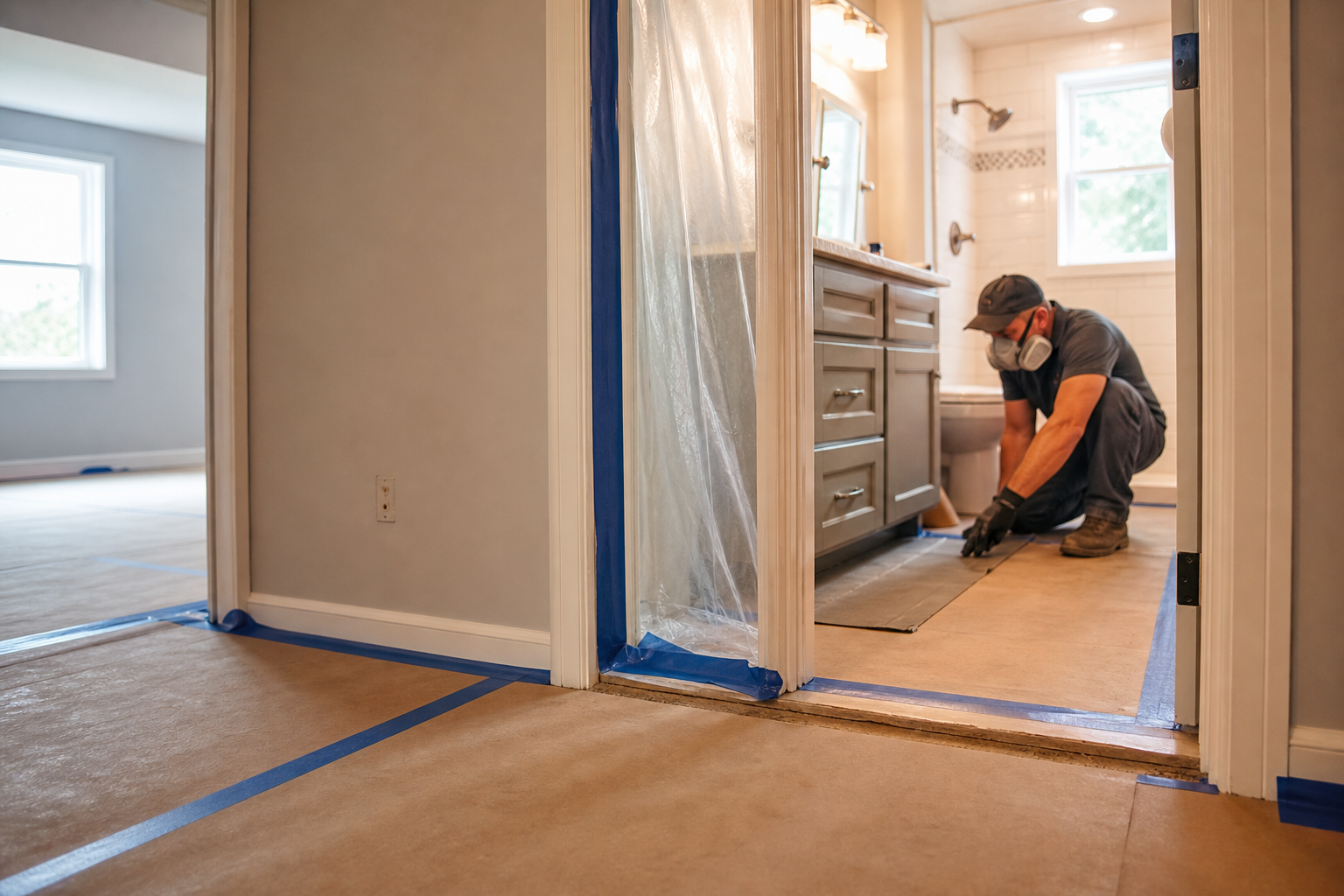
Minimise disruption with clear windows, containment and daily clean protocols. Mahal operates with WSIB-compliant crews and phased access to respect residents and building safety Mahal Concrete and Constructions.
- Schedule noisy work on weekdays between 9:00 and 16:00 unless the building rules require different windows.
- Use physical containment, negative air when dust is present, and daily trash removal to keep corridors clean.
- Apply a phased access plan so only units being worked on are affected, and avoid simultaneous work that blocks egress or building services.
- Provide tenants a short script and notice. Sample script: “Work will occur on [dates] from [hours]. We will contain dust, keep hallways clear, and return the unit to move-in-ready condition each day.”
Clear, written tenant notices and an agreed access plan prevent misunderstandings and reduce complaints. Internal scheduling routines and standardized finishes also shorten decision time and avoid delays.
Decision points, client sign-offs and inspection stop points
Every renovation timeline must identify where work must pause for approvals. Schedule these sign-offs into the project plan to avoid idle days.
- Scope confirmation and finish sign-off before ordering long-lead items.
- Plumbing and electrical rough-in approvals before concealing walls.
- Waterproofing or membrane inspection before tile installation.
- Tile bonding and grout cure checks prior to installing cabinetry and fixtures.
- Final building inspections and any required municipal permits where applicable.
Industry guidance notes that inspection scheduling and cure times are frequent causes of delay, so book inspections early and build cure-time buffers into the schedule Fin Home Blog.
Material lead times, procurement checklist and staging tips
Fast turnarounds depend on preordered materials and a staging plan. Use a procurement checklist and central storage for multi-unit projects to keep crews moving.
- Confirm finish schedule and order long-lead items immediately after scope sign-off.
- Verify supplier ETA and arrange delivery to a secure staging area near the property.
- Keep a kit of replacement fixtures, flexible couplings, and standard grout to handle on-site surprises.
- Label and sequence deliveries so the crew can pick items in install order.
For design and selection guidance consider manufacturer installation advice and curated inspiration resources when specifying materials Bathroom Renovation Ideas: Create a Space You Love. Purchasing decisions and accurate lead times are among the highest impact levers for reducing vacancy.
Fast-track repairs and emergency pathway for occupied properties
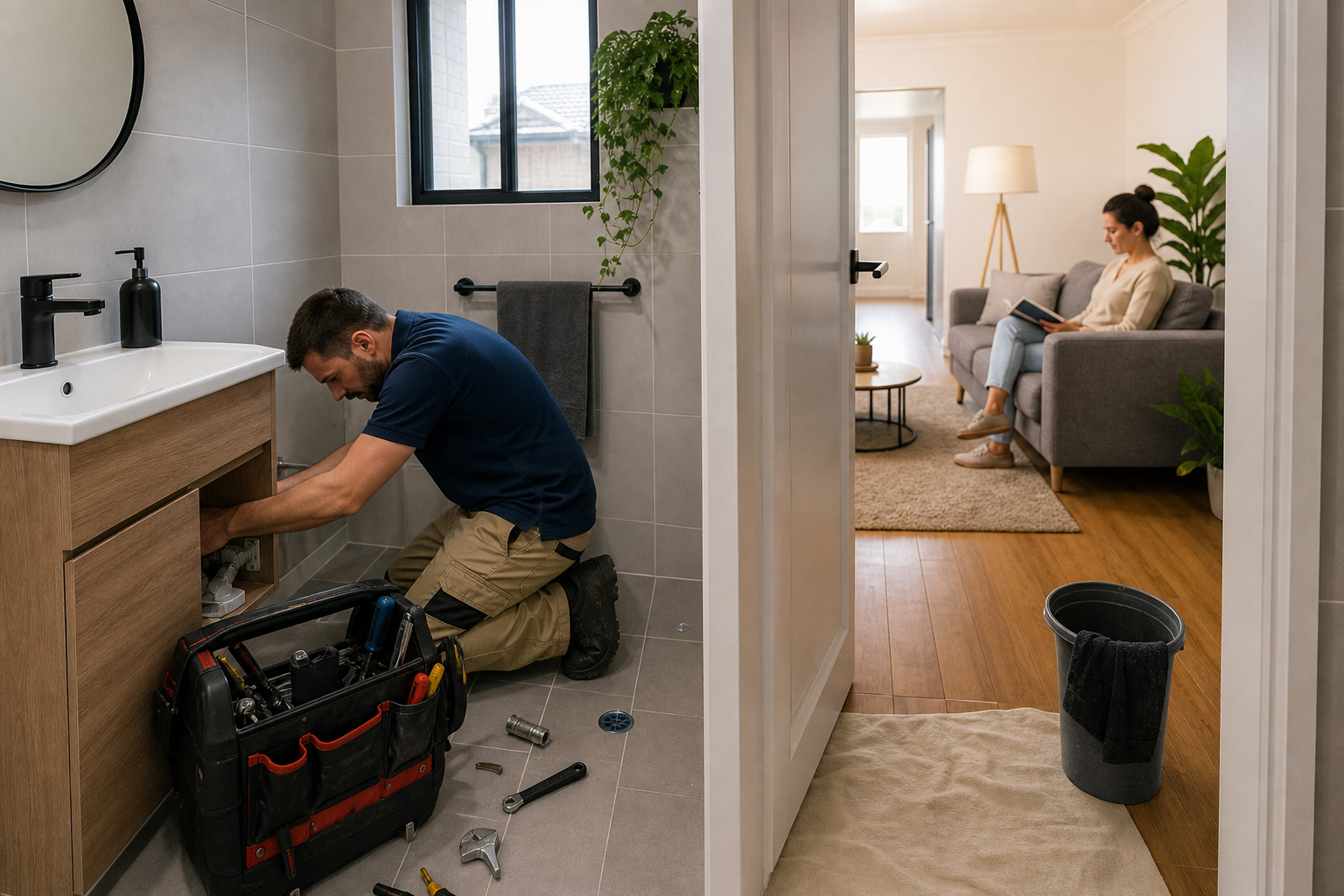
Not all issues require a remodel. Mahal offers emergency stabilization and fast repairs for leaks, fixture failures, and safety hazards with a triage approach: stabilize, isolate, repair, and restore. Fast-track repairs are completed in one to three days when parts are available and structural work is not required Mahal Concrete and Constructions.
Use the emergency pathway when the issue threatens habitability. Use the planned remodel pathway when you need long-term upgrades or layout changes.
Move-in-ready handover checklist and common objections with responses
Use this handover checklist to shorten vacancy and provide a consistent move-in standard.
- Fixture operation verified, no leaks, hot and cold water tested, and drains clear.
- Tile and grout clean, missing grout or chips addressed, and grout cure documented where applicable.
- Paint touchups complete, trim and caulking finished, and ventilation working.
- Electrical switches and GFCIs tested and labelled.
- Final clean and odour free, photos taken, and sign-off form completed with property manager.
Common objections include colour or hardware choices and dust concerns. Pre-empt these by confirming finishes in writing and committing to a daily clean and containment protocol. If the tenant requests additional upgrades, present a short decision window and an estimated delay so the owner can decide quickly.
How Mahal can help and next steps for property managers
Mahal Concrete and Constructions specialises in multi-unit and apartment projects, operates WSIB-compliant crews, and follows a structured, end-to-end process from site assessment to final handover, which helps reduce vacancy and maintain safety in occupied buildings Mahal Concrete and Constructions. To request a site assessment or a timeline proposal contact Mahal online or by phone, and ask for a multi-unit rollout plan with tenant phasing and procurement timelines.
Frequently asked questions
How long does each type of bathroom renovation take in a rental unit
Cosmetic refreshes can finish in a long weekend to three days. Mid-range updates commonly run one to three weeks. Full gut remodels typically take about six weeks but can extend for permits or structural work. These ranges are consistent with industry timelines when planning and procurement are handled early Canada Construction Network, HanoDecor.
Can you renovate a bathroom while the unit is occupied and keep tenants safe
Yes, with phased access, containment, daily clean protocols, sealed dust barriers and WSIB-compliant crews. Clarify work windows in writing and isolate noisy or dusty operations to reduce exposure and complaints. Mahal uses tenant-friendly phasing and safety-first procedures for occupied properties Mahal Concrete and Constructions.
What are the most common causes of delay and how can property managers avoid them
Common delays are long-lead fixtures, inspection scheduling, unexpected structural repairs and tile or grout cure times. Avoid delays by confirming finishes early, ordering long-lead items at sign-off, booking inspections immediately, and adding measured buffer days for curing.
When do I need permits or inspections for a bathroom renovation in Ontario
Permits and inspections depend on scope. Plumbing and electrical changes, structural modifications or relocated drainage usually require municipal permits. Book inspections early and plan for their lead times; if in doubt consult your municipality or your contractor during the site assessment. Industry guides advise building permit checks during the planning phase to avoid schedule slips Fin Home Blog.
How can I shorten vacancy time and ensure a fast move-in handover
Standardize finishes, order all long-lead items at scope sign-off, use a move-in-ready handover checklist, schedule buffer days strategically, and use experienced multi-unit crews who run repeatable processes. Standardization and a clear procurement plan are the highest impact steps to shorten vacancy.
Ready to plan a fast, low-disruption bathroom rollout across your property portfolio? Contact Mahal Concrete and Constructions to request a site assessment and an adaptive timeline proposal for your units.