
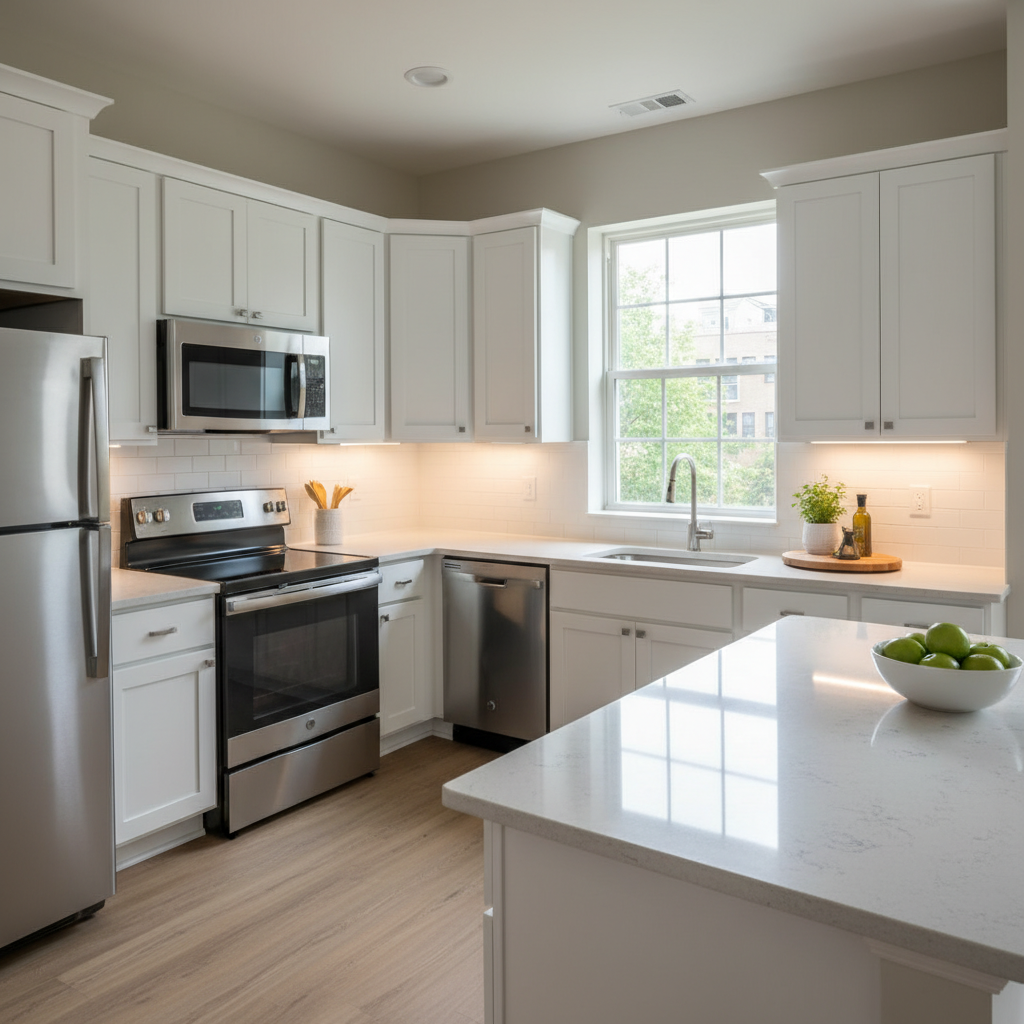
Kitchen renovation cost for apartment units is driven by scope, building rules, logistics, and finish choices. From our base at 805 Chelton Rd in London, ON, Mahal Concrete and Constructions helps property managers control total investment with standardized scopes, durable materials, and schedule discipline that shortens vacancy downtime.
By Mahal Concrete and Constructions · Last updated: 2026-06-02
Overview and table of contents
Apartment kitchen costs are best managed by clarifying scope, sequencing trades, and standardizing finishes across units. This guide shows how multi-unit constraints, permits, logistics, and material choices influence outcomes—and how to control them with a repeatable process that protects timelines and tenant experience.
This complete guide is written for property managers, landlords, and apartment owners coordinating multiple units at once. You’ll learn how to frame scope, avoid rework, and align stakeholders so kitchens turn over faster and hold up longer under daily use.
- What “kitchen renovation cost for apartment units” really includes
- Why planning matters in multi-unit buildings (London, ON context)
- How drivers like permits, access, and finishes affect outcomes
- Scope options: refresh, partial, and full rebuild
- Best practices to reduce vacancy periods and change orders
- Tools, templates, and checklists for repeatable results
- Real examples from Southwest Ontario portfolios
What is kitchen renovation cost for apartment units?
Kitchen renovation cost for apartment units refers to the total project investment to refresh or rebuild a rental kitchen. It spans scoping, permits, labor, protection, materials, building coordination, inspections, cleanup, and handover. In multi-unit settings, consistent standards and sequencing minimize disruption while improving durability and tenant appeal.
When property teams ask about “cost,” they’re really asking about trade-offs. Scope breadth changes labor hours and coordination intensity. Finish specifications change lead times and durability. Building rules determine working windows, material staging, and waste handling. Each factor adds up to time on site and, ultimately, unit downtime.
- Scope elements: demolition, patch/paint, flooring and tiling, cabinet replacement or refinishing, countertop installation, plumbing adjustments, backsplash, lighting, and appliance hookups.
- Coordination: elevator bookings, loading access, quiet hours, protection of corridors and common areas, and signoffs.
- Quality assurance: photo documentation, punch lists, and final walk-throughs before turnover.
In our experience delivering 500+ projects, clarity up front prevents downstream friction. Standardizing SKUs, finishes, and layout choices across a portfolio reduces decisions per unit by 30–50% and keeps the sequence predictable. Cure times still matter: thinset needs 24–48 hours, paint should rest 24 hours between coats, and silicone needs 12–24 hours before heavy use.
Why cost planning matters for apartment kitchens
Cost planning aligns scope, finishes, permits, and logistics before work begins. When stakeholders agree on standards, crews move faster, vendors ship on time, and units return to market sooner—improving NOI while reducing maintenance calls over the next leasing cycles.
Here’s the thing: in multi-unit buildings, inefficiency multiplies. A missed elevator booking can idle a crew for hours. A delayed countertop template can pause plumbing reconnections for days. Clear playbooks compress these gaps.
- Portfolio standards cut decision time. One cabinet line, two door styles, three pulls—documented once and reused across buildings.
- Lead-time visibility avoids schedule stalls. Stock cabinets can be ready in days; custom options can stretch to weeks.
- Tenant-friendly windows maintain goodwill. Quiet work hours and dust control reduce complaints and supports occupancy targets.
- Safety and compliance are non-negotiable. WSIB-compliant, fully insured crews keep risk controlled in occupied properties.
Sequencing is where timelines win or slip. Demo often completes within 1–2 days for typical apartments. Surface prep and patching add 1–3 days, depending on wall condition. Template-to-install cycles for countertops typically require a 3–10 day window after base cabinets set. These blocks are predictable when you pre-book trades and measure early.
How kitchen cost drivers work in multi-unit buildings
The main kitchen cost drivers are scope, finish selections, building logistics, and compliance. In apartments, elevator access, staging space, and quiet-hour rules influence labor productivity; meanwhile, finish durability and lead times determine how long each unit stays off-market.
From London to Chatham, we see patterns repeat. Coordinated access boosts throughput by double digits because crews aren’t waiting on keys or loading docks. Protection of hallways with runners and dust walls reduces cleanup by hours per unit. And consistent SKUs let purchasing batch orders for better availability.
- Scope breadth: light refresh vs. partial upgrade vs. full rebuild dictates trade count and onsite duration.
- Material choices: durable vinyl plank resists moisture and installs quickly; porcelain tile is rugged but slower to set and grout.
- Cabinet strategy: replacement is straightforward once leveled; refinishing saves materials but can add cure time and odor control needs.
- Countertops: laminate installs same day; stone needs templating after base set and often returns 3–7 days later.
- Building logistics: booked elevators, bin access, and working hours gate daily throughput.
- Compliance: permitting, insurance certs, and safety orientations keep projects audit-ready and uninterrupted.
Trade sequencing matters too. A typical flow is demolition → rough adjustments → cabinet set → template (if needed) → countertop install → backsplash → plumbing/electrical trims → final paint and caulk → punch. Where buildings enforce quiet hours, loud tasks are scheduled at the start of the day to keep the remainder productive.

Types of kitchen renovation scopes for apartments
Apartment kitchens group into three scopes: refresh (cosmetic tune-ups), partial upgrade (select systems and surfaces), and full rebuild (layout and systems). Choosing the smallest scope that solves complaints saves time, reduces vacancy, and focuses spend where renters notice it.
Right-sizing scope is the fastest way to manage kitchen renovation cost for apartment units without sacrificing quality. Not every unit needs a reset. Many respond well to cabinet door swaps, a new countertop, lighting upgrades, and a clean, bright paint scheme. Others—especially with layout issues or chronic moisture problems—benefit from full replacement and waterproofing details.
| Scope level | Typical inclusions | Typical timeline window | Coordination complexity | When it’s right |
|---|---|---|---|---|
| Refresh | Paint/punch, hardware swap, lighting, minor wall repair, deep clean | 3–5 working days including cure times | Low | Surfaces are sound; goals are speed and cleanliness |
| Partial upgrade | New countertop and sink, backsplash, LVP flooring, select cabinet replacements | 7–12 working days including template-return cycles | Moderate | Cabinet boxes OK; renters value brighter, easier-to-clean finishes |
| Full rebuild | Cabinet replacement, layout tweaks, tile or LVP, lighting plan, plumbing adjustments | 15–25 working days depending on inspections | High | Chronic failures, poor storage, or failing surfaces |
For portfolios, standards keep choices simple. We often specify one durable cabinet finish, one pull style, two countertop options, and two flooring systems (tile for wet-prone areas; LVP elsewhere). With that kit, most units can be assessed and scheduled within a single site visit.
Best practices to control investment and reduce vacancy
Standardize finishes, lock the sequence, and pre-order long-lead items. Batch similar units, book elevators early, and document every step. This reduces change orders, shortens downtime, and creates predictable handovers property teams can trust.
Portfolio standards that renters notice
- Durable LVP in kitchens for water resistance and quick install; it cuts subfloor prep hours relative to brittle legacy sheet goods.
- LED task lighting under cabinets improves safety and perceived cleanliness; many leases mention lighting as a top-3 satisfaction item.
- Backsplash at splash zones reduces repaint cycles; grout with stain resistance extends the clean look between tenants.
Sequence discipline
- Confirm measurements, then template immediately after cabinet set to start the countertop clock the same day.
- Schedule loud work first within allowed hours; follow with quiet tasks so days stay productive.
- Hold a 15–30 minute daily standup with the superintendent to clear blockers and confirm the next day’s tasks.
Documentation and QA
- Photograph every wall pre- and post-demo; it speeds dispute resolution and punch completion by days per floor.
- SKU sheets for cabinets, pulls, counters, and flooring keep purchasing aligned even when staff rotate buildings.
- Final walkthrough checklist (fixtures, caulk lines, door alignment, anti-tip brackets, GFCI tests) ensures consistent handovers.
For deeper planning context on sequencing and lead times, see this project management overview with a helpful timeline perspective at renovation project management timeline. While every building is unique, the principle stands: compress idle time, not work quality.
Related reading on targeting the right scope is available in our practical post about trade-offs between a full remodel and targeted upgrades. Explore options in our kitchen remodel vs. cabinet replacement guide.
Tools and resources for predictable results
Use checklists, SKU standards, and unit-by-unit photo logs. Track elevator bookings, bin access, and quiet hours. Centralize scopes and approvals so superintendents and vendors work from the same playbook across properties.
Turnover toolkit (practical)
- Scope definition template: unit photos, measured drawings, noted defects, and a yes/no matrix for refresh/partial/full.
- Standards binder: cabinet line, pull, hinge, sink, faucet, flooring SKUs; acceptable alternates; installation notes.
- Logistics sheet: elevator windows, loading dock, key pickup, bin permits, and quiet hours—all in one page per building.
- Punch and handover form: GFCI and shutoff tests, appliance checks, caulk/grout inspection, and paint touch-ups signed by supervisor.
Digital coordination
- Photo logs per unit reduce back-and-forth during approvals and punch. Aim for 20–30 photos from demo to handover.
- Shared calendars for elevator slots and template/installation windows keep everyone on the same clock.
- Material trackers with expected ship dates prevent “surprise” idle days on site.
For a high-level primer on renovation planning that complements our apartment focus, see this general guide to how to plan a kitchen renovation. Pair it with your building’s rules to tailor the steps.
If you’re new to our process, learn more about our company values, safety compliance, and portfolio support on the Mahal Concrete and Constructions home page.
Case studies and examples (Southwest Ontario)
Standardized scopes and disciplined sequencing shorten vacancy periods and improve renter satisfaction. These brief scenarios from London-area portfolios illustrate how refreshes, partial upgrades, and full rebuilds are matched to unit conditions for faster, cleaner handovers.
Example 1: 12-unit refresh program in London
- Challenge: Aging paint, yellowed lighting, and worn counters diminished perceived cleanliness.
- Approach: LED under-cabinet lights, fresh paint, counter-only swap, and hardware update using preapproved SKUs.
- Result: Turnovers slotted back-to-back; thinset-free counters eliminated cure delays and reduced odor concerns.
Example 2: Partial upgrades across two floors
- Challenge: Sound cabinet boxes but recurring surface damage near cooking zones.
- Approach: Door-and-drawer fronts replacement, stain-resistant backsplash, LVP to handle moisture at entries.
- Result: Fewer mid-lease paint calls; easy-to-clean finishes rated highly by incoming tenants during showings.
Example 3: Full rebuild to correct layout and storage
- Challenge: Poor work triangle and limited prep space impeded livability.
- Approach: Cabinet re-layout with added drawers, task lighting plan, GFCI upgrades, and tile in wet-prone areas.
- Result: Smoother viewing-to-lease conversions due to immediate, visible functional gains.
In our experience, batching similar scopes (e.g., all refreshes first, then all partial upgrades) raises crew productivity because tools and materials stay consistent. Where buildings restrict delivery windows, cabinet staging one day prior keeps day-one demolition instantly productive.
Local considerations for London
- Coordinate quiet-hour work with building management in London to schedule noisy tasks early and reserve afternoons for paint, lighting, and trim.
- Expect seasonal delivery swings; winter weather can affect supplier lead times. Pre-order cabinets and flooring to hold your place in the queue.
- Use tenant-friendly signage on floors under renovation to guide foot traffic and reduce dust complaints during corridor moves.
Need an apartment kitchen game plan? We standardize scopes, lock timelines, and coordinate with management to minimize disruption. Request a portfolio assessment with Mahal Concrete and Constructions.
Permits, compliance, and building rules
Permits, insurance, and building policies shape schedules and site conduct. Clarify permit needs early, provide insurance certificates, and document dust control and protection plans. Crews work faster—and safer—when expectations are written and approved.
- Permit triggers: layout changes, new circuits, and substantial plumbing adjustments may require permits and inspections.
- Safety: WSIB-compliant teams with site orientations reduce incidents and keep projects uninterrupted.
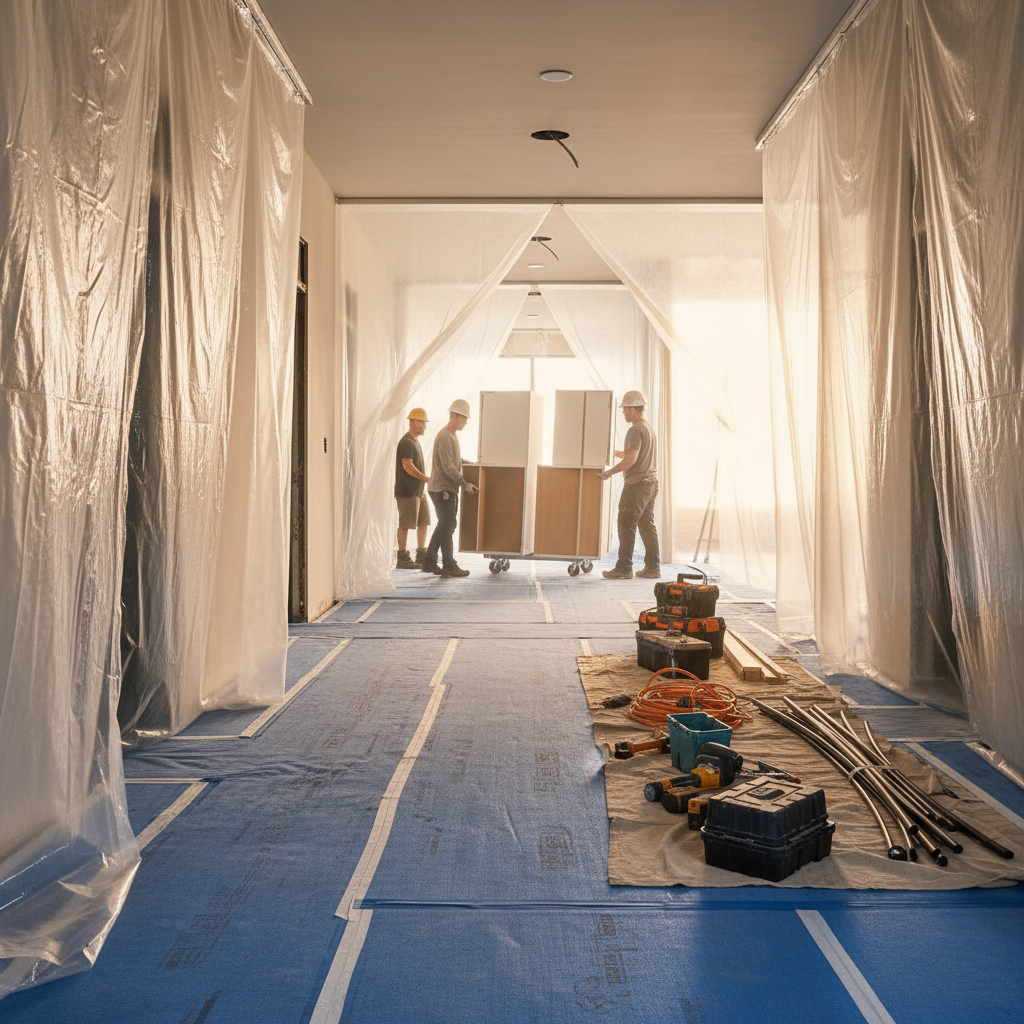
- Protection: dust walls, corridor runners, and daily cleanup maintain resident satisfaction and avoid remediation later.
Permitting windows vary by municipality, but internal planning can proceed in parallel. Standard drawings and a repeatable specification package mean fewer revisions and faster approvals across multiple buildings.
For a general overview of renovation challenges common to vertical living, this primer on condo renovation challenges and solutions highlights logistics that echo apartment rules—useful when tailoring your project calendar.
How our multi-unit kitchen process works
Our end-to-end program moves from site assessment and scope finalization to a detailed proposal and schedule, then controlled execution and rigorous quality checks. The goal is consistent results across units with minimal disruption to residents.
Our four-phase approach
- Site assessment and scope finalization: document conditions, confirm measurements, align on refresh/partial/full.
- Detailed proposal and timeline: standards applied; logistics sheet issued; elevator and staging windows pre-booked.
- Scheduled execution: tenant-friendly hours; daily site cleanliness; safety-first operations in occupied buildings.
- Quality check and handover: punch, photo documentation, and superintendent signoff for repeatable results.
This is the same framework we apply to full unit turnovers, bathroom remodels, flooring and tiling, and paint and repairs. Consistency across trades is what enables multi-property support without reinventing the wheel per address.
Common mistakes to avoid
Over-scoping, late measurements, and ad hoc finishes drive delays. Set standards, measure before demo, and order long-lead items early. Protect corridors and plan for inspections to avoid surprise downtime.
- Over-scoping: adopting full rebuilds where a standards-based partial upgrade would meet renter expectations.
- Late countertop templating: waiting days after cabinet set extends plumbing reconnects unnecessarily.
- Unapproved alternates: last-minute substitutions complicate maintenance and warranty handling across properties.
- Skipping QA photos: missing documentation slows dispute resolution and prolongs punch lists.
Key scheduling metrics property teams should track
Track demolition duration, template-return intervals, cure times, and punch closure rates. These numbers reveal bottlenecks, enable better vendor commitments, and forecast when each unit returns to market.
- Demo and haul: typically 1–2 days for standard apartments with proper bin access.
- Surface prep: 1–3 days depending on wall condition and floor prep needs.
- Template to install: 3–10 days for many stone vendors once bases are set.
- Backsplash and grout: 1–2 days with 24–48 hour cure windows.
- Punch closure: target 24–72 hours after substantial completion.
These benchmarks are starting points. The value is in measuring your building’s actual performance so schedules sharpen with each floor completed.
Frequently asked questions
These concise answers address planning, sequencing, and apartment logistics—without pricing—so you can shape reliable scopes and timelines for multi-unit kitchens.
Do I need permits for an apartment kitchen renovation?
Permits are typically required when you change layouts, add circuits, or make substantial plumbing adjustments. Cosmetic work like paint or hardware often proceeds without permits. Confirm rules with building management and your contractor so inspections are built into the schedule.
How do you renovate with minimal disruption to residents?
We schedule loud work early within allowed hours, use dust barriers and corridor protection, and keep daily cleanups. Clear signage and a dedicated superintendent reduce complaints. This approach works well in occupied buildings where quiet hours and access windows are enforced.
What sequence should trades follow for an apartment kitchen?
A reliable sequence is demolition, rough adjustments, cabinet set, countertop template and install, backsplash, flooring (if applicable), then plumbing and electrical trims, followed by paint and caulk. Final punch and QA documents close the project for handover.
Which finishes last longer in rental kitchens?
Look for moisture-resistant LVP or porcelain tile for floors, stain-resistant grout, and quartz-look counters or high-pressure laminate with durable edges. LED task lighting and simple, wipeable cabinet profiles help units stay cleaner between tenancies.
How do I compare contractor proposals without focusing on price?
Compare scope detail, finish standards, schedule commitments, safety compliance, and QA documentation. Ask about elevator bookings, staging plans, and photo logs. A thorough plan with standards usually delivers fewer delays and a more consistent renter experience.
Conclusion and next steps
Managing kitchen renovation cost for apartment units is about right-sizing scope, locking standards, and sequencing trades with discipline. With a clear playbook, you reduce change orders, shorten vacancy, and create consistent, renter-ready kitchens across properties.
- Key takeaways:
- Define refresh, partial, or full rebuild—don’t overshoot the goal.
- Standardize SKUs to speed purchasing and maintenance.
- Book elevators, bins, and inspections before demo.
- Track template-return and cure times to forecast handovers.
- Action steps:
- Walk three representative units and classify them by scope today.
- Draft a one-page standards sheet for cabinets, counters, flooring, and lighting.
- Set a shared calendar for elevator windows and vendor milestones.
- Schedule a portfolio assessment with our WSIB-compliant team.
Ready to standardize your next program? Partner with a London-based team built for multi-unit execution. Explore our services on the Mahal Concrete and Constructions site or meet the team behind our methods on our author profile page.
Related topics for apartment turnovers
Apartment success is portfolio work. Pair kitchen standards with bathroom upgrades, flooring and tiling programs, and paint and repairs to deliver consistent, move-in-ready units with fewer maintenance calls and faster lease-ups.
If you’re weighing whether to replace cabinets or target fronts and hardware, our remodel vs. cabinet replacement guide outlines where selective upgrades deliver strong renter impact.