
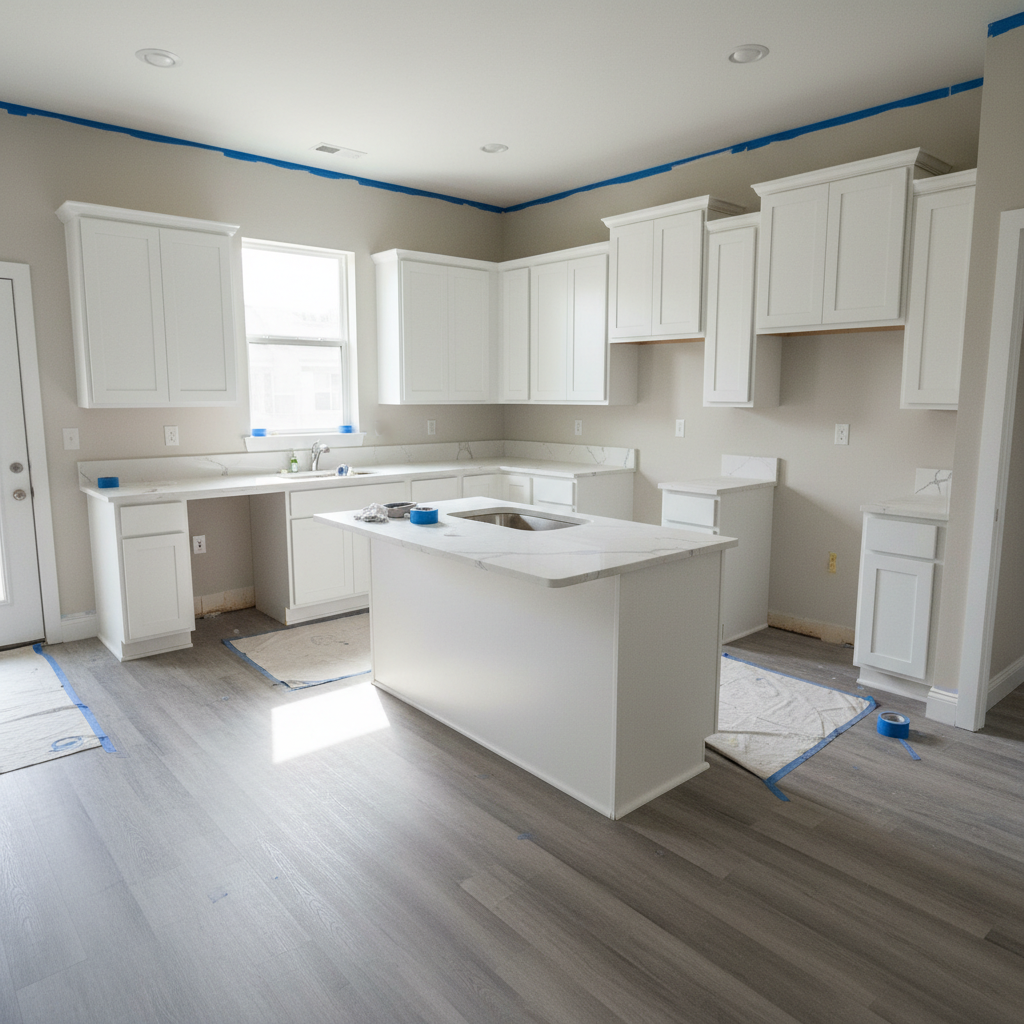
Kitchen remodeling checklist for apartment turnovers refers to a structured, step-by-step scope that readies a rental kitchen to re-lease quickly with standardized finishes and documented quality control. From our base at 805 Chelton Rd in London, ON, Mahal Concrete and Constructions uses this checklist to shorten vacancy periods and deliver move-in-ready units at scale.
By Mahal Concrete and Constructions • Last updated: 2026-06-02
Summary: At a Glance
Use this apartment kitchen turnover checklist to plan scope, schedule, and QA. It covers assessment, protection, demolition, rough-ins, cabinets, countertops, tile, flooring, paint, fixture installs, cleanup, and final sign-off—organized to minimize disruption and standardize finishes across multiple units.
- Who it’s for: Property managers, landlords, and apartment owners handling multi-unit turnovers.
- What you’ll get: A 12-phase checklist, material specs, a buying guide, and QA templates.
- Why it matters: Kitchens drive leasing decisions; consistent finishes reduce rework and speed re-leasing.
- Use with: Your make-ready plan and our turnover delays guide to avoid schedule drift.
- Related expertise: See our kitchen remodel vs. cabinet replacement insights for scope decisions.
What Is a Kitchen Remodeling Checklist for Apartment Turnovers?
A kitchen remodeling checklist for apartment turnovers is a standardized sequence of tasks and inspections that make a rental kitchen safe, durable, and move-in-ready. It aligns trades, narrows choices to pre-approved finishes, and documents quality so multiple units reach the same standard—fast.
In our experience across 500+ projects, a clear checklist keeps labor coordinated and finish choices predictable. That steadies timelines in occupied properties and lowers punch-list churn after handover.
- Core purpose: Consistency, speed, and safety across many units.
- Scope control: Pre-select SKUs and finishes so superintendents don’t waste days re-quoting variants.
- Documentation: Photos and sign-offs at phase gates reduce dispute risk.
- Portfolio value: Standardized kitchens simplify future maintenance and turn costs.
For a portfolio view, align your unit checklist with your building’s make-ready standards and your procurement catalog. That’s how multi-property owners maintain uniform results without micromanaging each suite.
Why This Checklist Matters for Property Managers
Turnover kitchens affect leasing speed, inspection outcomes, and long-term maintenance. A repeatable checklist reduces vacancy days, prevents mid-project change orders, and protects resident experience in occupied buildings through planned containment and communication.
Here’s the thing: kitchens concentrate the most trades. Without a structured flow, rough-ins collide with cabinet install or paint, and schedules slip. We’ve found that standardized finishes plus a locked sequence cut rework and callbacks significantly across a multi-unit program.
- Leasing impact: Clean, bright kitchens lift perceived value and reduce concessions.
- Fewer surprises: Phase gates reveal hidden issues before they derail the last week.
- Tenant-friendly: Planned hours, dust control, and quiet windows respect neighbors.
- Portfolio ops: One playbook scales from 5 to 50+ units with predictable results.
Want to keep your schedule tight? Pair this checklist with the strategies in our turnover mistakes to avoid.
How a Turnover Kitchen Remodel Works (Step-by-Step)
Sequence drives speed. Move from assessment and protection to demolition, rough trades, cabinets, countertops, backsplash, flooring, paint, fixtures, cleanup, and QA sign-off. Lock the order, assign owners, and document pass/fail at each phase to prevent rework.
- Site assessment + scope lock: Verify measurements, appliance specs, vent path, shutoffs, and panel capacity. Confirm finish schedule and any ADA/safety requirements.
- Protection + containment: Cover floors, zip walls if needed, establish negative air for dust control, and protect adjacent suites.
- Demolition: Remove cabinets, counters, backsplash, worn flooring, and obsolete fixtures. Cap plumbing and safe-out electrical.
- Rough plumbing/electrical: Set supply/drain locations, GFCI/ARC fault protection, dedicated circuits per appliance specs, and venting path.
- Cabinet installation: Plumb, level, and anchor boxes. Shim carefully to support stone or solid-surface tops.
- Countertops: Template and set tops. Seal seams, verify overhang, and protect for next trades.
- Backsplash/tile: Install substrate, set tile with consistent reveals, grout, and seal where specified.
- Flooring: Install LVP or tile; maintain expansion gaps; undercut casing where appropriate.
- Paint + surface restoration: Prime repairs, apply standardized color and sheen, and back-roll for consistent texture.
- Fixtures + hardware: Set sink, faucet, garbage disposal (if specified), pulls/knobs, and lighting.
- Appliances: Slide-in range, fridge, dishwasher, and hood per manufacturer clearances; verify anti-tip and water hook-ups.
- Cleanup + QA handover: White-glove clean, photos, and manager sign-off against this checklist.
Throughout, maintain a daily log and photos. Consistency of documentation makes multi-unit programs scalable and auditable.

Turnover Options Compared: Refresh vs. Partial vs. Full Gut
Choose the lightest scope that achieves your target lease profile. A refresh swaps surfaces and paint; a partial remodel replaces cabinets or tops; a full gut resets layout and services. Match scope to property class and hold period, then standardize SKUs.
| Option | Scope | Disruption level | Best for | Risk if skipped |
|---|---|---|---|---|
| Refresh | Paint, hardware, LVP, backsplash overlay, lighting upgrades | Low | Short vacancies, tight timelines | Old cabinets limit appeal; hidden plumbing/electrical remain |
| Partial remodel | New cabinets or countertops, updated plumbing/electrical at fixtures | Medium | Class B/C uplift, mid-term holds | Mixed finishes if SKUs aren’t standardized |
| Full gut | Layout change, new services, all finishes reset | High | Major repositioning, longevity goals | Longer downtime if sequencing slips |
Not sure which path fits? Our team breaks down pros and trade impacts in this remodel vs. cabinet replacement overview.
Buying Guide: Materials, Finishes, and Appliances That Last
Standardize to durable, easy-to-source SKUs. Favor shaker cabinets, solid-core drawers, LVP with commercial wear layer, quartz-look tops, ceramic backsplash tile, LED lighting, and ENERGY STAR appliances. Lock colorways and hardware families to simplify future replacements.
Cabinets and hardware
- Boxes: Plywood or high-quality particle core with reinforced hang rails; soft-close hinges as standard.
- Fronts: Durable painted shaker; light neutrals photograph well and resist trend fatigue.
- Hardware: Brushed-nickel pulls/knobs across the portfolio to unify look and simplify reorders.
Surfaces
- Countertops: Solid surface or quartz-look for stain resistance; maintain 1.5″ minimum overhangs at edges.
- Backsplash: 3×6 or 4×12 ceramic tile; keep grout lines consistent and sealed at wet zones.
- Flooring: LVP with a commercial wear layer; color-match thresholds for clean transitions.
Lighting, plumbing, and appliances
- Lighting: LED flush mounts and under-cabinet task lights; match temperature across fixtures.
- Plumbing: Single-handle faucets with braided supply lines and quarter-turn shutoffs.
- Appliances: ENERGY STAR-rated where available; verify electrical and water requirements against panel capacity and shutoffs.
For planning inspiration on appliance and layout coordination, see these practical primers on renovation planning from planning a kitchen renovation and a before/after walkthrough of kitchen remodels.
Best Practices: Keep Multi-Unit Programs on Rails
Pick once, use everywhere. Standardize SKUs, enforce a fixed sequence, and document every phase. Protect neighbors with dust control and quiet hours. Capture photos, signatures, and punch-list closure before moving crews to the next unit.
- Scope discipline: Lock selections before demolition; change requests move to a backlog, not midstream.
- Trade choreography: One owner per phase; no overlaps that force rework (e.g., tile before paint touch-ups).
- Quality gates: Use a 15-point QA at cabinets, counters, tile, flooring, and paint before fixtures.
- Safety/compliance: Maintain insured, WSIB-compliant crews; daily toolbox talks in occupied buildings.
- Documentation: Photos and sign-offs live in the turnover packet for each unit.
As a multi-unit specialist, we built our process to minimize disruption while keeping schedules predictable for property managers.
Tools and Resources for Faster Turnovers
Equip teams with a shared checklist, phase-gate QA forms, and a single-source spec sheet. Add a photo log and a daily site diary. Centralizing documents keeps programs auditable and speeds manager approvals.
- 12-phase turnover checklist: The sequence in this guide, printable per unit.
- Spec sheet: Cabinet line, pulls, LVP SKU, grout color, paint color and sheen, lighting model numbers.
- QA forms: 15-point checks at cabinets, tops, tile, floors, paint, and fixtures.
- Photo log: Before, during, and after angles; include shutoff locations and panel labels.
- Daily diary: Crew on site, progress, issues, and next steps signed by superintendent.
Need help setting up program docs? Start a conversation on our company site and we’ll share templates tailored to multi-unit buildings.

Local Kitchen Turnover Planning in London, ON
For London, ON apartments, schedule turnover kitchens around colder months and move-in waves, and coordinate building rules for quiet hours and elevator bookings. A local, WSIB-compliant crew keeps occupied properties safe while standardizing finishes across suites.
Working across London and Southwest Ontario, we align building access policies, quiet windows, and elevator timing with our 12-phase sequence. That protects neighbors while keeping the job on schedule.
Local considerations for London
- Plan noisy work and material deliveries outside peak resident times and coordinate elevator bookings with building staff.
- Sequence painting and flooring during drier, less humid periods when possible to support faster curing and stable adhesion.
- Use dust control and clear signage to respect neighboring suites in occupied properties; notify residents of quiet hours and milestones.
All of this rolls up to predictable timelines—critical when you’re turning multiple units in the same building.
Case Studies and Practical Examples
Multi-unit turnover success hinges on repeatability. These short examples show how a standardized kitchen scope reduced callbacks, tightened schedules, and lifted leasing appeal across different property classes.
Portfolio standardization across buildings
A property manager rolling five kitchens across two buildings adopted our shaker/LVP/quartz-look spec and 12-phase sequence. Result: uniform finishes, cleaner punch lists, and easier reorders on pulls and lighting across addresses.
Occupied property, quiet-hour execution
In a partially occupied mid-rise, our WSIB-compliant team contained dust, observed quiet hours, and staged deliveries to avoid peak times. Crews finished two adjacent kitchens without tenant complaints, then repeated the flow floor-by-floor.
Refresh vs. partial remodel decision
For a Class C asset aiming for lease-ready speed, we recommended a refresh (paint, hardware, LVP, lighting) instead of a full gut. The result: cleaner photos and fewer service calls while deferring major layout changes to a later capital plan.
For scope trade-offs and visuals, you can browse a planning explainer on kitchen renovation efficiency and pair it with our internal scope comparison.
Quality Assurance and Safety Checks
Documented QA protects residents and managers. Use 15-point checks at cabinets, tops, tile, floors, paint, and fixtures; verify GFCI/ARC fault protection, shutoffs, anti-tip brackets, and caulk/sealant at wet zones before sign-off.
- Cabinets: Plumb/level, secure to studs, clearances at appliances, smooth soft-close action.
- Countertops: Seam tightness, sink reveal, sealed penetrations, protected edges.
- Tile: Even grout joints, sealed at splash zones, clean cuts at outlets and edges.
- Flooring: Expansion gaps, flat transitions, undercut casing, no hollow spots.
- Electrical: GFCI/ARC fault where required; working under-cabinet lighting; labeled breakers.
- Plumbing: No leaks under load; quarter-turn shutoffs accessible; appliance hook-ups verified.
- Safety: Anti-tip for ranges; smooth edges; no trip hazards at thresholds.
- Cleanliness: White-glove surfaces; debris removed; filters and vents free of dust.
Capture photos of shutoffs, panel schedules, and finished work. That file becomes a reference for maintenance throughout the lease.
Need a Standardized Turnover Kitchen Program?
If you manage multiple units, a standardized kitchen program cuts rework and speeds leasing. We design specs, run the 12-phase sequence, and document QA so your team can re-lease quickly with consistent results.
We support property managers and owners across Southwest Ontario with schedule-driven delivery, standardized finishes, and tenant-friendly execution. Explore our approach on the Mahal Concrete and Constructions site or scan our author profile here.
Frequently Asked Questions
These quick answers address the most common kitchen turnover questions for apartment managers, from scope choice to sequencing and documentation. Each response is designed for fast scanning and policy alignment.
What should be included in a kitchen turnover checklist?
Include assessment, protection, demolition, rough plumbing/electrical, cabinets, countertops, backsplash, flooring, paint, fixtures, appliances, cleanup, and QA sign-off with photos. Assign an owner and pass/fail criteria for every phase.
How do I choose between a refresh, a partial remodel, and a full gut?
Match scope to leasing goals and asset class. Use a refresh for fast make-ready, a partial remodel for mid-tier uplift, and a full gut for layout changes and long-term repositioning. Standardize SKUs regardless of scope.
What quality checks prevent callbacks after handover?
Run 15-point checks at cabinets, tops, tile, flooring, paint, and fixtures. Verify GFCI/ARC fault protection, shutoffs, anti-tip brackets, and sealed wet zones. Keep a photo log of shutoffs and panel labels for maintenance.
How can I keep neighbors happy during kitchen turnovers?
Use dust containment, quiet-hour scheduling, and clear signage. Coordinate elevator bookings, limit noisy work to planned windows, and communicate milestones in advance. A predictable plan reduces complaints.
Conclusion and Key Takeaways
Standardized turnover kitchen checklists deliver faster, safer, and more consistent results across multi-unit properties. Lock the sequence, standardize SKUs, and document QA to reduce vacancy time and lift leasing appeal.
- Follow the 12 phases: Assessment through QA sign-off keeps teams in sync.
- Standardize SKUs: Cabinets, LVP, pulls, tile, and paint selections drive consistency.
- Document everything: Photos, QA forms, and daily logs are your audit trail.
- Respect neighbors: Dust control and quiet hours preserve resident experience.
Ready to roll a consistent, multi-unit kitchen program in London and Southwest Ontario? Connect with our team on the company site to schedule a turnover planning session.