
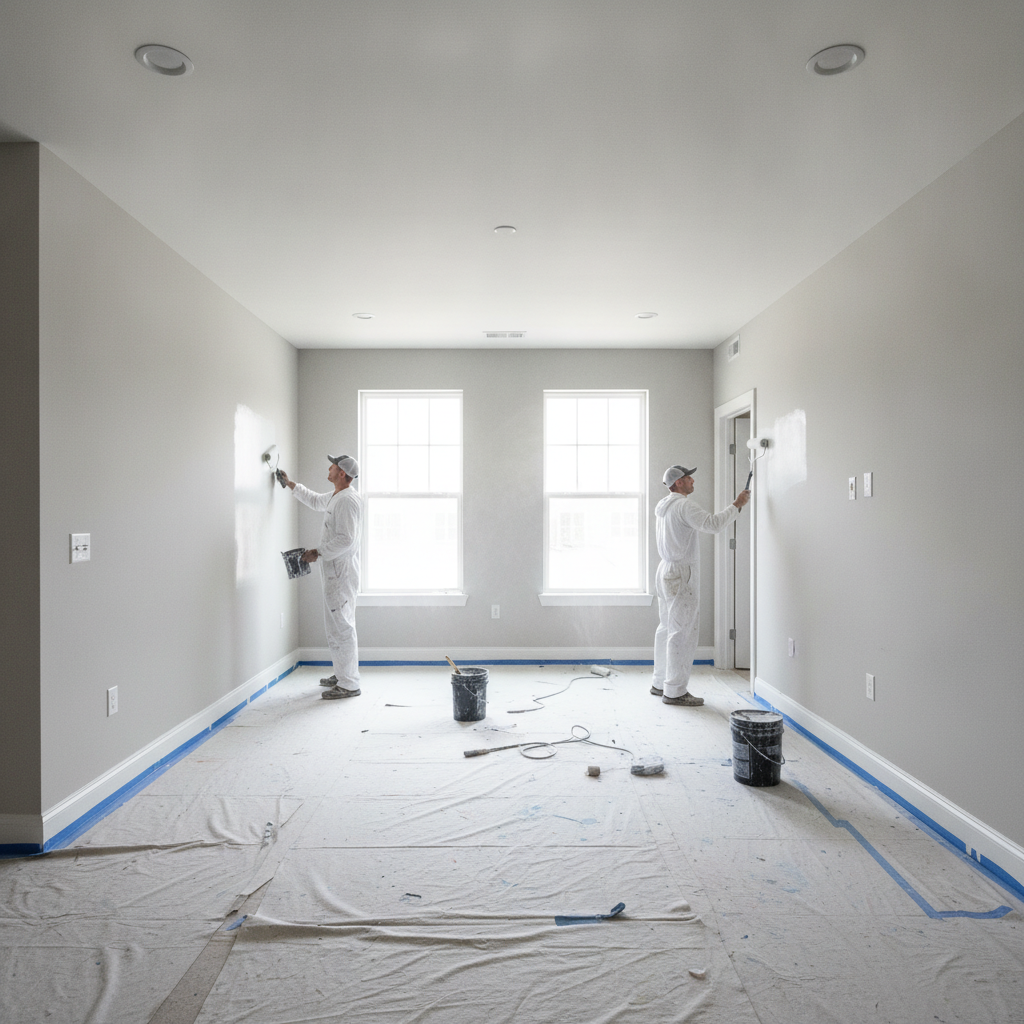
Paint touch up vs full repaint in a rental unit is a turnover decision about uniform finish, durability, and speed. Choose a full repaint when color match, sheen, or prior wear makes patches obvious; use targeted touch-ups only for small, well-matched spots. In London multi-unit buildings, the faster path to tenant-ready often wins.
By Mahal Concrete and Constructions • London multi-unit contractor
Last updated: 2026-07-10
| Service area | London and Southwest Ontario (multi-unit/apartment) |
|---|---|
| Hours | Mon–Fri, 8:00 AM–5:00 PM |
| Compliance | Fully insured, WSIB-compliant |
| Track record | 500+ projects; 50+ years combined team experience |
| Apartment focus | Full Unit Turnover, Paint and Repairs, full-unit painting |
| Emergency response | Yes — stabilization and safety mitigation |
Overview
A clean, uniform paint job is a key rental turnover signal: the unit is move-in-ready. Touch-ups can work for tiny, well-matched blemishes; full repainting delivers consistency fast across rooms. London property managers should weigh finish uniformity, schedule pressure, and vacancy loss before deciding.
- Who this is for: London property managers, landlords, and asset teams turning over apartments fast.
- What you’ll learn: Clear rules for paint touch up vs full repaint, plus 7 unmistakable “repaint now” signs.
- How we help: Standardized finishes, full-unit painting, wall repair, and schedule-driven turnovers.
London turnover tip
At 8 a.m., London’s angled daylight makes halos obvious on south-facing walls. We schedule repainting early in the turnover week, ventilate between coats, then move flooring and cleaning in behind us. That order protects fresh paint and keeps your handover date firm.
The Real Cost of Getting This Decision Wrong at Turnover
Choosing spot fixes when a unit needs a full repaint triggers rework: halos show in photos, the leasing team delays showings, and crews must return. Uniform repainting prevents callbacks and locks your turnover schedule.
How this shows up on site:
- Flashing is unmistakable. In morning light, a “repaired” spot glows like a bruise around the window bay.
- Photos reveal everything. Camera flash hits the patch at an angle and the sheen shift jumps out online.
- Schedules slip. Stagers pull back, cleaners repeat, and move-in prep restarts after repainting.
What we do instead: escalate to full-unit painting, then pair it with surface preparation and wall repair so the suite photographs clean on the first try.
What Actually Determines Touch-Up vs. Full Repaint (The 4 Factors)
Make the call using four checks: (1) color/sheen match, (2) total affected area, (3) substrate condition, and (4) turnover schedule. If any one fails at room scale, repainting the full surface is the correct move.
1) Color and sheen match
- Unknown brand or aged walls shift color; fresh paint reads brighter. On eggshell and satin, mismatches are obvious.
- Use the window-light test: stand off-axis by the window; if the patch edge catches light, it will show to prospects.
2) Total affected area (the 10–15% rule, with field math)
- A typical bedroom wall is roughly 80–100 sq ft (e.g., 10 ft × 8–10 ft).
- If you can circle more than 8–10 sq ft of scuffs, patches, and nail pops on that wall, repaint the wall.
- Repeat that scan room by room. If multiple walls cross the threshold, repaint the entire room.
3) Substrate condition
- Grease, smoke, or moisture stains bleed through spot fixes; prime with a stain blocker and repaint.
- Texture mismatches telegraph. We skim, sand, and prime so the roller stipple reads the same across the wall.
4) Turnover schedule
- One-pass repainting is predictable. Chasing spots forces second visits and disrupts other trades.
- We stage paint before flooring, then finish with cleaning so your listing photos are ready immediately.
For additional prep principles that align with this approach, see these interior painting guidelines.
Touch-Up vs. Full Repaint — Side-by-Side Comparison
Touch-up is surgical and only succeeds with a perfect match on a tiny area. Full repainting resets rooms to a consistent standard, prevents halos in photos, and protects your turnover timeline.
| Aspect | Touch-Up | Full Repaint |
|---|---|---|
| Finish uniformity | Halos and flashing on aged/glossy walls | Even color and sheen across rooms |
| Best use | Tiny, isolated nicks with exact-match paint | Multiple walls/rooms with visible wear |
| Timeline risk | High—requires reinspects and return trips | Low—one-and-done cycle |
| Leasing photos | Patches read under flash | Clean, uniform images |
| Coordination | Interrupts stagers/cleaners | Pairs cleanly with flooring/clean |
Property-management painters stress uniformity for rentals; see these portfolio painting tips for more context.
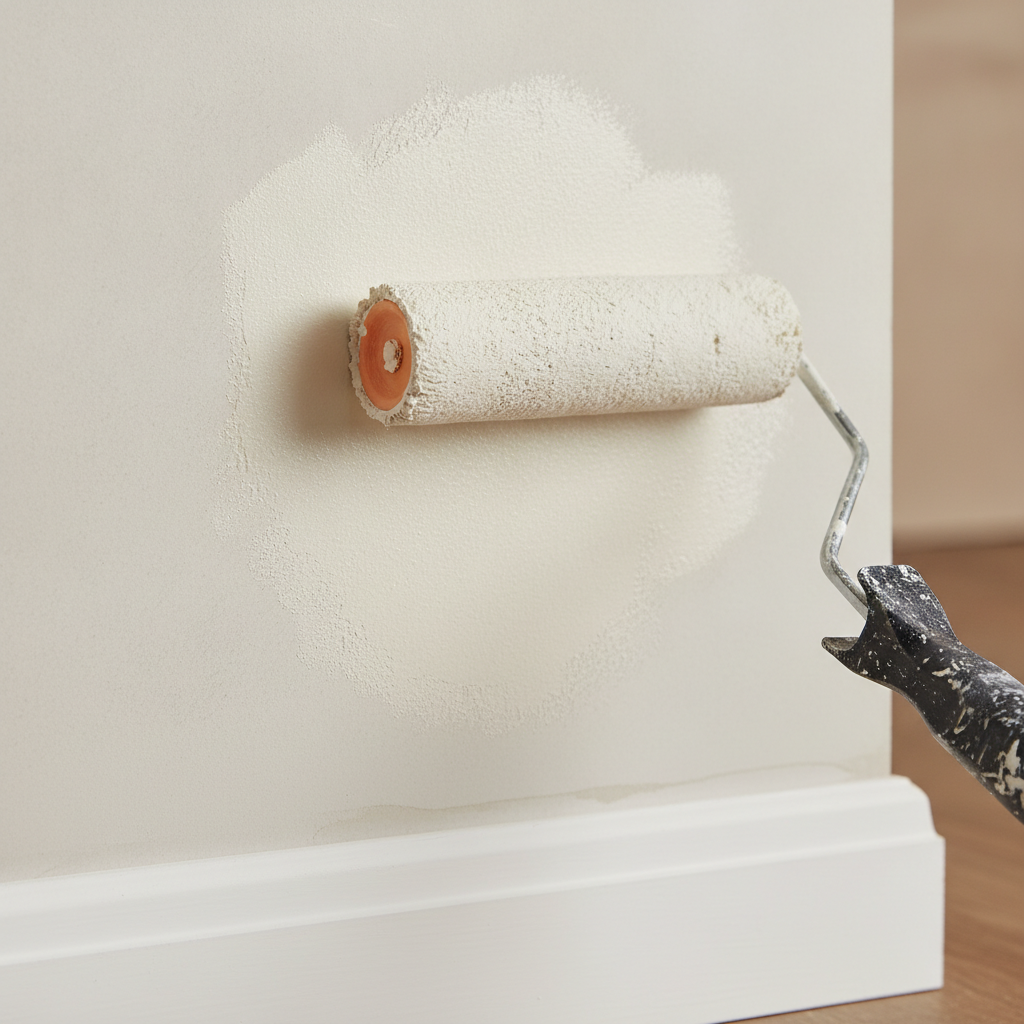
Our Full Unit Turnover team sequences wall repairs, full-unit painting, and cleaning to hit your handover date. Ask for our standardized finish spec for London properties.
When Touch-Up Is the Right Call (and When It Quietly Fails)
Touch-ups work only with the original paint, identical applicator method, and a truly tiny blemish. They fail on aged or glossy walls, stained areas, or when damage appears across rooms. If you’re hesitating, repaint.
Touch-up works when
- The exact original paint is on hand (brand, color code, sheen) and hasn’t faded.
- The mark is small and isolated (door-edge nick, single scuff).
- Prep is thorough: degrease, sand, feather edges, prime patches, and match the same applicator pattern (roller vs brush).
Touch-up fails when
- Sun fade, smoke, or grease films exist—the new spot reads brighter and cleaner.
- Finishes are eggshell, satin, or semi-gloss—sheen shifts jump out under angled light.
- Multiple rooms show wear—chasing spots derails the turnover and invites callbacks.
We redirect to full-unit painting during a quick turnover assessment so photos, showings, and move-ins proceed without rework.
Signs Your Unit Needs Full Painting, Not a Patch Job
Choose full-unit painting when walls show widespread wear, unreliable color match, or prior patching that telegraphs. These seven signs mean repainting is the only reliable route to a move-in-ready finish.
- Unknown or aged paint. No can on file or visible fade—matching will fail across walls.
- Multiple rooms affected. Scuffs, nail pops, and patching appear in more than one space.
- Past touch-up halos. You can see rings or shine changes around old repairs.
- Texture telegraphing. Spackle edges print through; skim/prime and repaint.
- Odor or staining. Smoke, cooking, or moisture marks require stain-blocking primer and repaint.
- Finish change needed. You’re standardizing to a scrub-resistant sheen across the portfolio.
- Tight timeline. One-pass repainting coordinates cleanly with flooring and final clean.
Lock a standard color and sheen for the whole portfolio; future touch-ups become predictable—or unnecessary.
How This Fits Into a Full Unit Turnover
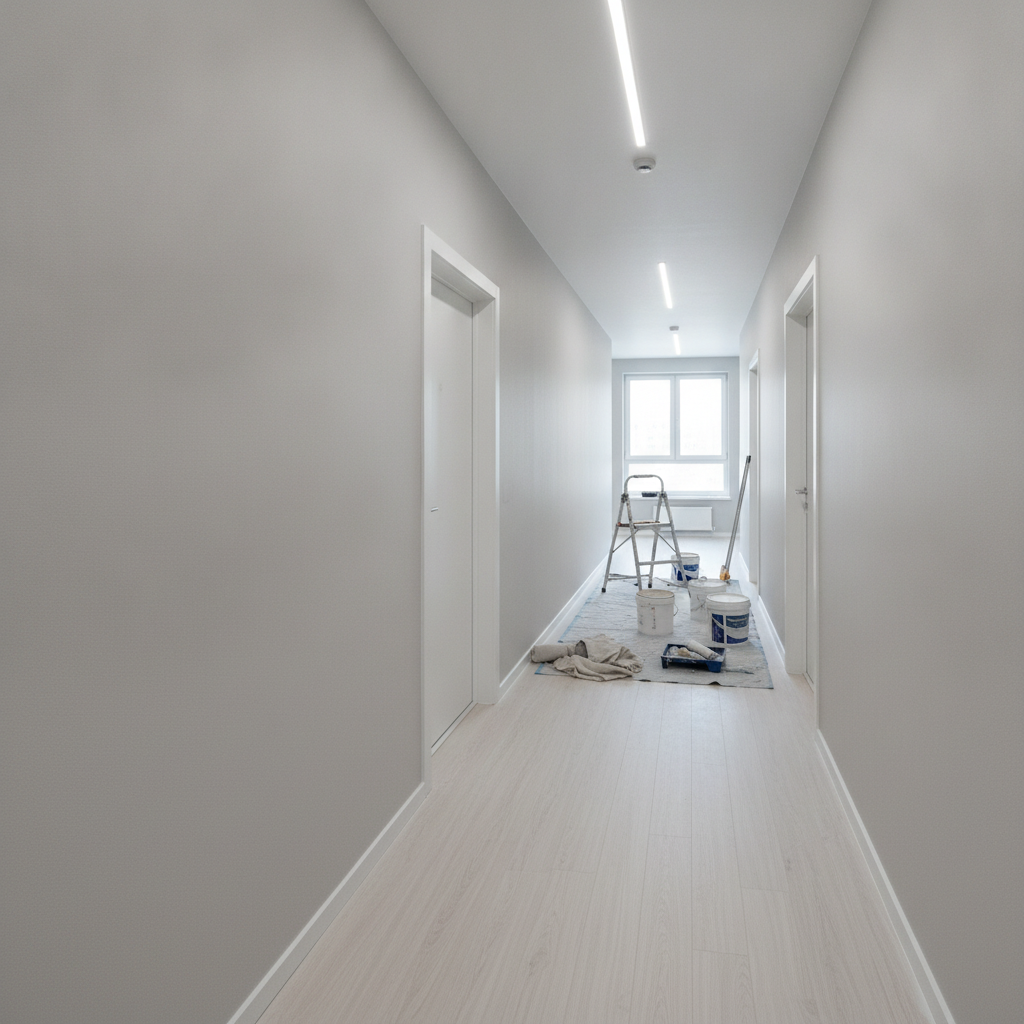
We paint early, protect surfaces, then hand the suite to flooring and cleaning. That order keeps wet-edge lines off new floors, prevents scuffs, and helps listings go live on schedule.
- Site assessment: confirm repaint vs touch-up; mark problem walls with painter’s tape.
- Wall repairs: dents, nail pops, skim where needed; prime stains and patches (repair guide).
- Full-unit painting: standardized neutral, low-VOC where appropriate; consistent roller stipple.
- Flooring and tiling: move in behind the paint crew; protect door frames and baseboards (kitchen updates often follow).
- Cleaning and finishing: touch any incidental marks, final walkthrough, handover (see decision criteria).
For another perspective on coordinating interior work, skim this renovation painting overview.
Local considerations for London
- Plan repainting before deep cold snaps. Brief ventilation between coats helps cure and reduces lingering odor.
- During peak summer move-outs, set your standard color early so crews can sequence back-to-back units efficiently.
- Older buildings mix substrates (drywall and plaster). Our assessment flags texture transitions so patches don’t telegraph.
FAQ
Managers ask three things: will touch-ups show, how to time painting with other trades, and whether to mix accent walls with neutral standards. Here are direct answers.
How do I know if a touch-up will disappear?
Stand by the window and look off-axis. If you see a dull ring or a shinier spot, it won’t disappear in photos. Without the original brand, color code, and sheen, assume repainting the wall is the right call.
Where does painting sit in the turnover sequence?
Right after wall repairs and before flooring. We protect the finish during later trades and do a quick paint walk at the end to catch any incidental marks before cleaning.
Can I repaint one accent wall and touch up the others?
Yes—if the other walls are pristine and you have exact-match paint. For rentals, standardized neutrals across rooms lease faster and eliminate patchwork halos in photos.
What’s the fastest way to estimate the 10–15% rule on-site?
Treat a 10×8 ft wall as ~80 sq ft. If you can cover the total scuffed/patched area with ten letter-size sheets of paper, you’re near 10 sq ft—repaint the wall. If several walls cross that mark, repaint the room.
Key Takeaways
Touch-ups only disappear with perfect paint and tiny repairs. Full repainting gives uniform, photo-ready walls and protects your turnover schedule. Standardize finishes and paint early in the sequence.
- Use touch-up surgically; repaint when multiple walls or glossy finishes are involved.
- Run the 10–15% rule with quick wall-area math—don’t chase spots across rooms.
- Sequence: repair → repaint → flooring → clean → handover.
Need a go/no-go call on a unit in London? We’ll walk the suite, run the 10–15% test with you, and align painting with your turnover dates.
We’ll confirm paint touch up vs full repaint, outline wall repairs, and provide a standardized finish plan so your unit lists on time. Contact our team.