
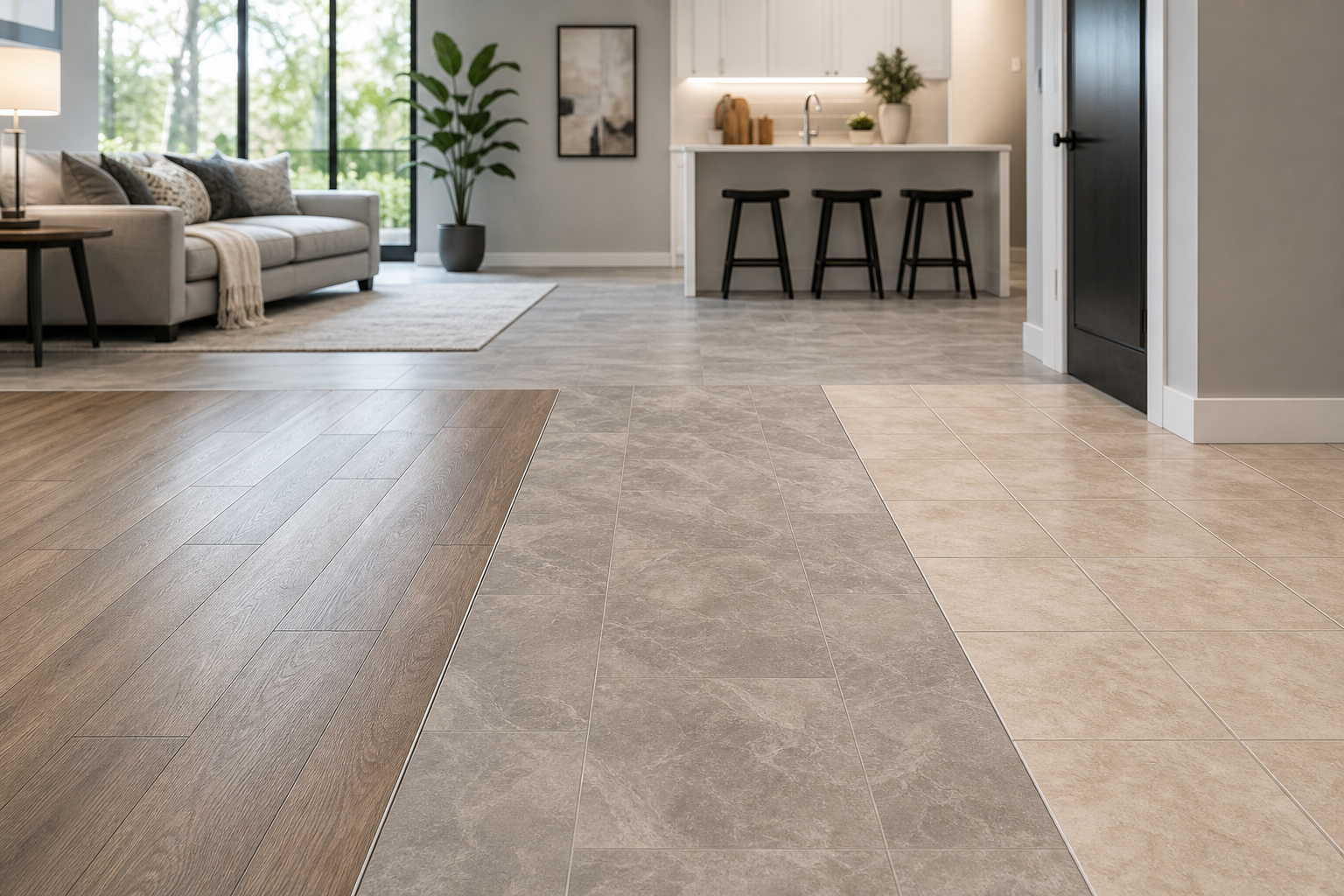
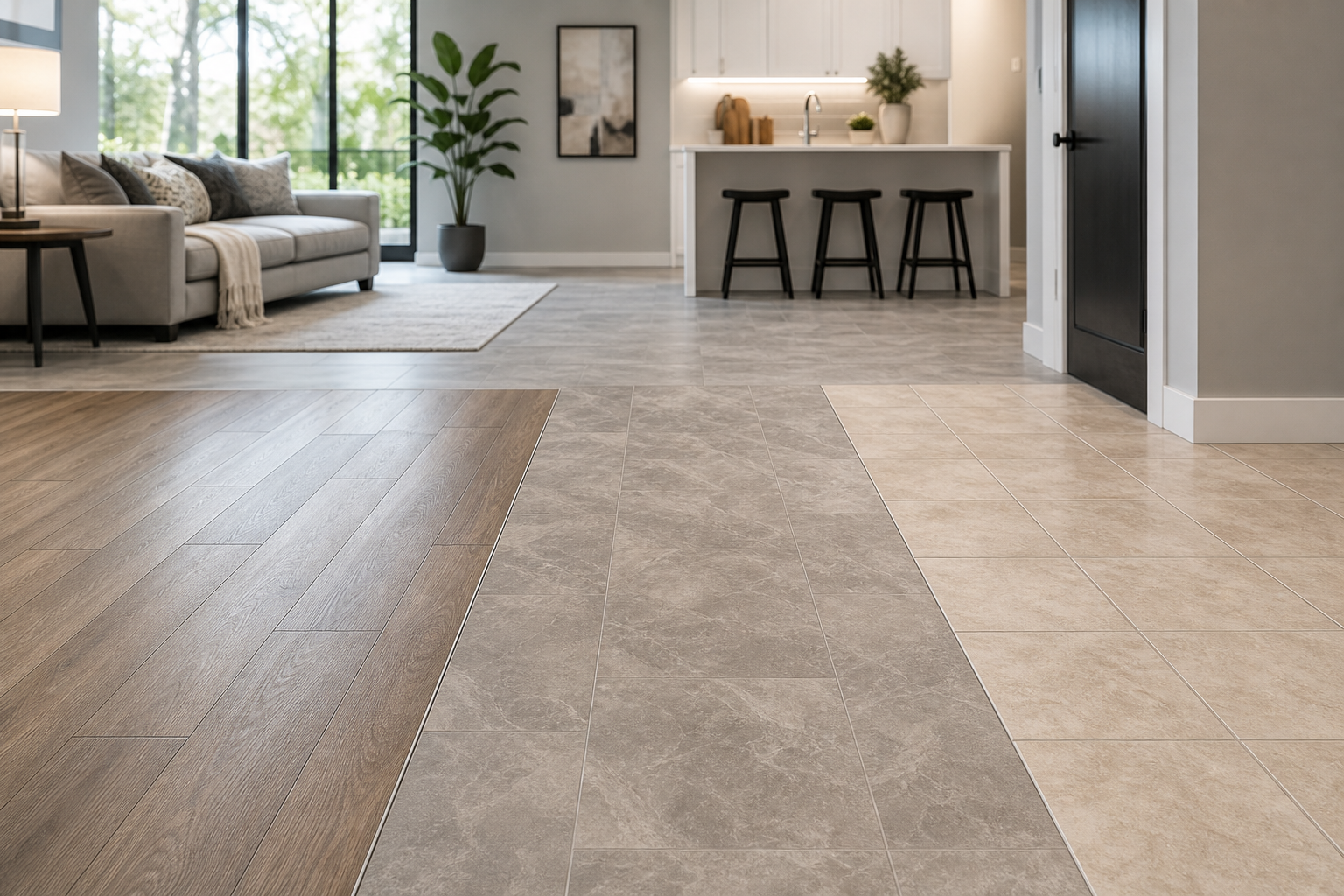
Durable flooring for rentals compared: LVP, vinyl and tile
This comparison helps property managers and landlords choose durable flooring for rentals across London and Southwest Ontario. We compare five material families—luxury vinyl plank (LVP), vinyl sheet, commercial-grade laminate, porcelain or ceramic tile, and low-pile commercial carpet—against water resistance, scratch and impact resistance, repairability, cleaning needs, and turnover logistics. You will also get a contractor-ready specification checklist, local climate notes for Ontario, and practical rollout advice to minimize vacancy and tenant disruption. For local installation support, Mahal Concrete and Constructions offers WSIB-compliant, fully insured multi-unit services and structured site assessments and handovers (the official website).
Quick verdict: which flooring to pick by unit type and tenant profile
Short decision cues to choose durable flooring for rentals:
- Long-term family units or heavy furniture: LVP or porcelain tile for impact resistance and easy cleaning.
- Short-term or high-turnover units: LVP or vinyl sheet for fast cleaning and spot repairs; sheet vinyl is best where seams must be waterproof.
- Low-budget, low-traffic long-term units: Commercial-grade laminate if moisture risk is low and you select higher wear ratings.
- Corridors and stairs: Porcelain tile or heavy-duty commercial vinyl because abrasion and concentrated foot traffic are highest there.
- Bedrooms in furnished units: Low-pile commercial carpet for noise control and tenant comfort where staining risk is moderate.
These recommendations reflect the landlord-first principle that rental flooring must survive water incidents, resist scratches and dents from furniture and foot traffic, and stay presentable to attract good tenants, as described in industry guidance (BBS Flooring).
Comparing the top five options: what each material does best
Luxury vinyl plank (LVP)
Why choose it: LVP combines wood-look aesthetics with durable wear layers and very good water tolerance. Modern LVP comes in waterproof constructions that allow plank replacement if a section is damaged. It balances tenant appeal with fast cleaning and good scratch resistance.
- Water resistance: Many LVP products are fully waterproof, which helps at thresholds and bathrooms when installed with appropriate transitions.
- Scratch and impact: High-quality wear layers protect against scuffs and furniture; choose 20 mil or higher wear layers for heavy traffic.
- Repairability: Individual planks can be replaced, reducing the need for full-room replacement.
- Cleaning: Simple mop and spot cleaning speeds turnover. Avoid steam cleaners unless product permits.
- Turnover logistics: Installation is relatively fast and tolerates phased rollouts in multi-unit projects.
Vinyl sheet
Why choose it: Sheet vinyl is economical and excels where continuous waterproofing is required, such as kitchens and bathrooms. Seams can be welded to create water-resistant surfaces that limit water migration to subfloors.
- Water resistance: Best for continuous waterproof surfaces when seams are welded.
- Scratch and impact: Good for routine traffic, but heavy concentrated weight can dent softer products.
- Repairability: Seam or patch repairs are possible, but large damage often requires panel replacement.
- Cleaning: Very low maintenance, quick to sanitize between tenants.
- Turnover logistics: Fast installs by experienced crews if substrate is prepared; selection favours sheet where wet risk is constant.
Commercial-grade laminate
Why choose it: Commercial laminate offers a scratch-resistant surface and a realistic wood look at lower cost than hardwood. It is best where moisture risk is controlled and the finish is protected from constant slush or water ingress.
- Water resistance: Water-resistant laminates perform well for spills but are not fully waterproof; avoid in bathrooms unless paired with waterproof treatments.
- Scratch and impact: High abrasion class products handle foot traffic well; check AC ratings for durability.
- Repairability: Individual planks are replaceable but removal can be disruptive if glued. Floating installs speed replacement.
- Cleaning: Quick vacuuming and damp mopping make turnarounds manageable when stains are uncommon.
- Turnover logistics: Moderate disruption; floating systems allow faster reinstallations in phased projects.
Porcelain or ceramic tile
Why choose it: Tile is extremely durable under abrasion and water exposure, so it is ideal for entryways, kitchens, and bathrooms in multi-unit properties. It offers long lifecycle value where style and hygiene are priorities.
- Water resistance: Fully waterproof when properly installed with grout and sealed transitions.
- Scratch and impact: Excellent abrasion resistance, though heavy impact can crack tiles.
- Repairability: Individual tiles and grout lines can be replaced or regrouted quickly by a skilled crew.
- Cleaning: Easy to clean and disinfect, which is useful for short-term rentals and higher hygiene standards.
- Turnover logistics: Installation is more time intensive and may require longer vacancy windows for grout curing, so plan phased installs.
Low-pile commercial carpet
Why choose it: Carpet controls noise and delivers tenant comfort in bedrooms or quiet units. Low-pile, stain-resistant commercial carpet can be patched quickly and is cheaper to replace than engineered floors when limited sections fail.
- Water resistance: Limited; not ideal where slush or frequent spills occur.
- Scratch and impact: Hidden wear from furniture but may show staining under heavy soiling.
- Repairability: Carpet tiles or small patches speed turnaround after damage.
- Cleaning: Regular vacuuming and spot extraction between tenants; deep cleaning raises turnover time.
- Turnover logistics: Fast for patch repairs, longer if steam cleaning is required between occupants.
Contractor-ready specs and a checklist to hand to your installer
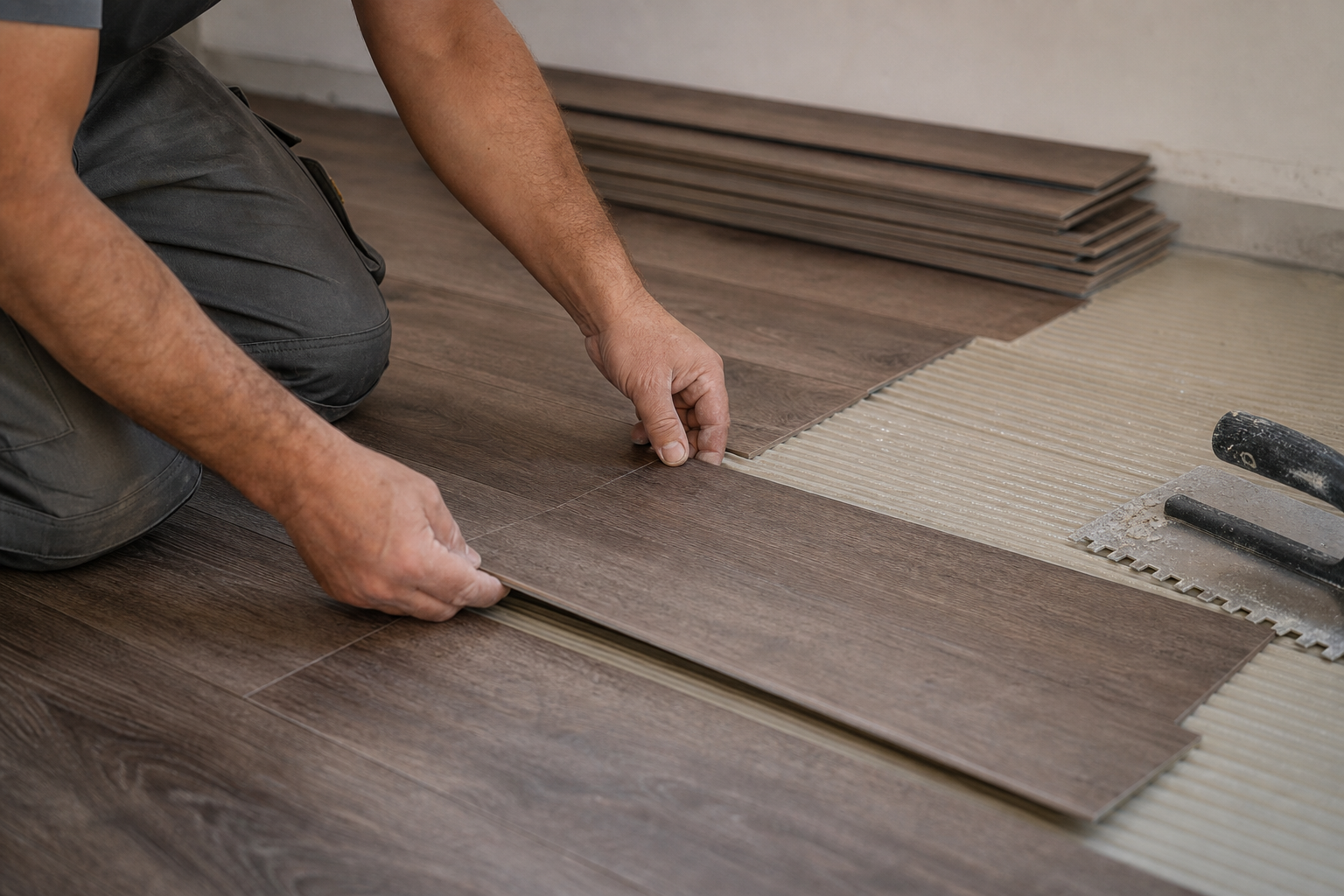
Give your contractor exactly this checklist so proposals are comparable and enforceable.
- Waterproof requirement: State whether the product must be fully waterproof or water resistant. For kitchens, bathrooms, and entryways specify waterproof. Industry guidance notes the value of waterproof options for rentals (BBS Flooring).
- Wear layer and abrasion rating: For LVP require 20 mil wear layers for heavy traffic, or manufacturer-specified commercial wear class. For laminate choose high AC ratings.
- Slip resistance: Specify minimum wet-traction slip ratings for wet areas and thresholds.
- Underlay and acoustic requirements: Require sound-rated underlays for multi-storey buildings and thermal underlay where cold floors are likely.
- Transition and threshold details: Provide transition profiles between materials, and specify welded seams for sheet vinyl where waterproofing is required.
- Repair policy: Ask for written procedures for plank or tile replacement, patching, and grout repair during turnarounds.
- Warranty and finish standards: Request product warranty documentation and a sample board of standardized finishes for multi-unit consistency.
For a deeper comparison and product examples see a detailed selection at Top Rental Flooring Picks: Top Rental Flooring Picks: Get More Value in 2026 Now.
Turnover logistics and installing floors in occupied units
Minimize vacancy and tenant disruption with an installation plan that matches the material choice.
- Site assessment and scope finalization: Document substrate condition and tenant access needs before quoting.
- Phased scheduling: Install by block or floor to keep most units operational. LVP and sheet vinyl allow quicker single-day installs than tile.
- Protective staging: Use dust barriers, covered walkways, and temporary thresholds to protect tenant areas and reduce complaints.
- Furniture handling: Plan for on-site furniture moves or tenant-assisted moves with clear timelines to reduce delays.
- Quality checks: Require pre-handover inspection and a snag list to ensure first-pass acceptance, a practice Mahal follows in its structured handover process (the official website).
Availability of crews and cure times will affect choice. For short-term rentals where fast turnarounds matter, choose materials that allow same-day cleaning and reoccupation, as advised in short-term rental industry guidance (Caledon Floors).
Local realities: London and Southwest Ontario climate and entryway protection
Ontario winters bring slush and salt that greatly accelerate wear. Practical protections reduce cleaning time and prolong floor life.
- Install heavy-duty entry mats and an interior transition zone for slush control, and specify water-tolerant flooring at entryways.
- Choose finishes and grout sealers that tolerate de-icing salt and frequent wet cleaning cycles.
- Schedule seasonal deep cleans and inspect grout or transitions at the end of winter to catch damage early and speed next turnover.
Industry guidance for Canadian short-term rentals highlights selecting durable, easy-to-clean materials that handle dirt, slush, and moisture as a priority (Caledon Floors).
Decision framework: choose by ROI, tenant profile and repairability

Use this three-step rule to select durable flooring for rentals:
- Assess moisture and entry risk: If risk is high, prioritise waterproof systems such as waterproof LVP or welded sheet vinyl.
- Match traffic and furniture load: For high traffic or heavy furniture, choose tile or high-wear LVP.
- Plan for repairs: If rapid turnaround is essential, prefer materials with modular repair options such as plank LVP or tile replacement rather than broad glued systems.
Keeping lifecycle maintenance in mind is essential. Treat flooring as a strategic investment where upfront durability reduces vacancy and long-term costs, a view supported by landlord-focused guidance (FloorNerd).
Repair and patch strategies that speed turnarounds and extend life
- LVP: Replace single planks; keep a supply of spare planks from the same production batch to ensure colour match.
- Vinyl sheet: Localized patches can be welded or glued; large damage may need panel replacement.
- Laminate: Replace floating planks; glued installations may require partial replacement and more time.
- Tile: Swap cracked tiles and regrout small areas quickly if spare tiles are stored.
- Carpet: Use carpet tiles or small patching kits to return a bedroom to market the same day in many cases.
Quick, standardized repair protocols reduce downtime at turnover. Specify repair responsibilities and acceptable repair materials in the RFP.
How to pick a local contractor and what to ask before you book
Ask every bidder these questions and verify documentation before you award work.
- Are you fully insured and WSIB-compliant? Request proof of coverage.
- Do you have multi-unit, occupied-building experience and references? Ask for projects similar in scale.
- Can you provide standardized finish samples and a single point of contact for quality decisions?
- What is your phased scheduling plan and how do you protect occupied units during work?
- What are your repair and warranty policies for flooring installed in rental units?
Mahal Concrete and Constructions is a London, Ontario contractor focused on multi-unit projects with WSIB compliance, structured site assessment, schedule-driven execution, and final quality checks. Contact them to request a site assessment and a detailed proposal (Mahal Concrete and Constructions).
Frequently asked questions
Can you install new flooring while tenants remain in place and what are the disruption limits for each material
Yes, but disruption varies. LVP and sheet vinyl can often be installed with limited, daytime access restrictions. Tile needs longer cure times and may require temporary vacancy for adjoining rooms. Plan phased installs and protective staging to keep disruption minimal, and confirm the contractor’s tenant coordination plan.
Which flooring is easiest to patch quickly during a turnover without replacing the whole floor
LVP plank replacement and tile replacement are the fastest for spot repairs. Carpet tiles also allow same-day patches. Avoid glued full-surface systems in high-turnover units if rapid patching is a priority.
Do I need waterproof flooring in every rental unit or only at entryways and bathrooms
Prioritise waterproof flooring in high-moisture locations and at entryways where slush and salt infiltrate. For open-plan units you can use water-resistant LVP throughout to reduce risk without paying premium everywhere, as discussed in rental flooring guides (BBS Flooring).
What wear ratings and product specifications should I require in an RFP for multi-unit installs
Request manufacturer wear layer specifications for LVP (for example 20 mil for heavy use), abrasion class ratings for laminate, and clarification on waterproof claims. Also specify underlay acoustic ratings and slip resistance for wet areas. Include repair and warranty procedures in the contract.
How should I budget for lifecycle maintenance versus upfront durability when planning a multi-unit rollout
Budget for slightly higher upfront material costs when that reduces turnover downtime and repair frequency. Durable materials like tile and high-quality LVP often save money by reducing vacancy days and cleaning costs, a principle seen in landlord-focused flooring advice (FloorNerd).
For a detailed site assessment, standardized finish samples, and an installation plan that minimises vacancy, contact Mahal Concrete and Constructions: Mahal Concrete and Constructions.