
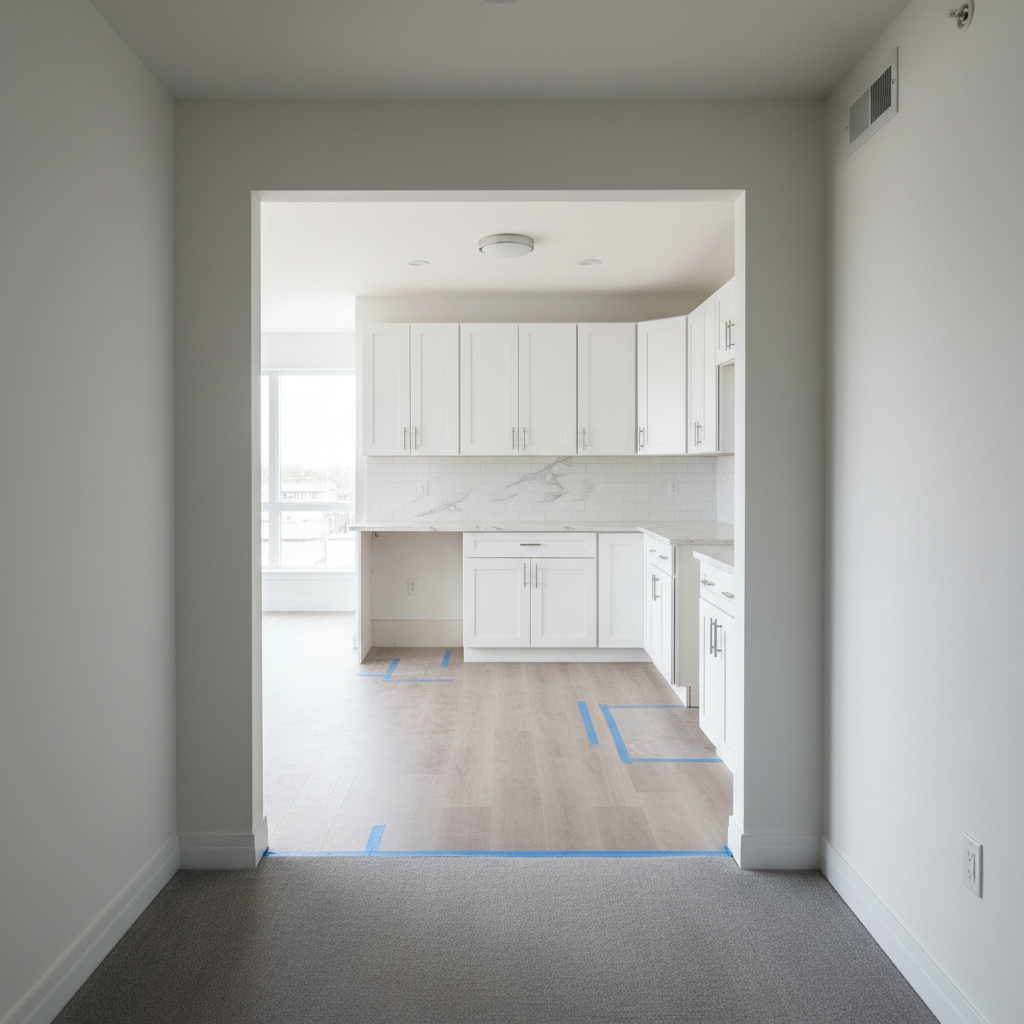
A full kitchen renovation for apartment units is the end-to-end upgrade of cabinets, countertops, flooring, lighting, plumbing, electrical, and appliances, delivered through a structured assessment-to-handover process. In London, ON, Mahal Concrete and Constructions at 805 Chelton Rd executes apartment-scale kitchen overhauls that cut vacancy time and create consistent, move-in-ready units.
By Mahal Concrete and Constructions • Last updated: 2026-06-01
Summary and Table of Contents
This guide explains what a complete apartment kitchen renovation entails, why it matters for property performance, and how to run it with minimal disruption. You’ll learn approaches, best practices, tools, and an apartment-specific workflow that supports predictable timelines, standardized finishes, and higher tenant appeal across your portfolio.
- What a full kitchen renovation includes (apartment context)
- Why apartment kitchens drive tenant appeal and retention
- How the renovation process works step by step
- Methods: full gut, partial refresh, and phased turnover
- Best practices for occupied properties and multi-unit scale
- Tools and materials that last in high-traffic rentals
- Case examples from London and Southwest Ontario
- FAQ and next steps
What is a full kitchen renovation for apartment units?
A full kitchen renovation for apartment units is a comprehensive reset of cabinets, counters, flooring, lighting, plumbing, and electrical, culminating in a quality-checked handover. In London, ON, property managers use this scope to standardize finishes, reduce vacancy periods, and deliver move-in-ready units across multi-building portfolios.
In our work across Southwest Ontario, “full” means no guesswork. We align scope, finishes, and timeline before demo begins, then sequence trades to keep sites clean and predictable. The outcome is a kitchen that photographs well, functions better, and stands up to tenant turnover.
Key components you should expect
- Cabinetry: New boxes and doors or factory-finish replacements designed for rental-grade durability.
- Countertops and backsplash: Easy-clean, chip-resistant surfaces with sealed grout lines.
- Appliances and ventilation: Right-sized, energy-conscious models with proper ducting where applicable.
- Lighting and electrical: Upgraded circuits, GFCI where required, and layered lighting for task and ambient use.
- Plumbing fixtures: Reliable valves, shutoffs, and water-saving faucets.
- Flooring: LVP or tile rated for high traffic with moisture protection.
- Paint and finishing: Scrubbable finishes and clean caulk lines for a tight, move-in-ready look.
Because every building has quirks, we document site constraints during assessment and finalize selections in a single, standardized spec so your units look consistent building-wide.
Why kitchen renovations matter in apartments
Apartment kitchens anchor first impressions, impact tenant satisfaction, and influence renewal decisions. Standardized, durable finishes reduce maintenance calls and cleaning time between tenants, while predictable, schedule-driven execution shortens vacancy periods and stabilizes cash flow across portfolios.
We’ve found that kitchens drive a large share of leasing decisions because they signal cleanliness and care. When property managers standardize materials and hardware, they streamline maintenance and simplify ordering. Over 500 completed projects tell us that a consistent kitchen package pays off in faster turns.
Operational benefits for property teams
- Faster turns: Sequenced scopes reduce idle time between trades and inspections.
- Portfolio consistency: Shared SKUs and finishes across buildings ease reorders and touch-ups.
- Tenant experience: Better lighting, storage, and venting improve day-to-day living.
- Fewer callbacks: Rental-grade fixtures and protected surfaces reduce warranty churn.
Want a deeper dive into timeline mechanics? See our kitchen remodel timeline guide for scheduling patterns that keep units available sooner.
How a full kitchen renovation works (apartment workflow)
Apartment kitchen renovations succeed with a disciplined workflow: assess the unit, finalize scope and finishes, schedule trades, execute with clean handoffs, then quality-check and document. This structure reduces tenant disruption, supports predictable durations, and produces consistent results at multi-unit scale.
Our end-to-end process is built for occupied properties and stacked schedules. We coordinate entry times, protect common areas, and keep noise windows tight. Each handoff is documented so nothing slips between trades.
| Phase | Primary activities | Owner visibility | Deliverables |
|---|---|---|---|
| 1) Site assessment | Measure, document utilities, check ventilation and electrical capacity | Walkthrough notes and photos | Scope outline and risk flags |
| 2) Scope & finishes | Finalize cabinet, countertop, flooring, lighting, and hardware SKUs | Finish board and approvals | Standardized spec sheet |
| 3) Schedule & logistics | Book trades, order materials, stage protection for corridors/elevators | Start date and milestones | Sequenced calendar |
| 4) Execution | Demo, rough-ins, cabinets, counters, tile, lighting, paint, appliances | Progress photos and updates | Clean, safe jobsite |
| 5) QC & handover | Punch list, function tests, touch-ups, documentation | Final walkthrough | Move-in-ready kitchen |
For a broad turnover checklist that pairs well with this workflow, review our apartment renovation planning checklist.

Local considerations for London
- Coordinate material deliveries to avoid peak times in busy London apartment corridors; protect common floors with runners to keep strata rules intact.
- Plan noisy tasks in tighter windows during winter months when windows stay closed longer; notify tenants well in advance.
- Use moisture-resistant finishes and sealed transitions to handle snow and slush tracked in from entrances during colder seasons.
Types and approaches for apartment kitchens
Apartment kitchens benefit from three core approaches: full gut and rebuild, targeted refresh (cabinets, counters, lighting), and phased turnovers across multiple units. Choose based on building age, vacancy windows, and portfolio goals for standardization and speed.
Here’s how we help owners select the right path without over-scoping. We review building systems, note wear patterns, and match the approach to your vacancy realities.
Approach comparison
- Full gut and rebuild: Best when systems are outdated or layouts waste space. Aligns all finishes and utilities at once.
- Targeted refresh: Swap doors, counters, sink, lighting, and flooring while leaving good bones intact.
- Phased turnovers: Standardize the spec, then execute in waves to maintain occupancy and crew rhythm.
When a refresh is enough
- Cabinet boxes are sound but doors and hardware are tired.
- Countertop and backsplash are stained or cracked but layout works.
- Lighting is dim; adding LED strips and a new ceiling fixture transforms the space.
Not sure if you should reface or replace? Our cabinet replacement guide breaks down trade-offs for apartment settings.
Best practices for apartment kitchen renovations
Prioritize standardized specs, tenant-friendly scheduling, protection of common areas, and documented handoffs. Use durable, easy-to-clean materials, test every connection, and photograph each milestone. These habits reduce callbacks, keep boards happy, and make results repeatable in multi-unit environments.
In our experience, consistent results come from repeatable playbooks. Below are practices our WSIB-compliant, fully insured team uses on every unit.
Standardization and durability
- One spec, many units: Lock SKUs for cabinets, counters, pulls, and paint to keep units uniform.
- Rental-grade materials: Choose LVP with high wear layers, sealed grout, and moisture-resistant cores.
- Hardware that lasts: Soft-close hinges, quality slides, and metal pulls reduce service calls.
Clean, safe execution
- Protection: Ram board, dust walls, and daily cleanup to keep shared spaces pristine.
- Timing: Schedule noisy or dusty tasks in coordinated windows; respect quiet hours.
- Documentation: Progress photos, labeled shutoffs, and appliance serials simplify turnover.
Quality control
- Run water at every connection; verify traps and shutoffs.
- GFCI where required; test load, light levels, and fan flow.
- Operate all doors and drawers; level, align, and caulk.
These steps create predictable outcomes, which is how we’ve delivered 500+ successful projects with consistent finishes across buildings.
Tools and resources for apartment-grade results
Use trade-proven tools and rental-grade materials: laser measures for fast as-builts, cabinet jigs for repeatable hardware, LVP with high wear layers, sealed tile systems, and LED lighting. Standard kits and labeled bins keep crews efficient across multiple units and buildings.
Tooling and materials aren’t glamorous, but they’re where durability and speed are won. Here’s a concise kit that has proven reliable for apartment kitchens.
Tools we rely on
- Laser measurer and angle finder for fast, accurate layouts.
- Cabinet levelers, shims, and clamps for flawless installs.
- Tile cutter and wet saw with dust control for clean edges.
- Stud finder and multi-meter for safe mounting and testing.
- HEPA vacuums and air scrubbers to protect occupied properties.
Materials that hold up
- LVP with moisture-resistant cores and high wear layers.
- Quartz-look counters that resist chips and stains.
- Epoxy or sealed grout systems to fight discoloration.
- LED fixtures with warm color temperatures and high CRI.
- Moisture-resistant drywall and scrubbable paints near splash zones.
For inspiration on sequencing and visuals, see this third-party kitchen renovation planning overview that outlines a homeowner workflow; we adapt similar steps for multi-unit contexts.

Pricing and scope drivers (without numbers)
Apartment kitchen renovation budgets hinge on scope, building constraints, and finish levels. Focus on standardized specs, smart sequencing, and minimal rework. This keeps schedules tight and value high without publishing numbers that vary by building, unit conditions, and approvals.
We don’t publish fixed prices because buildings differ. Instead, we establish scope first, then plan a schedule that reduces downtime. These non-numeric drivers shape investment and outcomes:
- Scope depth: Full gut vs. targeted refresh.
- Systems condition: Electrical capacity, plumbing reroutes, ventilation needs.
- Finish tier: Cabinet construction, counter material, hardware grade.
- Access and logistics: Elevators, corridor protection, loading windows.
- Portfolio strategy: Standardization that unlocks bulk ordering and repeatability.
If you want a side-by-side on refresh options, the visuals from this before-and-after gallery can help you calibrate expectations during internal reviews.
Case studies and examples
Across 500+ projects, we’ve delivered apartment kitchens that balance speed, durability, and consistent finishes. Here are brief, anonymized examples showing how standardized specs, tight scheduling, and careful protection of occupied areas translate into faster, cleaner turnovers.
These snapshots reflect common conditions in London and surrounding cities and how we approached them.
London mid-rise portfolio refresh
- Challenge: Dated cabinets and low light across multiple floors.
- Action: Standardized shaker doors, LED fixtures, and LVP; sequenced two units per week with protected corridors.
- Result: Consistent look-and-feel that photographed well for listings and simplified maintenance.
Woodstock walk-up with tight access
- Challenge: Narrow stairwells and limited staging space.
- Action: Flat-pack cabinets, measured deliveries, and off-site prep to minimize time on site.
- Result: Clean installs without blocking resident movement or damaging common walls.
Chatham unit with ventilation issues
- Challenge: Recirculating fans causing lingering odors.
- Action: Verified duct paths; installed proper venting and sealed penetrations.
- Result: Noticeably fresher air and fewer moisture complaints in adjacent suites.
For a homeowner-oriented perspective on condo constraints, this condo renovation guide highlights space and logistics challenges we routinely solve at building scale.
Frequently Asked Questions
These concise answers address the most common questions property managers and landlords ask about apartment kitchen renovations, focusing on scope, duration, standards, and occupied-building execution. Each response is direct and practical for faster decision-making.
What does a “full” apartment kitchen renovation include?
It includes demo, rough-ins, cabinets, countertops, backsplash, flooring, lighting, paint, appliances, and a documented quality check. The goal is a standardized, move-in-ready kitchen that looks consistent across units and reduces maintenance.
How do you minimize disruption in occupied buildings?
We schedule noisy tasks in tight windows, protect corridors and elevators, use dust control, and communicate entry times in advance. Clean, safe worksites and daily resets keep residents informed and common areas tidy.
Do you standardize finishes for multi-property portfolios?
Yes. We lock cabinet, counter, flooring, and hardware SKUs so units match across buildings. This simplifies maintenance, reduces rework, and keeps future turnovers fast and predictable.
How is schedule predictability maintained across several units?
We finalize scope first, then sequence trades and materials to avoid idle time. Milestones are documented, and each handoff includes photos and checks so progress stays on track even when multiple units are in flight.
Conclusion and next steps
Successful apartment kitchen renovations come from standardized specs, disciplined scheduling, and meticulous quality control. This approach shortens vacancy periods and delivers consistent, tenant-pleasing results across units and properties in London and Southwest Ontario.
- Key takeaways: Standardize finishes, protect common spaces, document handoffs, and sequence trades.
- Action steps: Book a unit assessment, align on a single spec, and schedule a pilot run across a small batch of suites.
- Ready to move? Explore Mahal Concrete and Constructions and meet our team to plan your next turnover wave.
Let’s plan your next batch of units. Schedule a structured site assessment so we can align scope, finishes, and timelines with your vacancy windows.