

Kitchen remodeling timelines for rentals are the start-to-finish schedules that move a unit from notice-to-vacate to move-in ready. For our London, ON team at Mahal Concrete and Constructions (805 Chelton Rd), typical rental kitchen schedules run 7–21 days depending on scope, permitting, and material lead times—structured to reduce vacancy and disruption.
By Mahal Concrete and Constructions • Last updated: 2026-06-11
Overview: what you’ll learn and how to use this guide
Use this guide to plan predictable rental kitchen remodel timelines that cut vacancy. You’ll see phase-by-phase schedules, tenant-safe sequencing, and multi-unit rollout tactics our London, ON team uses to deliver consistent handovers with standardized finishes across apartment portfolios.
This complete guide is built for property managers and apartment owners who need predictable schedules, low disruption, and standardized results across multiple units. We combine our multi-unit experience with an actionable, step-by-step plan you can apply this quarter.
- Clear definitions: what “timeline” really includes for rentals
- Why predictable schedules shrink vacancy days and turnover stress
- Step-by-step process from scope to final handover
- Timeline ranges by scope (refresh vs. full remodel)
- Occupied-building sequencing and communication tips
- Portfolio rollout patterns for multi-property teams
- Checklists, tools, and quality control milestones
What is a rental kitchen remodel timeline?
A rental kitchen remodel timeline is the coordinated schedule of tasks—assessment, materials, trades, inspections, installation, and cleanup—designed to deliver a move-in ready kitchen on a target date. The best timelines lock scope early, sequence trades tightly, and track milestones to keep vacancy low.
In our experience, confusion happens when “timeline” is treated as demolition-to-install only. Your schedule actually starts with notice-to-vacate and ends at key handover. That window covers approvals, ordering, on-site work, cleaning, and quality checks.
- Notice-to-vacate to scope lock: measure, photograph, and finalize scope before keys return.
- Materials and permitting: order standard SKUs and submit any required permits.
- On-site sequence: demo, rough-ins, cabinets, countertops, appliances, finishes.
- Closeout: punch list, cleaning, documentation, and turnover to leasing.
Treat each phase as a milestone with owner signoff. That clarity prevents scope creep and keeps your crew sequence intact across multiple units.
Why timelines matter for London, ON apartment portfolios
Tight, realistic timelines reduce vacancy, protect resident experience in occupied buildings, and unlock same-finish repeatability across London, ON portfolios. The result is faster leasing, fewer scope changes, and easier budgeting for property managers and owners.
Vacancy days add up quickly when schedules slip. Kitchen work is central to “move-in ready,” so a late countertop template or missing cabinet SKU can stall a handover. We standardize finishes and SKUs to avoid re-selections and keep calendars stable.
- Faster leasing: every day saved returns the unit to revenue sooner.
- Lower disruption: predictable quiet hours and staging keep neighbors comfortable.
- Portfolio clarity: repeatable finishes simplify maintenance and future turns.
For background on scoping and finishes, see our internal guide to full kitchen renovation for apartment units. It pairs well with this scheduling playbook.
How the timeline works: step-by-step
The fastest rental kitchen timelines follow a fixed sequence: assess and scope (Day 0–2), order materials (Day 1–5), demo and rough-ins (Days 1–3 on-site), install cabinets (Days 3–5), template/install countertops (Days 5–10), finishes and cleanup (Days 7–12), punch and handover (Days 12–14).
Our schedule-driven method stacks what can run in parallel without creating rework. Where inspections or templates add wait time, we use those days for adjacent work like paint and repairs.
- Site assessment and scope lock (0–2 days): measure, photo log, confirm selections, sign scope.
- Materials and permitting (1–5 days): release POs for standard SKUs; submit any permits.
- Demo and disposal (1 day): remove cabinets, tops, flooring as required; cap services.
- Rough-ins and surface prep (1–2 days): plumbing adjustments, electrical boxes, wall repairs.
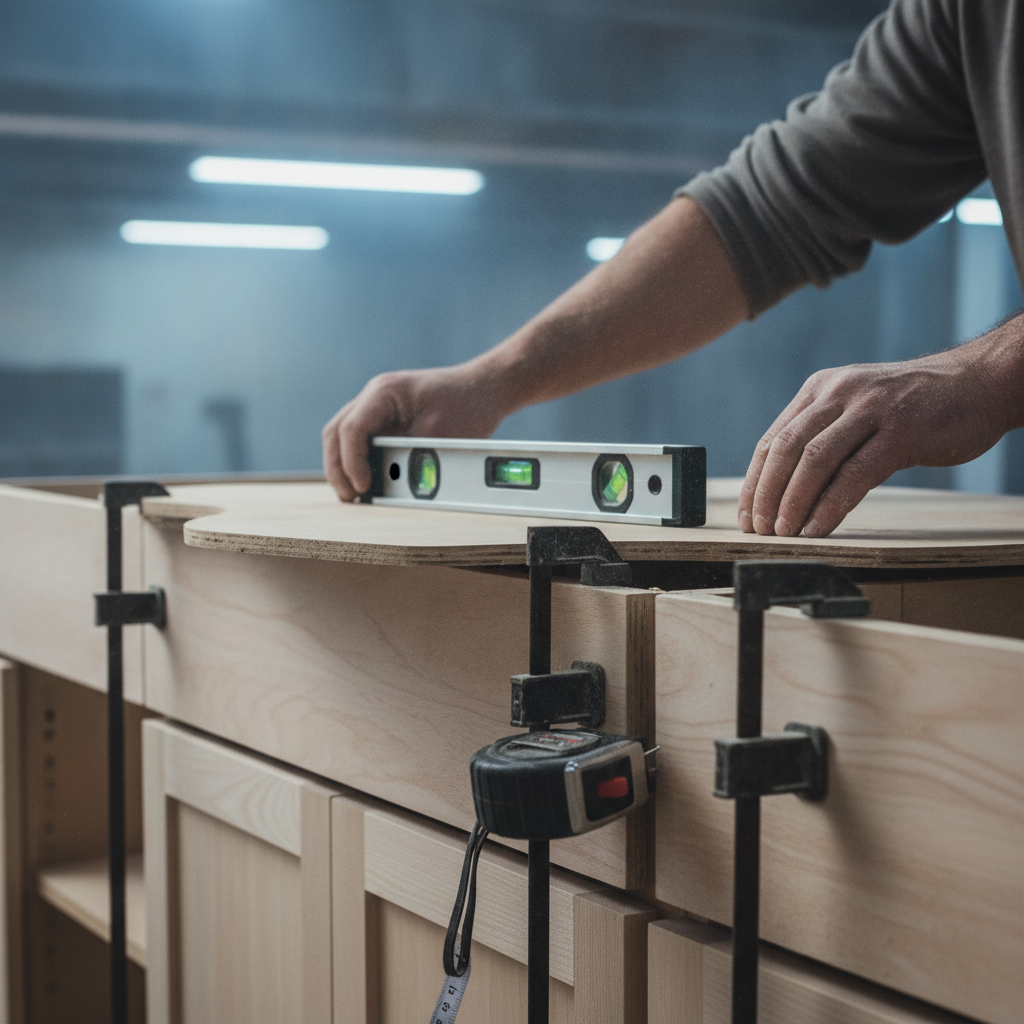
- Cabinet installation (1–2 days): hang and level boxes; verify plumb and reveals.
- Countertop template and install (2–5 days total): template, fabricate, install.
- Tile, LVP, paint, and trims (2–3 days): backsplash, resilient flooring, touch-ups.
- Appliances, fixtures, and final clean (1 day): set appliances, connect sink, caulk.
- Quality check and handover (same day): punch list, signoff, keys to leasing.
For owners building their first schedule, our turnover checklist keeps tasks visible and prevents missed dependencies.
Timeline by scope: refresh vs. replace vs. full remodel
Rental kitchen schedules vary by scope: quick refreshes often fit in 5–7 days, partial replacements land around 7–14 days, and full remodels typically require 14–21 days. Standardized SKUs and parallel sequencing keep each scenario on track.
Not every unit needs a gut. Many portfolios win by aligning finishes to demand and remaining lease term. Below is a simple planning table we use in multi-unit turnovers.
| Scope | Typical inclusions | Typical timeline | Where it fits |
|---|---|---|---|
| Refresh | Paint, hardware, minor wall repairs, LVP patch, caulk | 5–7 days | Short-term boost, lower wear units |
| Partial replace | Cabinet doors or boxes, new counters, faucet/sink, backsplash | 7–14 days | Mid-market uplift, common in turnovers |
| Full remodel | Layout tweaks, new cabinets, counters, flooring, lighting | 14–21 days | Repositioning units, end-of-life finishes |
If you’re deciding between a door-only swap and a full cabinet replacement, compare service life and scheduling risks. We unpack that trade-off in kitchen remodel vs. cabinet replacement.
Sequencing in occupied buildings
In occupied properties, the right sequence limits noise, dust, and water shutoffs. We cluster loud work into short windows, stage materials off-site, and post daily notices so residents always know what’s next. The result: faster work with fewer complaints.
Occupied-property construction demands communication and containment. Our WSIB-compliant crews run HEPA filtration, floor protection, and quiet-hour rules while keeping crew density low in corridors.
- Noise windows: batch demo and drilling within posted hours.
- Water/electric notices: plan riser shutoffs in advance with stack coordination.
- Containment: zipper walls, negative air, sticky mats, and daily vacuuming.
- Clean egress: end-of-day corridor sweeps and material staging.
See our apartment renovation scheduling tips for more tenant-friendly playbooks.
Standardized finishes and lead times
Standardized finishes compress timelines by eliminating re-selections and surprise backorders. Pre-approved cabinet lines, counters, LVP, and fixtures let you order once, stock spares, and schedule crews with confidence across multiple buildings.
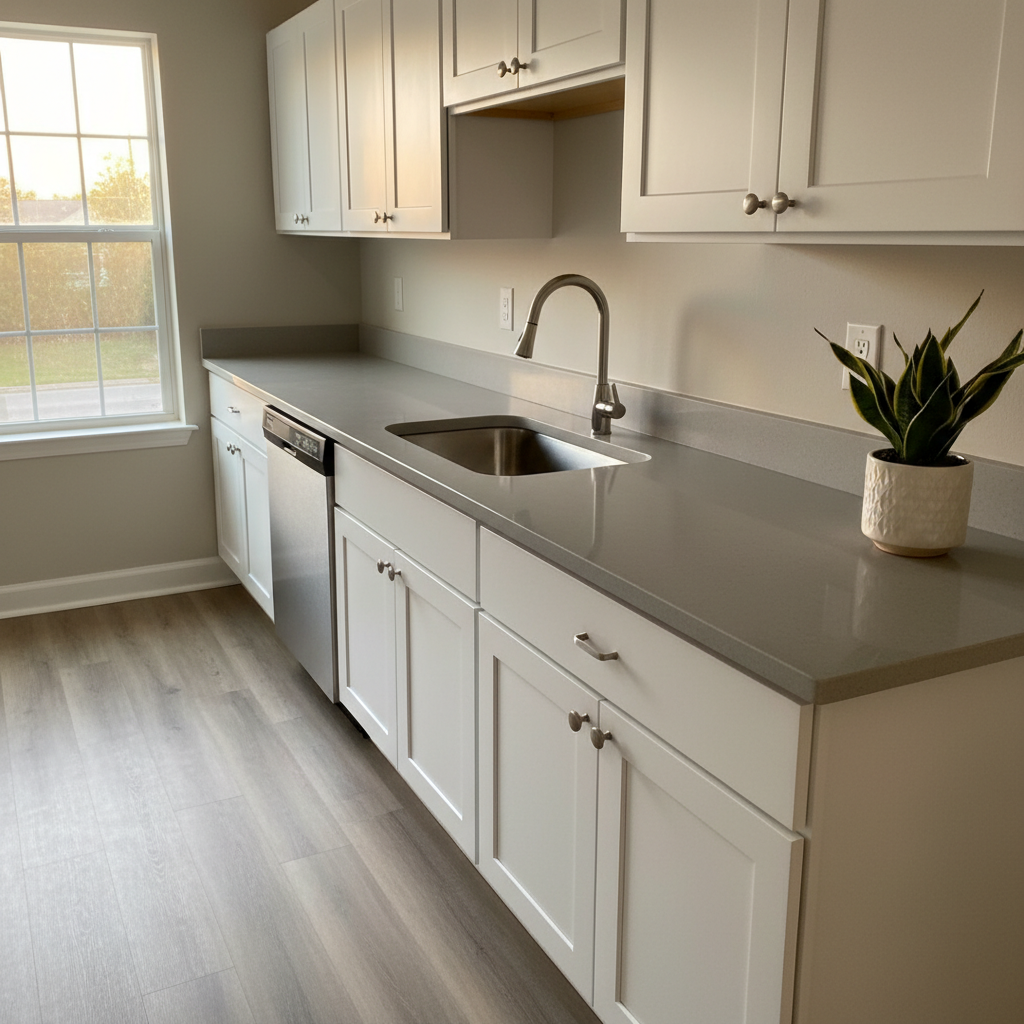
We maintain SKU lists that balance durability and appeal: white shaker, subway tile, LVP with wear layers suitable for high-traffic areas, and proven faucets and pulls. When selections are fixed across properties, procurement becomes routine and install crews move faster.
- Cabinet lines: choose one box system and two finishes for portfolio use.
- Counters: standardize thickness, edge profile, and color family.
- Backsplash: one tile size and layout; consistent grout color.
- Flooring: LVP thickness and wear layer that resists frequent turns.
For a deeper dive into finish choices and unit positioning, read apartment kitchen remodeling for owners.
Permits, inspections, and critical path
Permits and inspections shape your critical path. Lock scope early, confirm whether plumbing or electrical changes trigger permits, and book inspections the moment work starts. Use waiting days for paint and repairs to keep the schedule moving.
Inspection timing varies by municipality. To keep momentum, we preload documentation and coordinate with property teams for access. When templates or inspections create gaps, we advance parallel tasks such as wall repair or full-unit painting if planned.
For general renovation timeline planning ideas beyond kitchens, see this external overview from Altima Kitchens & Closets. It’s a useful framing tool while we customize to London’s building rules.
Tools, templates, and resources
Use a simple playbook: a one-page Gantt, a standardized finish matrix, a site readiness checklist, and a closeout punch list. These tools make dates visible, reduce change orders, and align property, leasing, and contractors on the same plan.
- One-page Gantt: scope-to-handover dates, dependencies, and inspection holds.
- Finish matrix: approved SKUs with photos for cabinets, counters, tile, LVP, pulls, faucet.
- Readiness checklist: access, elevator pads, staging area, water/electric shutdown windows.
- Closeout punch: caulk lines, door swings, scribe trims, silicone cures, appliance tests.
For planning fundamentals, this primer on renovation planning steps from Altima Kitchens & Closets is a helpful broad-strokes resource.
Case studies and real-world examples
Real schedules prove what’s possible. Below are snapshots from recent London-area projects, showing how standardized finishes and tight sequencing trimmed days off vacancy while keeping occupied properties calm and clean.
Example 1: Partial replacement, 24-unit building
- Scope: cabinet boxes stayed; new doors, counters, sink/faucet, subway backsplash.
- Timeline delivered: 9 business days per unit, two units in parallel per week.
- Method: template Day 3, counters Day 6–7; tile and paint during fabrication gap.
- Outcome: leasing photos by Day 10; standardized pulls/sink simplified future turns.
Example 2: Full remodel in occupied mid-rise
- Scope: new cabinets and LVP, GFCI outlets, LED under-cabinet, new range hood.
- Timeline delivered: 15 days per unit with quiet-hour demo and HEPA control.
- Method: noise batching before 3 p.m.; corridor sweeps each day; water notices 48 hours prior.
- Outcome: zero formal complaints; stacking trades cut one day from schedule.
Example 3: Refresh for quick turn
- Scope: paint, hardware, LVP patch, caulk refresh, appliance check.
- Timeline delivered: 6 days total; leasing posted Day 7.
- Method: paint and LVP staged off-site; same crew handled punch next door.
- Outcome: consistent photos portfolio-wide; reduced make-ready list at move-in.
Best practices that keep timelines tight
Lock scope early, standardize finishes, schedule inspections on Day 1, and keep a two-unit buffer of cabinets and LVP on hand. These four moves eliminate the top causes of delay and make multi-unit schedules resilient.
- Scope freeze: selections fixed before keys; no on-the-fly swaps.
- Two-week lookahead: publish weekly; call out dependencies and risks.
- Stock buffer: spare doors, pulls, and LVP planks for damage or shorts.
- Template fast: schedule countertop template the day cabinets go in.
- Quality gates: pre-paint wall repairs; post-counter caulk; final-function test.
For speed levers specific to kitchens, review our post on finishing a kitchen remodel faster. It pairs tactics with real sequences.
Typical risks and how to avoid delays
Most delays come from late selections, backordered SKUs, surprise plumbing/electrical conditions, and missed inspection windows. Avoid them by freezing scope, carrying a parts buffer, pre-inspecting plumbing/electrical, and booking inspections on Day 1.
- SKU risk: choose in-stock lines; keep alternates with the same spec.
- Hidden conditions: open test walls at demo start; carry valves, P-traps, shims.
- Access: pre-book elevator pads and reserve a staging zone.
- Paperwork: upload permits and MSDS sheets before crews mobilize.
When scope changes mid-stream, use a formal change protocol. Our short guide on managing renovation scope changes shows the template we use to protect dates.
Portfolio rollout patterns for multi-unit owners
Roll out in waves of two to four units per week, repeating the same finishes and sequence. Keep one crew focused on demo/prep and another on install/closeout to maintain rhythm without overloading corridors or elevators.
On multi-building portfolios, we standardize walk-throughs, photo logs, and materials. That lets leasing teams market units with consistent photography and finish names while maintenance teams order the same parts across addresses.
- Wave planning: batch neighbors to share dust control and staging.
- Crew specialization: prep crew, install crew, punch crew.
- Finish continuity: one spec sheet portfolio-wide for easy reorders.
More on finish strategy and owner trade-offs in our article on cabinet replacement for rentals.
Summary
Plan rental kitchen timelines by locking scope, standardizing finishes, sequencing trades, and booking inspections early. Expect 5–7 days for refreshes, 7–14 for partial replacements, and 14–21 for full remodels when materials and access are ready.
- Define your timeline from notice-to-vacate through handover.
- Use standard SKUs and a one-page Gantt to keep dates stable.
- Stage materials and cluster noise in occupied properties.
- Run two to four units per week with repeatable finishes.
Local considerations for London
- Plan around seasonality: winter moves are fewer; use that window for deeper kitchen scopes while keeping corridors clean and dry.
- Book inspections and elevator pads early in busier summer months when turnover peaks across London rentals.
- Standardize finishes that are readily available in Southwest Ontario to prevent backorder pauses between buildings.
Free scheduling assessment: If you manage apartments in London or nearby, we can map a two-week lookahead and finish matrix for your next turnover cycle. Schedule a quick consult with our team.
Frequently Asked Questions
These quick answers cover the most common timeline questions from London-area property managers. Each response is based on standardized finishes, tenant-safe sequencing, and our schedule-driven approach to multi-unit turnovers.
What slows rental kitchen timelines the most?
Late selections and backordered SKUs cause most delays. Pre-approve a short list of cabinets, counters, tile, and LVP, and carry a small parts buffer. Book inspections on Day 1 and schedule countertop templating as soon as cabinets are leveled.
How do you keep tenants comfortable during work?
We cluster noisy work into posted windows, run dust containment with HEPA, and post daily corridor notices. Water and power interruptions are planned in advance, and end-of-day cleanups keep pathways clear.
Can two rental kitchens be remodeled at once?
Yes. We run units in waves to maximize crew efficiency without overloading elevators or corridors. A prep crew handles demo and surface repairs while an install crew follows with cabinets, counters, and finishes.
Do minor layout changes affect the schedule?
Small shifts, like moving a fridge gable or adding a pantry, add time if electrical or plumbing is involved. We confirm permit needs up front, then overlap paint, tile, or LVP while inspections clear to protect the finish date.
Additional reading and citations
External planning primers can help frame your schedule before we tailor it to your building. These sources outline broad renovation steps; we adapt them to London constraints, resident needs, and your standardized finish list.
For context on general planning, you can scan these overviews from established renovation publishers: a broad renovation timeline planning outline, a step-by-step on planning a kitchen renovation, and a combined kitchen and bathroom renovation overview. We use these as framing, then apply our standardized finishes and local scheduling rules.
Conclusion and next steps
Rental kitchen timelines stay on track when scope is frozen, finishes are standardized, and inspections are booked early. Refresh, partial, and full remodels each have predictable windows—plan them, sequence trades, and protect your handover date.
- Decide your scope tier and lock selections before keys are returned.
- Use a one-page Gantt and a finish matrix to keep everyone aligned.
- Run occupied-building controls and batch noise to keep peace.
- Template counters fast; use the fabrication gap for tile and paint.
Ready to map your next turn? Our London team specializes in multi-unit turnovers with standardized finishes and schedule-driven delivery. Book a scheduling consult and we’ll outline a two-week lookahead for your buildings.